The Divine Command and the Manifestation of Glory
"And Moses said, This is the thing which the LORD commanded that ye should do: and the glory of the LORD shall appear unto you." - Leviticus 9:6
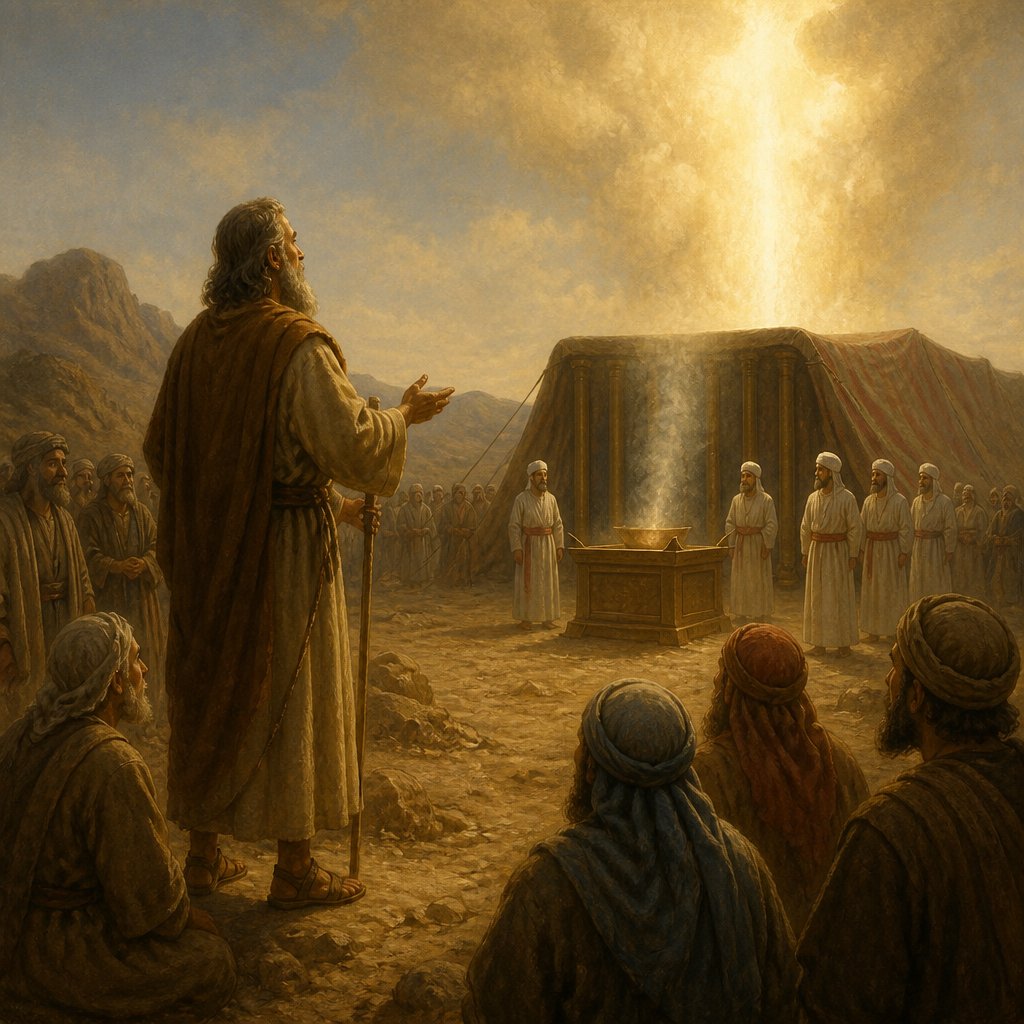
In Leviticus 9:6, we find a profound directive from Moses, declaring, "And Moses said, This is the thing which the LORD commanded that ye should do: and the glory of the LORD shall appear unto you." This verse encapsulates a pivotal moment in the narrative of the Israelites—the transition from the preparations for worship to the very manifestation of God’s presence among His people. It reveals a significant truth about obedience and the relationship between divine commandments and the consequent unveiling of God’s glory.
The context of this verse can be found within the larger framework of Leviticus, a book dedicated to the laws and rituals concerning worship and holiness. Following the establishment of the priesthood and the ordination of Aaron and his sons, Moses commanded them to follow God's prescribed rituals to approach Him. The Lord provided a blueprint for worship to ensure that the people understood how to engage with Him reverently and correctly. Therefore, it is vital to recognize that obedience to God's commandments is not merely a matter of rigid adherence to rules; it represents a heart posture of submission and honor towards God.
Moses' proclamation serves as a powerful reminder of the connection between obedience and divine manifestation. When the people followed the prescribed commands from the Lord, it was not just for religious compliance; it was about understanding the gravity and sanctity of their relationship with an Almighty God. The statement, "that ye should do" calls us to reflect on our actions and the intentionality behind them. Are our offerings, prayers, and acts of worship a true reflection of our desire to honor God? How often do we prioritize doing what is pleasing to the Lord?
Furthermore, Moses assures the people that the glory of the Lord will appear unto them. This is an awe-inspiring promise—the very presence of God Himself is conditional upon their obedience. The term "glory" in Hebrew (kavod) signifies weightiness or the fullness of God’s presence. It is not a trivial concept, but rather, it conveys the reality that God's glory is transformative. When the glory of God is present, it brings wisdom, healing, and restoration.
Reflecting on what it means for the glory of God to manifest in our lives today, we must consider how obedience plays a vital role. Just as the Israelites had specific commands that they were to follow, we, too, have commands from scripture that guide our lives. However, in a world filled with distractions and a culture that often subverts divine authority, it can be challenging to align ourselves with God's will. Yet, it is in these moments of obedience that we open ourselves up to experiencing His presence.
When we prioritize our spiritual disciplines—prayer, reading the Word, fellowship, and service—we position ourselves to perceive God’s glory. Just as the Israelites witnessed the fire of the Lord consuming their sacrifices, we, too, can experience His power and presence through our acts of faithfulness. The glory of God is not only for the church gathering but manifests in our daily decisions, our responses to challenges, and our love for one another.
In summary, Leviticus 9:6 is not merely an Old Testament regulatory framework; it is a gospel message reminding us that obedience leads to encounter. We are called to do what the Lord commands, and in our doing, we expect His glory to reveal itself among us. May we strive to be a community that honors God through our actions, anticipating His presence in transformative and life-giving ways. Let us ask ourselves daily—what does the Lord command of me, and am I willing to do it? For in our faithfulness, the glory of the Lord will indeed be made manifest.
Want to reflect more on Leviticus 9:6?
Continue your spiritual journey with Bible Chat — an AI-powered tool for exploring God's Word through conversation. Ask questions, discover connections, and deepen your understanding.
Get Our Apps


Leviticus 9:6 Artwork
Leviticus 9:6 - "And Moses said, This is the thing which the LORD commanded that ye should do: and the glory of the LORD shall appear unto you."
"And Moses said, This is the thing which the LORD commanded that ye should do: and the glory of the LORD shall appear unto you." - Leviticus 9:6

Leviticus 6:9 - "Command Aaron and his sons, saying, This is the law of the burnt offering: It is the burnt offering, because of the burning upon the altar all night unto the morning, and the fire of the altar shall be burning in it."

Leviticus 26: 4-6
Leviticus 26: 4-6

Leviticus 26: 4-6

Leviticus 23:9 - "¶ And the LORD spake unto Moses, saying,"

Leviticus 6:24 - "¶ And the LORD spake unto Moses, saying,"

Leviticus 6:8 - "¶ And the LORD spake unto Moses, saying,"

Leviticus 6:19 - "¶ And the LORD spake unto Moses, saying,"

Leviticus 6:1 - "And the LORD spake unto Moses, saying,"

Leviticus 9:16 - "And he brought the burnt offering, and offered it according to the manner."

Leviticus 9:11 - "And the flesh and the hide he burnt with fire without the camp."

Leviticus 1:6 - "And he shall flay the burnt offering, and cut it into his pieces."

Leviticus 8:6 - "And Moses brought Aaron and his sons, and washed them with water."

Leviticus 13:9 - "¶ When the plague of leprosy is in a man, then he shall be brought unto the priest;"

Leviticus 9:20 - "And they put the fat upon the breasts, and he burnt the fat upon the altar:"

Leviticus 2:6 - "Thou shalt part it in pieces, and pour oil thereon: it is a meat offering."

Leviticus 9:9 - "And the sons of Aaron brought the blood unto him: and he dipped his finger in the blood, and put it upon the horns of the altar, and poured out the blood at the bottom of the altar:"

Leviticus 6:29 - "All the males among the priests shall eat thereof: it is most holy."

Leviticus 6:23 - "For every meat offering for the priest shall be wholly burnt: it shall not be eaten."

Leviticus 15:9 - "And what saddle soever he rideth upon that hath the issue shall be unclean."

Leviticus 9:14 - "And he did wash the inwards and the legs, and burnt them upon the burnt offering on the altar."

Leviticus 9:8 - "¶ Aaron therefore went unto the altar, and slew the calf of the sin offering, which was for himself."

Leviticus 9:1 - "And it came to pass on the eighth day, that Moses called Aaron and his sons, and the elders of Israel;"

Leviticus 6:13 - "The fire shall ever be burning upon the altar; it shall never go out."

Leviticus 6:6 - "And he shall bring his trespass offering unto the LORD, a ram without blemish out of the flock, with thy estimation, for a trespass offering, unto the priest:"

Leviticus 9:19 - "And the fat of the bullock and of the ram, the rump, and that which covereth the inwards, and the kidneys, and the caul above the liver:"

Leviticus 9:21 - "And the breasts and the right shoulder Aaron waved for a wave offering before the LORD; as Moses commanded."

Leviticus 7:9 - "And all the meat offering that is baken in the oven, and all that is dressed in the fryingpan, and in the pan, shall be the priest's that offereth it."