Sacrifice and Surrender: The Divine Call in Leviticus 9:10
"But the fat, and the kidneys, and the caul above the liver of the sin offering, he burnt upon the altar; as the LORD commanded Moses." - Leviticus 9:10
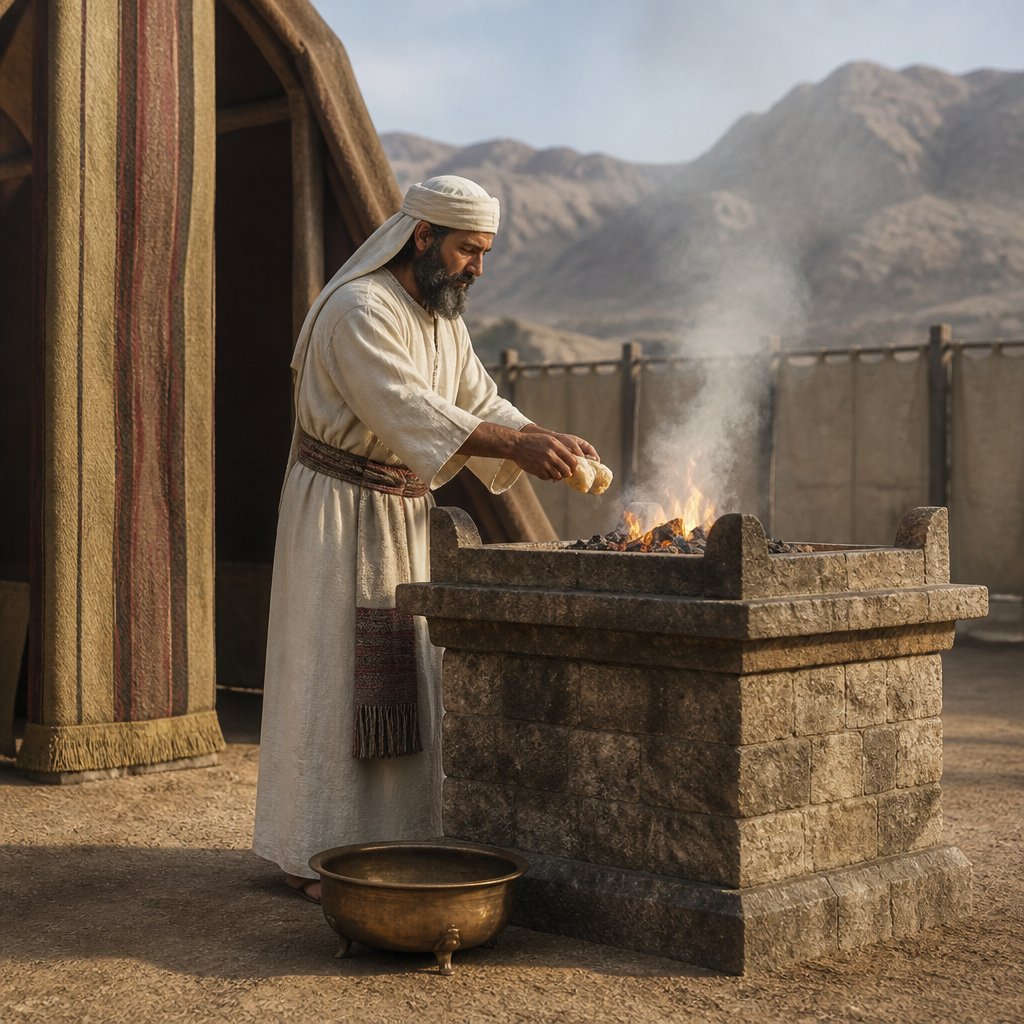
In Leviticus 9:10, we are presented with a deeply layered instruction regarding the sin offering: "But the fat, and the kidneys, and the caul above the liver of the sin offering, he burnt upon the altar; as the LORD commanded Moses." At first glance, these details may appear merely as ancient ritualistic practices, yet they hold profound spiritual truths that resonate with our relationship with God today.
The context of the verse is significant. This moment occurs during the consecration of Aaron and his sons as priests, marking the establishment of a divine order for worship and atonement within the community of Israel. The sacrificial system was not merely an act of religious ritual; it was God’s prescribed means of reconciliation between the holy God and His people marred by sin. The intricate regulations surrounding the offerings served as a visual representation of a greater spiritual truth: that sin carries a weight, and atonement requires sacrifice.
In the verse, the act of burning the fat and the kidneys signifies the complete surrender of a life to God. Fat, often considered the best part of the animal, symbolizes abundance and richness. By offering the fat on the altar, God's people are demonstrating that they are willing to give the very best they have. It invites us to reflect on our own lives: Are we offering up our best to God? In a world where we are often tempted to give God our leftovers—our time, resources, and attention—this call to sacrifice the fat suggests that true worship involves giving our all. God desires a heart fully devoted to Him, one that prioritizes His glory over our comfort and convenience.
Each aspect of the offering holds symbolic importance, particularly the kidneys and the caul above the liver. In ancient Jewish thought, the kidneys were associated with the conscience—the seat of emotions and moral judgment. To burn these on the altar is to acknowledge our complete surrender of self, our very thoughts and affections, to God’s will. In this way, the offering reflects an inner transformation that must precede any outward acts of worship. It challenges us to examine our innermost thoughts and intentions, reminding us that God looks beyond mere actions and sees the heart behind them.
Moreover, the mention of burning these parts "as the LORD commanded Moses" underlines a vital principle of obedience. Obedience to God’s commands is not only about following rules; it is about recognizing the authority of the One who has instituted them. For the Israelites, adherence to God’s commands was integral to their covenant relationship with Him. For us today, obedience still matters. It demonstrates our faith, trust, and sincerity in our relationship with God. When we obey His commands, we position ourselves in alignment with His will, allowing His Spirit to guide and transform us from the inside out.
As we meditate on Leviticus 9:10, we should reflect on the concept of sacrifice in our own lives. What are the 'fat portions' we need to offer to God? Are we willing to let go of our ambitions, our time, and our cherished plans if that is what He asks? How can we surrender our hearts so that our conscience aligns with His desires, leading to authentic worship?
In closing, let this verse remind us of the importance of a sacrificial life. As believers in Christ, we are continuously invited to offer ourselves as living sacrifices (Romans 12:1). Just as the Israelites were called to bring their best to God, may we also strive to bring our best selves—our whole selves—before Him, allowing His fire to refine us into the image of Christ. Let us commit to live lives marked by obedience, intentional surrender, and heartfelt worship that truly honors our God.
Want to reflect more on Leviticus 9:10?
Continue your spiritual journey with Bible Chat — an AI-powered tool for exploring God's Word through conversation. Ask questions, discover connections, and deepen your understanding.
Get Our Apps


Leviticus 9:10 Artwork

Leviticus 9:10 - "But the fat, and the kidneys, and the caul above the liver of the sin offering, he burnt upon the altar; as the LORD commanded Moses."
"But the fat, and the kidneys, and the caul above the liver of the sin offering, he burnt upon the altar; as the LORD commanded Moses." - Leviticus 9:10
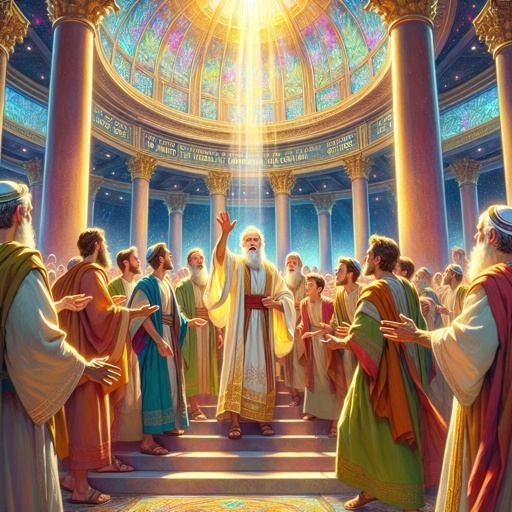
Leviticus 10:9 - "Do not drink wine nor strong drink, thou, nor thy sons with thee, when ye go into the tabernacle of the congregation, lest ye die: it shall be a statute for ever throughout your generations:"

Leviticus 10:10 - "And that ye may put difference between holy and unholy, and between unclean and clean;"

leviticus 16:7-10

Leviticus 10:20 - "And when Moses heard that, he was content."
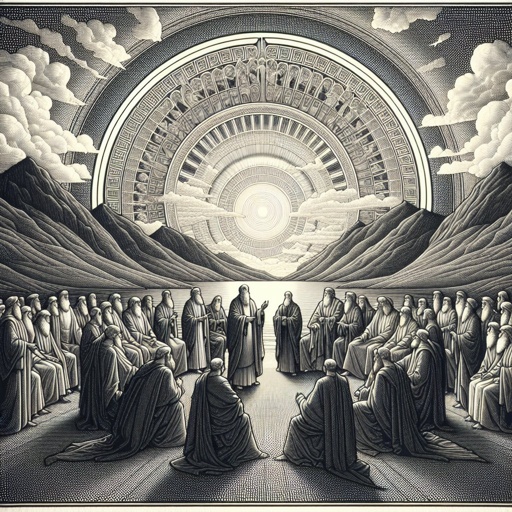
Leviticus 10:8 - "¶ And the LORD spake unto Aaron, saying,"

Leviticus 23:9 - "¶ And the LORD spake unto Moses, saying,"

Leviticus 9:16 - "And he brought the burnt offering, and offered it according to the manner."

Leviticus 9:11 - "And the flesh and the hide he burnt with fire without the camp."

Leviticus 13:9 - "¶ When the plague of leprosy is in a man, then he shall be brought unto the priest;"

Leviticus 9:20 - "And they put the fat upon the breasts, and he burnt the fat upon the altar:"

Leviticus 9:9 - "And the sons of Aaron brought the blood unto him: and he dipped his finger in the blood, and put it upon the horns of the altar, and poured out the blood at the bottom of the altar:"

Leviticus 10:2 - "And there went out fire from the LORD, and devoured them, and they died before the LORD."
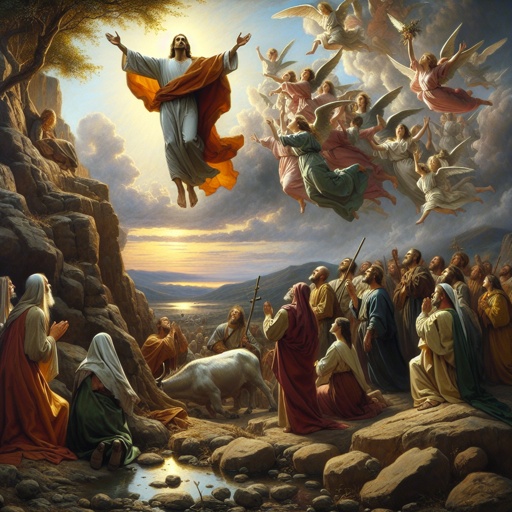
Psalm 10:9-10

Psalm 10:9-10

Leviticus 15:9 - "And what saddle soever he rideth upon that hath the issue shall be unclean."

Leviticus 9:14 - "And he did wash the inwards and the legs, and burnt them upon the burnt offering on the altar."

Leviticus 9:8 - "¶ Aaron therefore went unto the altar, and slew the calf of the sin offering, which was for himself."

Leviticus 9:1 - "And it came to pass on the eighth day, that Moses called Aaron and his sons, and the elders of Israel;"

Leviticus 26:10 - "And ye shall eat old store, and bring forth the old because of the new."

Leviticus 8:10 - "And Moses took the anointing oil, and anointed the tabernacle and all that was therein, and sanctified them."

Leviticus 10:5 - "So they went near, and carried them in their coats out of the camp; as Moses had said."

Leviticus 9:19 - "And the fat of the bullock and of the ram, the rump, and that which covereth the inwards, and the kidneys, and the caul above the liver:"

Leviticus 9:21 - "And the breasts and the right shoulder Aaron waved for a wave offering before the LORD; as Moses commanded."

Leviticus 7:9 - "And all the meat offering that is baken in the oven, and all that is dressed in the fryingpan, and in the pan, shall be the priest's that offereth it."
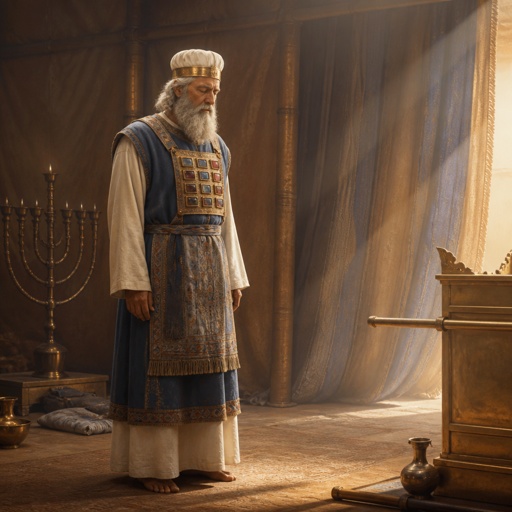
"¶ And the LORD spake unto Aaron, saying," - Leviticus 10:8
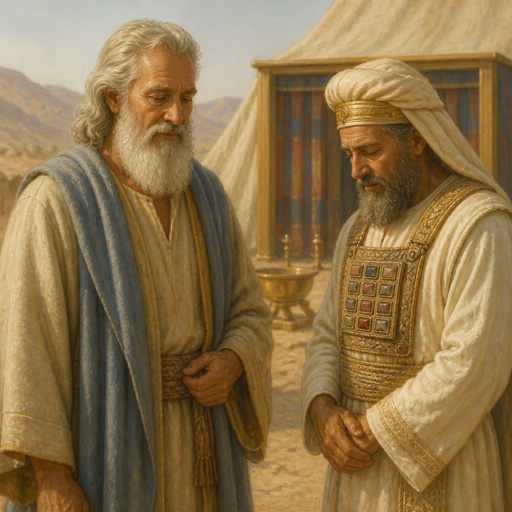
"And when Moses heard that, he was content." - Leviticus 10:20

"¶ And the LORD spake unto Moses, saying," - Leviticus 23:9

Leviticus 16:9 - "And Aaron shall bring the goat upon which the LORD'S lot fell, and offer him for a sin offering."