Abiding in His Presence: The Weight of Divine Responsibility
"Therefore shall ye abide at the door of the tabernacle of the congregation day and night seven days, and keep the charge of the LORD, that ye die not: for so I am commanded." - Leviticus 8:35
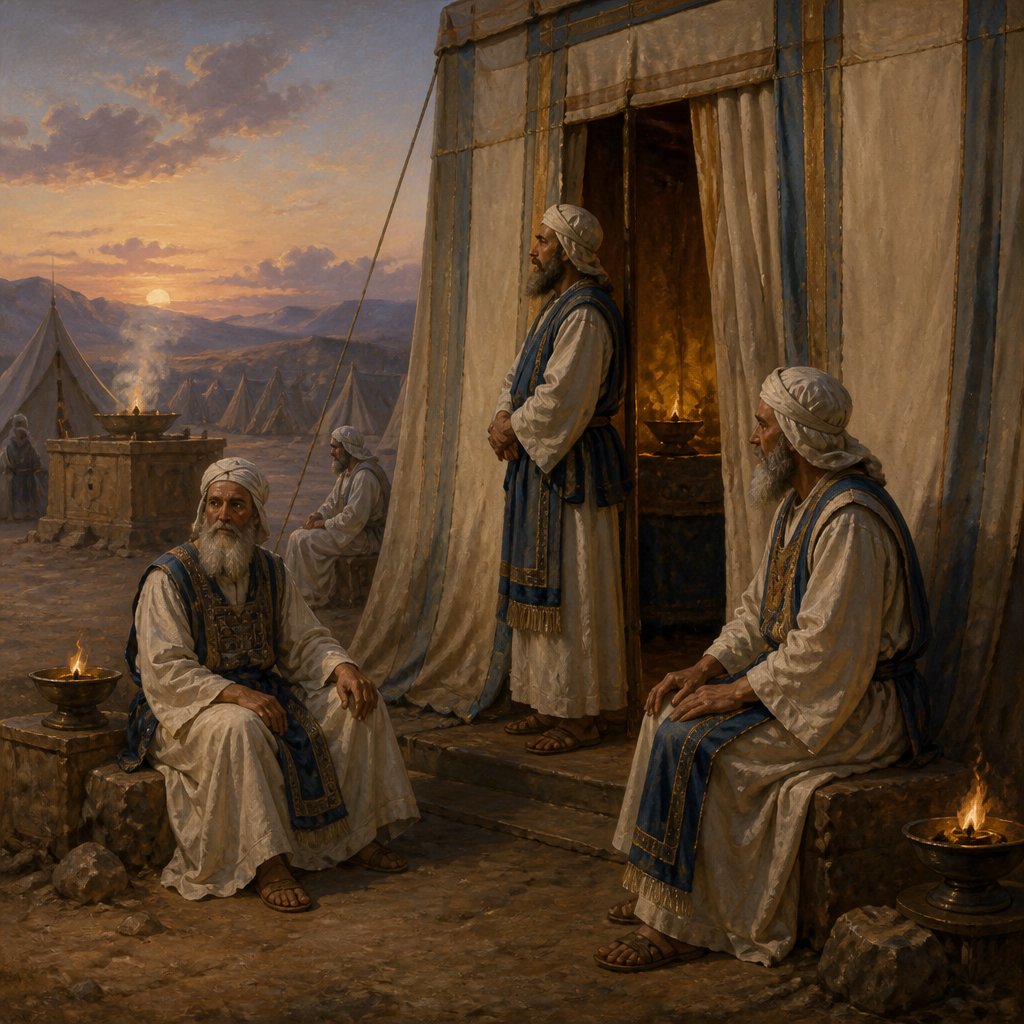
The call to abide—an invitation that echoes through the ages, encapsulated in Leviticus 8:35: "Therefore shall ye abide at the door of the tabernacle of the congregation day and night seven days, and keep the charge of the LORD, that ye die not: for so I am commanded." This command provides us with profound insight into the nature of our relationship with God, revealing both the privilege and responsibility bestowed upon those who serve Him.
To fully understand the import of this verse, we must first contextualize it within the narrative of Leviticus, which is foundational in understanding the holiness of God and the gravity of divine service. Leviticus is a book that delineates the specifics of the covenantal relationship between God and His people, focusing heavily on the priestly duties laid upon Aaron and his sons. The command in Leviticus 8:35 directs them to remain at the tent of meeting—a sacred place where heaven meets earth—indicating that their ministry was not merely a job, but a sacred vocation laden with heavenly significance.
To *abide* at the door suggests a state of perpetual watchfulness and readiness. In ancient Israelite culture, the tabernacle was the dwelling place of God among His people. Certainly, modern believers value the presence of the Holy Spirit as God’s indwelling, yet the directive emphasizes a physical fidelity to a space where the Divine was encountered. For Aaron and his sons, their presence at the tabernacle door served as a continual reminder of their commitment to God and the people. The word *abide* implies an ongoing relationship, not fleeting or occasional, but constant and enduring. Are we as diligent in our spiritual lives? How often do we set aside the distractions of this world to linger in God’s presence?
The instruction to remain for *seven days* symbolizes completeness and divine order in Scripture. In the biblical narrative, seven is often associated with perfection and the fulfillment of God's promises. By commanding Aaron and his sons to abide in the tabernacle for seven days, God was establishing a period of sanctification—preparing them to serve in purity as they entered into their roles. This period was integral for their spiritual formation, a time to immerse themselves in prayer, reflection, and preparation for the tasks ahead. Similarly, we must recognize that our seasons of waiting and preparation are not wasted but are crucial for our spiritual maturation.
Moreover, the phrase *keep the charge of the LORD* denotes a stewardship over what God has entrusted to them. This charge was not a light burden; it is a serious commitment characterized by the fear of the LORD. It beckons us to consider the weight of our service and the responsibility we bear when we claim to follow Christ. In the New Testament, we are also reminded of this charge as we are called priests to our God (1 Peter 2:9). Therefore, we too must be vigilant in our commitment, maintaining the sacred trust placed upon us to live out our faith authentically.
Ultimately, the directive *that ye die not* underscores the gravity of their responsibilities. The holiness of God necessitated that they approach Him with reverence and intent, reflecting a truth that remains pertinent today. There are spiritual repercussions for neglecting our role in God’s Kingdom. When we fail to abide—truly remain in His presence—we risk losing sight of our purpose, straying into spiritual lethargy and disobedience.
Thus, the mantras of Leviticus 8:35 ring true: abide, be vigilant, cherish your calling, and understand the weight of your accountability before the Almighty. As we embrace the role of sojourner in this life, may we commit ourselves to a lifestyle of abiding in His presence, fervently keeping the charge of the Lord in every aspect of our lives. May we remember that our seemingly mundane existences can be transformed into an eternal legacy when viewed through the lens of holy service.
Want to reflect more on Leviticus 8:35?
Continue your spiritual journey with Bible Chat — an AI-powered tool for exploring God's Word through conversation. Ask questions, discover connections, and deepen your understanding.
Get Our Apps


Leviticus 8:35 Artwork

Leviticus 8:35 - "Therefore shall ye abide at the door of the tabernacle of the congregation day and night seven days, and keep the charge of the LORD, that ye die not: for so I am commanded."
"Therefore shall ye abide at the door of the tabernacle of the congregation day and night seven days, and keep the charge of the LORD, that ye die not: for so I am commanded." - Leviticus 8:35

Leviticus 13:35 - "But if the scall spread much in the skin after his cleansing;"

Leviticus 19:35 - "¶ Ye shall do no unrighteousness in judgment, in meteyard, in weight, or in measure."

Leviticus 23:35 - "On the first day shall be an holy convocation: ye shall do no servile work therein."

Mark 8:35

Mark 8:35

Mark 8:35

Mark 8:35

Romans 8:35

Leviticus 14:35 - "And he that owneth the house shall come and tell the priest, saying, It seemeth to me there is as it were a plague in the house:"

Leviticus 26:35 - "As long as it lieth desolate it shall rest; because it did not rest in your sabbaths, when ye dwelt upon it."

Mark 8:27 - 35

Mark 8:27 - 35

Mark 8:27 - 35

Mark 8:27 - 35

Mark 8:27 - 35

"But if the scall spread much in the skin after his cleansing;" - Leviticus 13:35

Leviticus 16:8

Leviticus 8:30

Exodus 35:8 - "And oil for the light, and spices for anointing oil, and for the sweet incense,"

"¶ Ye shall do no unrighteousness in judgment, in meteyard, in weight, or in measure." - Leviticus 19:35

John 8:35 - "And the servant abideth not in the house for ever: but the Son abideth ever."

1 Chronicles 8:35 - "And the sons of Micah were, Pithon, and Melech, and Tarea, and Ahaz."
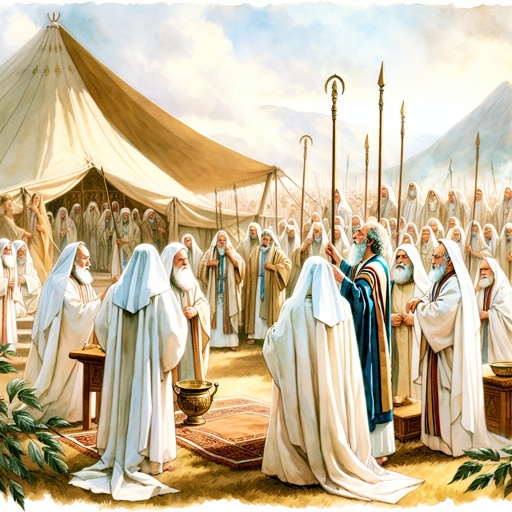
Leviticus 8:1-12

Leviticus 8:8 - "And he put the breastplate upon him: also he put in the breastplate the Urim and the Thummim."

Leviticus 25:35 - "¶ And if thy brother be waxen poor, and fallen in decay with thee; then thou shalt relieve him: yea, though he be a stranger, or a sojourner; that he may live with thee."

Proverbs 8:35 - "For whoso findeth me findeth life, and shall obtain favour of the LORD."

Leviticus 7:35 - "¶ This is the portion of the anointing of Aaron, and of the anointing of his sons, out of the offerings of the LORD made by fire, in the day when he presented them to minister unto the LORD in the priest's office;"

Leviticus 11:35 - "And every thing whereupon any part of their carcase falleth shall be unclean; whether it be oven, or ranges for pots, they shall be broken down: for they are unclean, and shall be unclean unto you."