The Sacredness of Offerings: Understanding Leviticus 7:25
"For whosoever eateth the fat of the beast, of which men offer an offering made by fire unto the LORD, even the soul that eateth it shall be cut off from his people." - Leviticus 7:25
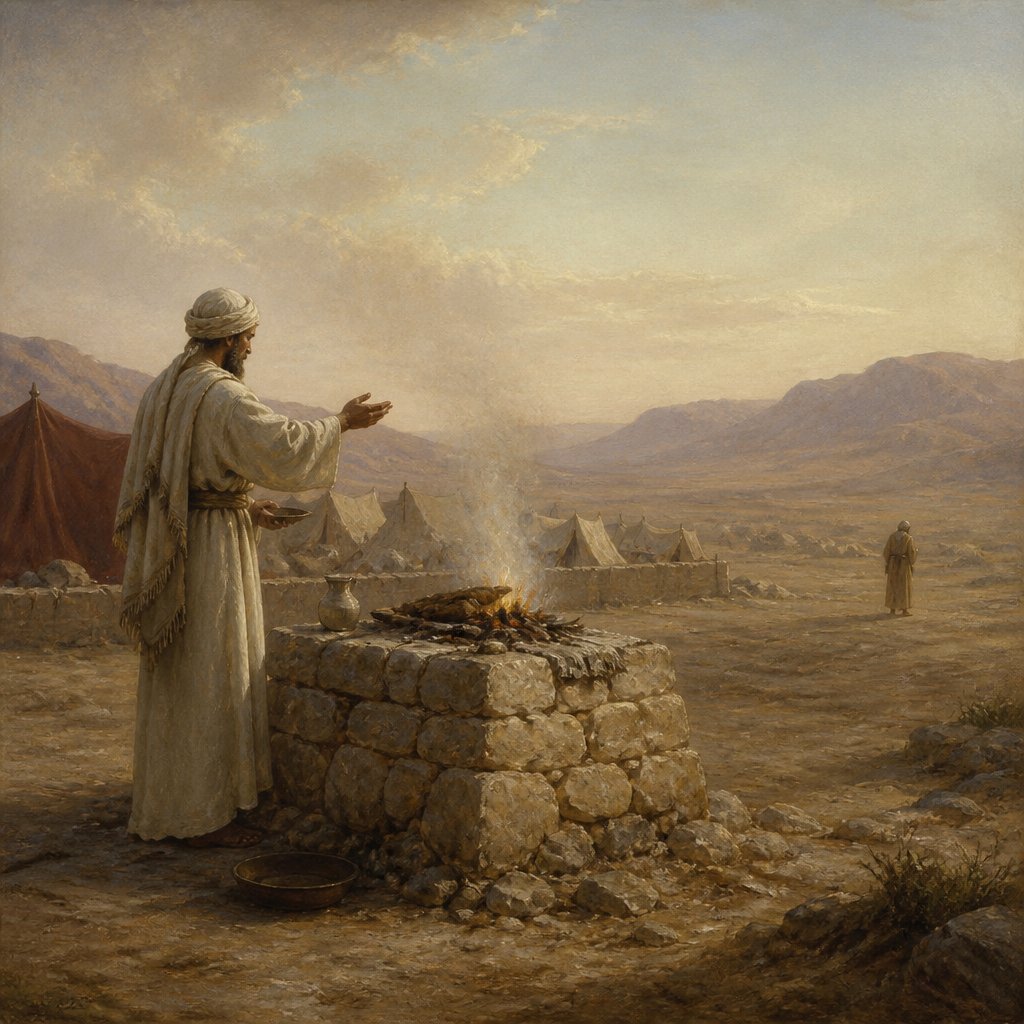
The book of Leviticus stands as a powerful reflection of God’s holiness and the serious nature of worship and sacrifice in the life of His people. Amid law after law, rituals after rituals, we find a verse that speaks profoundly to our understanding of obedience and the sanctity of what we offer to God. Leviticus 7:25 states, "For whosoever eateth the fat of the beast, of which men offer an offering made by fire unto the LORD, even the soul that eateth it shall be cut off from his people."
As we delve into this passage, we are confronted with some challenging principles that push us to consider not just our actions but our intentions and the gravity of reverence due to the Almighty.
Firstly, it is crucial to understand the context of this verse within the book of Leviticus. The entire chapter is concerned with the peace offering, which was a communal meal of gratitude to God. Offerings were not merely about sacrifice but were a way for the people to express their appreciation to God and share a meal, symbolizing fellowship and unity with Him. In this light, the fat that is mentioned in the verse represents the best part of the sacrifice. In Hebrew culture, fat was considered the most desirable portion of any animal, representing abundance and blessing. Thus, eating the fat designated for God represented a grievous disrespect for the sacredness of the offerings dedicated to Him.
When God declares through Moses that anyone who consumes the fat of the offering will be "cut off from his people," He emphasizes the importance of adhering to His directives. This divine mandate serves as a stern warning about the dangers of irreverence and making light of what should be held holy. Worship is not merely ritual; it is a relationship that requires understanding and honor.
Now, what does it mean for us today? While we are not required to follow the Levitical laws in the same way the Israelites did, understanding the principles behind them is crucial. God still desires our hearts to recognize His holiness and the sanctity of our offerings, be they financial, time, skills, or the offering of our very lives. Paul, in Romans 12:1, urges us to present our bodies as living sacrifices, holy and acceptable unto God. Every aspect of our lives is meant to be an offering, ideally characterized by our commitment to obeying His commands.
This brings us to meditate on the implications of disobedience. To be “cut off” from God’s people speaks to a severance of fellowship, a grave consequence that indicates how seriously God views our engagement—not merely with rules but with the relationship and reverence that should characterize His followers. It invites us to reflect: Are there areas in our lives where we disregard God's guidance? Are we treating sacred things lightly? Even in our worship and praise, do we approach the Lord half-heartedly, as if He were just another participant in our daily lives?
Further, this scripture allows us an opportunity for self-examination. Are we guilty of consuming “the fat” of our religious lives—taking from the sacred without giving due reverence in return? Our desire to pull close to God must be coupled with an understanding that we cannot approach Him on our terms. When He calls us to surrender, our response must echo a willingness to lay aside anything that distracts or detracts from His glory. It compels us to ask whether we are willing to give Him our best, to yield our lives fully rather than just portions of it, honoring Him as sovereign King.
In reflecting on Leviticus 7:25, let us take a moment to meditate on our personal offerings to God. In this moment of prayer, ask for a heart that recognizes the sacred and prompts us to act with intention, reverence, and earnestness in our relationship with Him. For when we grasp the everlasting value of our worship and submissions, we not only uplift our own souls but reflect His holiness, demonstrating to the world that we serve a God who is indeed worthy of the best we have to offer.
Want to reflect more on Leviticus 7:25?
Continue your spiritual journey with Bible Chat — an AI-powered tool for exploring God's Word through conversation. Ask questions, discover connections, and deepen your understanding.
Get Our Apps


Leviticus 7:25 Artwork

Leviticus 7:25 - "For whosoever eateth the fat of the beast, of which men offer an offering made by fire unto the LORD, even the soul that eateth it shall be cut off from his people."
"For whosoever eateth the fat of the beast, of which men offer an offering made by fire unto the LORD, even the soul that eateth it shall be cut off from his people." - Leviticus 7:25

Leviticus 25:7 - "And for thy cattle, and for the beast that are in thy land, shall all the increase thereof be meat."

Cycle of sabbath rest year. Leviticus 25:1-7
"And for thy cattle, and for the beast that are in thy land, shall all the increase thereof be meat." - Leviticus 25:7

Leviticus 25:26 - "And if the man have none to redeem it, and himself be able to redeem it;"

Leviticus 25:34 - "But the field of the suburbs of their cities may not be sold; for it is their perpetual possession."

Leviticus 25:1 - "And the LORD spake unto Moses in mount Sinai, saying,"

Leviticus 16:25 - "And the fat of the sin offering shall he burn upon the altar."

Leviticus 25:24 - "And in all the land of your possession ye shall grant a redemption for the land."

Leviticus 17:7

Leviticus 25:13 - "In the year of this jubile ye shall return every man unto his possession."

Leviticus 25:23 - "¶ The land shall not be sold for ever: for the land is mine; for ye are strangers and sojourners with me."
Leviticus 25:43 - "Thou shalt not rule over him with rigour; but shalt fear thy God."

Leviticus 25:32 - "Notwithstanding the cities of the Levites, and the houses of the cities of their possession, may the Levites redeem at any time."

Leviticus 27:25 - "And all thy estimations shall be according to the shekel of the sanctuary: twenty gerahs shall be the shekel."

Leviticus 25:25 - "¶ If thy brother be waxen poor, and hath sold away some of his possession, and if any of his kin come to redeem it, then shall he redeem that which his brother sold."

Leviticus 25:12 - "For it is the jubile; it shall be holy unto you: ye shall eat the increase thereof out of the field."

Leviticus 25:40 - "But as an hired servant, and as a sojourner, he shall be with thee, and shall serve thee unto the year of jubile:"

leviticus 16:7-10

Leviticus 25:42 - "For they are my servants, which I brought forth out of the land of Egypt: they shall not be sold as bondmen."
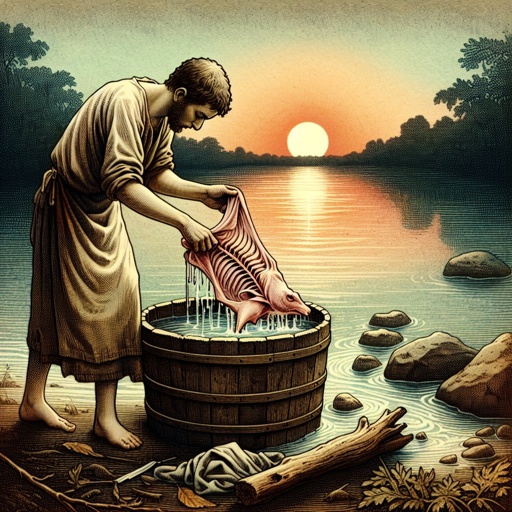
Leviticus 11:25 - "And whosoever beareth ought of the carcase of them shall wash his clothes, and be unclean until the even."

Leviticus 25:48 - "After that he is sold he may be redeemed again; one of his brethren may redeem him:"

Leviticus 25:36 - "Take thou no usury of him, or increase: but fear thy God; that thy brother may live with thee."

Leviticus 25:19 - "And the land shall yield her fruit, and ye shall eat your fill, and dwell therein in safety."

Leviticus 25:21 - "Then I will command my blessing upon you in the sixth year, and it shall bring forth fruit for three years."

Leviticus 25:37 - "Thou shalt not give him thy money upon usury, nor lend him thy victuals for increase."

Leviticus 23:25 - "Ye shall do no servile work therein: but ye shall offer an offering made by fire unto the LORD."

Leviticus 7:22 - "¶ And the LORD spake unto Moses, saying,"

Leviticus 7:28 - "¶ And the LORD spake unto Moses, saying,"