The Peace Offering: A Testament to Divine Communion
"And this is the law of the sacrifice of peace offerings, which he shall offer unto the LORD." - Leviticus 7:11
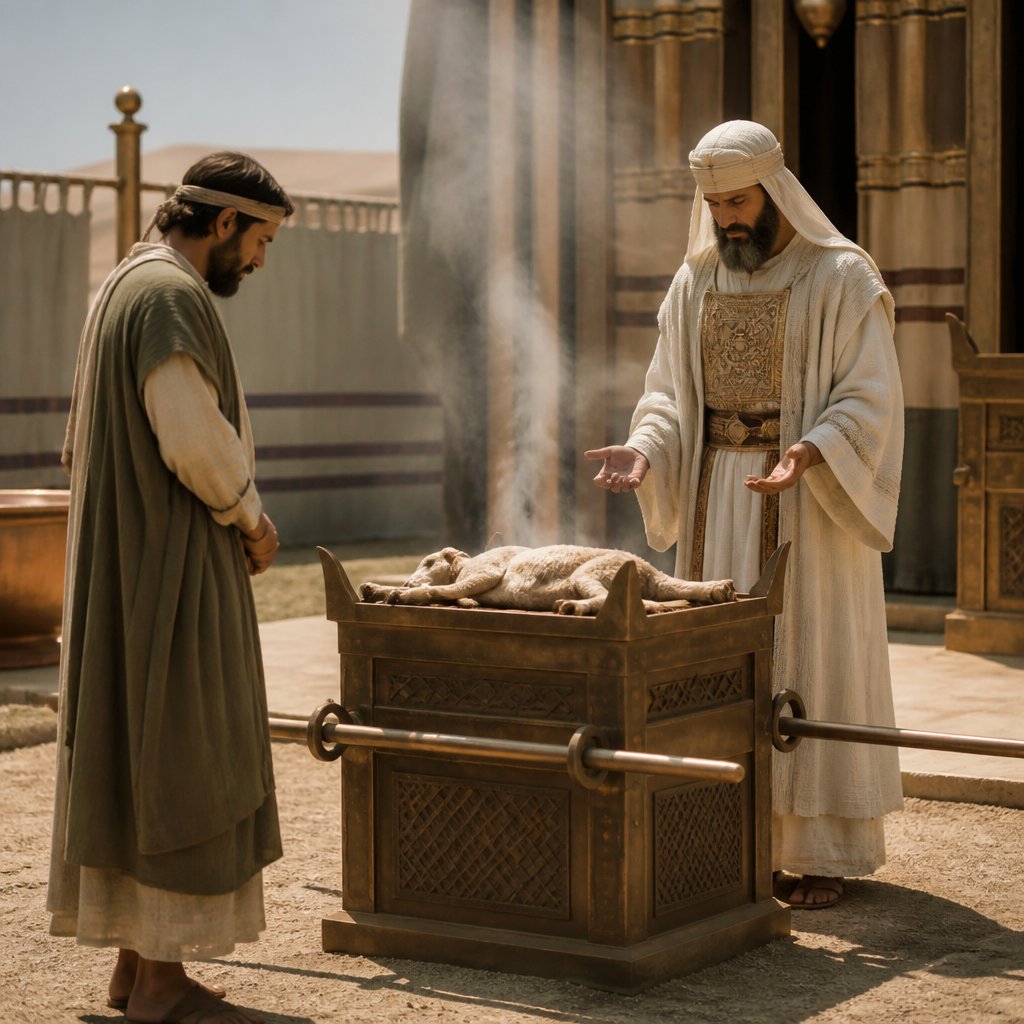
In Leviticus 7:11, we read, "And this is the law of the sacrifice of peace offerings, which he shall offer unto the LORD." This verse unfolds a rich tapestry of meaning that connects the act of sacrifice with the broader themes of communion, gratitude, and reconciliation in our walk with God. As we dive into the depths of this biblical law, we will uncover what it truly means to offer peace offerings to the Lord and how these ancient practices echo into our lives today.
The peace offering, also known as the fellowship offering, holds a unique position among the sacrifices prescribed in the Levitical law. Unlike the burnt offering, which was completely consumed on the altar, or the sin offering, which addressed atonement for wrongdoing, the peace offering was characterized by its shareable nature. Portions of this sacrifice were given to the priest, shared with family and friends, and most importantly, consumed in God's presence. This detailed sharing showcases the very essence of what it means to be at peace with God and with one another.
At the heart of the peace offering was the intention of establishing communion. When an individual or family offered a peace offering, they were entering into a personal relationship with God that emphasized unity and tranquility. In Jewish tradition, sacrifices were not mere transactional gestures; they represented a deep longing for closeness with the divine. Through this offering, worshippers expressed gratitude, fulfilled vows, or simply sought to celebrate their relationship with God. Each act symbolized an invitation to bask in the goodness and mercy of the Lord.
In our modern context, we might ask ourselves, what does it mean to offer peace to God today? While we may no longer bring literal sacrifices to an altar, there exists a principle behind the peace offering that speaks strongly to our spiritual lives. The essence lies in the recognition that our own hearts and actions can serve as offerings to God.
To extend peace offerings to the Lord, we must examine our hearts and our relationships with others. Are there unresolved conflicts that keep us from experiencing true peace? In Matthew 5:23-24, Jesus teaches us, "Therefore if thou bring thy gift to the altar, and there rememberest that thy brother hath ought against thee, leave there thy gift before the altar, and go thy way; first be reconciled to thy brother, and then come and offer thy gift." This echoes the sentiment behind the peace offering. God desires not only our gifts but also our hearts—he desires the reconciliation that paves the way for real communion.
Furthermore, in acknowledging Christ as our ultimate peace offering—His sacrifice on the cross that reconciled humanity with God—we're reminded of how our gratitude leads us to worship. Romans 12:1 urges us, "I beseech you therefore, brethren, by the mercies of God, that ye present your bodies a living sacrifice, holy, acceptable unto God, which is your reasonable service." Here, we find ourselves being called to bear a sacrificial lifestyle. The peace offering speaks to our responsibility to live in harmony, not only with God but also with our fellow man, as we embody the love and grace we have received.
In conclusion, the law of the peace offering in Leviticus serves as a poignant reminder of the nature of our relationship with God. It compels us to reflect on the peace we have through Christ and urges us to nurture and extend that peace to others. As we seek to worship genuinely, let us commit to offer not just with our hands but with our hearts, living as vessels of His peace in a world yearning for the same. May our lives resonate with the harmonious message of God’s love, and may our sacrifices reflect our deep desire for communion with Him and one another.
Want to reflect more on Leviticus 7:11?
Continue your spiritual journey with Bible Chat — an AI-powered tool for exploring God's Word through conversation. Ask questions, discover connections, and deepen your understanding.
Get Our Apps


Leviticus 7:11 Artwork

Leviticus 7:11 - "And this is the law of the sacrifice of peace offerings, which he shall offer unto the LORD."
"And this is the law of the sacrifice of peace offerings, which he shall offer unto the LORD." - Leviticus 7:11

Leviticus 11:7 - "And the swine, though he divide the hoof, and be clovenfooted, yet he cheweth not the cud; he is unclean to you."

Psalm 24:7-11
Leviticus 11:22
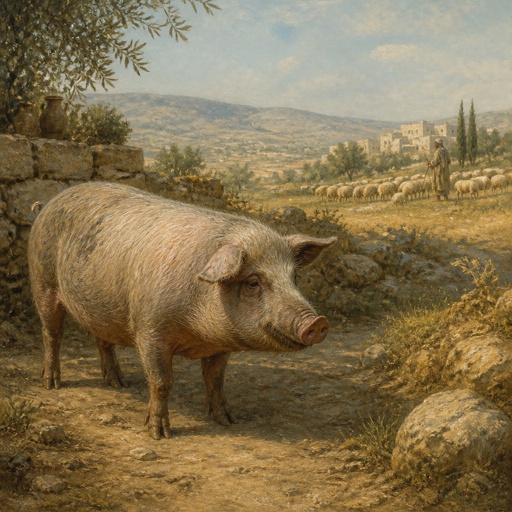
"And the swine, though he divide the hoof, and be clovenfooted, yet he cheweth not the cud; he is unclean to you." - Leviticus 11:7

Leviticus 17:7
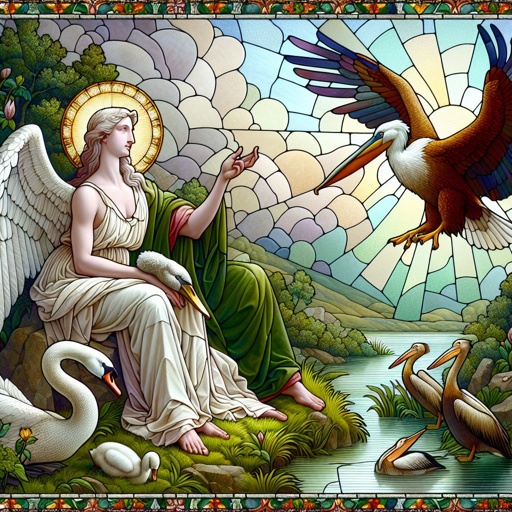
Leviticus 11:18 - "And the swan, and the pelican, and the gier eagle,"

Leviticus 11:17 - "And the little owl, and the cormorant, and the great owl,"

Leviticus 11:14 - "And the vulture, and the kite after his kind;"

Leviticus 11:15 - "Every raven after his kind;"

leviticus 16:7-10

Leviticus 11:30 - "And the ferret, and the chameleon, and the lizard, and the snail, and the mole."

Leviticus 11:19 - "And the stork, the heron after her kind, and the lapwing, and the bat."

Leviticus 7:22 - "¶ And the LORD spake unto Moses, saying,"

Leviticus 7:28 - "¶ And the LORD spake unto Moses, saying,"

Leviticus 9:11 - "And the flesh and the hide he burnt with fire without the camp."

Leviticus 7:1 - "Likewise this is the law of the trespass offering: it is most holy."

Leviticus 7:7 - "As the sin offering is, so is the trespass offering: there is one law for them: the priest that maketh atonement therewith shall have it."

Leviticus 19:7 - "And if it be eaten at all on the third day, it is abominable; it shall not be accepted."

Leviticus 11:1 - "And the LORD spake unto Moses and to Aaron, saying unto them,"

Leviticus 11:16 - "And the owl, and the night hawk, and the cuckow, and the hawk after his kind,"

Leviticus 7:17 - "But the remainder of the flesh of the sacrifice on the third day shall be burnt with fire."

Leviticus 11:41 - "And every creeping thing that creepeth upon the earth shall be an abomination; it shall not be eaten."

Leviticus 19:11 - "¶ Ye shall not steal, neither deal falsely, neither lie one to another."

"And the swan, and the pelican, and the gier eagle," - Leviticus 11:18

Leviticus 11:12 - "Whatsoever hath no fins nor scales in the waters, that shall be an abomination unto you."

Leviticus 11:8 - "Of their flesh shall ye not eat, and their carcase shall ye not touch; they are unclean to you."

Leviticus 26:11 - "And I will set my tabernacle among you: and my soul shall not abhor you."

Leviticus 11:24 - "And for these ye shall be unclean: whosoever toucheth the carcase of them shall be unclean until the even."