The Unforgivable: A Deeper Look at Sin and Sacrifice
"And he shall bring them unto the priest, who shall offer that which is for the sin offering first, and wring off his head from his neck, but shall not divide it asunder:" - Leviticus 5:8
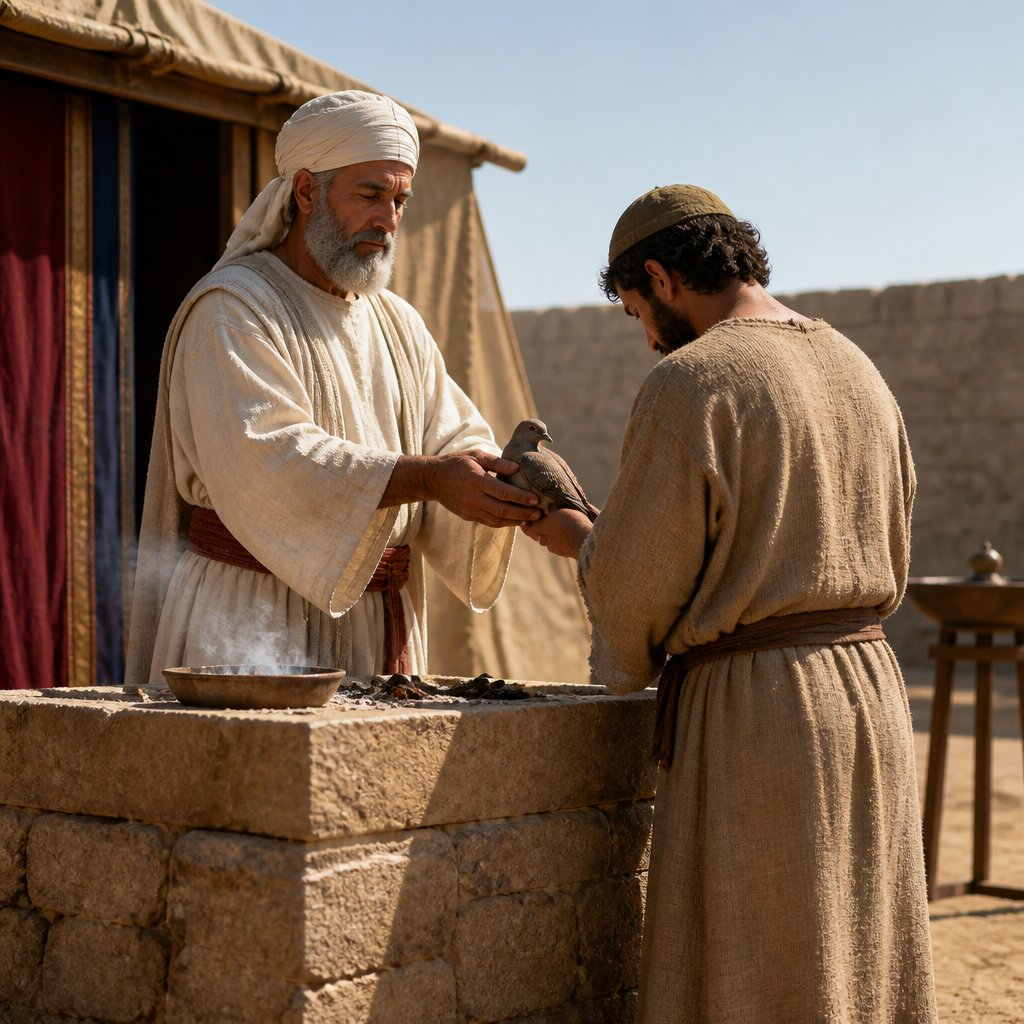
Leviticus 5:8 (KJV) states, "And he shall bring them unto the priest, who shall offer that which is for the sin offering first, and wring off his head from his neck, but shall not divide it asunder." This verse, hidden within the intricate rituals of the Law, speaks volumes not just about sin and sacrifice but about our relationship with God. To grasp the weight of this scripture, we must venture into the cultural and theological implications of sacrificial practices in ancient Israel.
Invisible through the ages, sin is an insidious force that disrupts our fellowship with God. The sacrificial system outlined in Leviticus was God’s prescribed method for the Israelites to acknowledge their sinfulness and desire for restoration. The act of bringing an offering, especially a sin offering, is a public declaration of acknowledging wrongdoing and a step towards seeking redemption.
When we look closely at the instruction for the priest to wring off the head of the offering, we uncover layers of meaning. The head symbolizes authority and identity; thus, the act of wringing it off signifies the serious nature of sin and its consequences. In the ritual, sin doesn’t merely vanish; it demands acknowledgment, recognition, and eventually redemption through sacrifice. Just as the head is detached from the body in this ritual, our sin creates a separation between us and God, severing the relationship intended for closeness and intimacy.
God is concerned with the heart of the sinner, not merely the act of sacrifice. As theologian John Calvin noted, "Though the sacrifices were bodily, God preferred the sacrifices of the heart." The offering was never meant to be a mere transaction; it was meant to evoke a change within the sinner, reflecting genuine repentance and a longing for reconciliation.
In the context of today’s life, we often reduce our transgressions to mere mistakes or 'bad choices.' However, the sacrificial system serves to elevate the conversation around sin. Sin is serious; it leads to death in one form or another. When we ignore it, we foster spiritual stagnation and deprive ourselves of the fullness that is a life lived in communion with the Creator. Recognition of our sin must lead to confession, ushering us into a state of vulnerability before God, should we desire a true relationship with Him.
The role of the priest is instrumental in this process. The priest serves as a mediator, someone standing between the sinner and God, making the offering acceptable. In the New Testament, we see this concept evolve into the ultimate high priest, Jesus Christ, whose sacrifice on Calvary reflects the fulfillment of the sin offerings described in Leviticus. Jesus Christ offered Himself once and for all, and this perfect sacrifice is available to all who would believe.
In our modern context, how often do we approach God with our offerings—be they our prayers, acts of service, or financial gifts—while carrying the burden of unconfessed sin? God desires authenticity over rituals. He calls us not to merely perform acts of worship but to offer our whole selves in honest reflection and confession.
As you meditate on Leviticus 5:8, consider your relationship with sin. Are there elements in your life where you need to acknowledge and confess? How does the reality of sacrifice—both ancient and redemptive—shape your view of God’s grace? Let this be a call to recognize the severity of sin, the depth of its impact, and the vastness of God’s mercy.
Lastly, take a moment to reflect on the grace afforded to us through Jesus. Because of His sacrifice, we can come boldly before the throne of grace, unburdened, and find reconciliation with God—a gift initiated by His love and an invitation we are called to accept.
Want to reflect more on Leviticus 5:8?
Continue your spiritual journey with Bible Chat — an AI-powered tool for exploring God's Word through conversation. Ask questions, discover connections, and deepen your understanding.
Get Our Apps


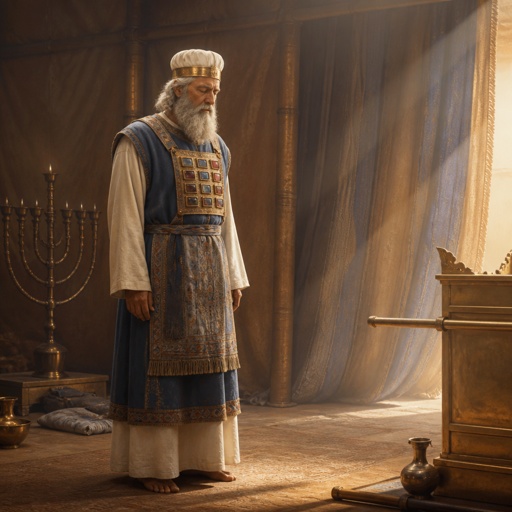
Leviticus 5:8 Artwork

Leviticus 5:8 - "And he shall bring them unto the priest, who shall offer that which is for the sin offering first, and wring off his head from his neck, but shall not divide it asunder:"
"And he shall bring them unto the priest, who shall offer that which is for the sin offering first, and wring off his head from his neck, but shall not divide it asunder:" - Leviticus 5:8

Leviticus 8:5 - "And Moses said unto the congregation, This is the thing which the LORD commanded to be done."
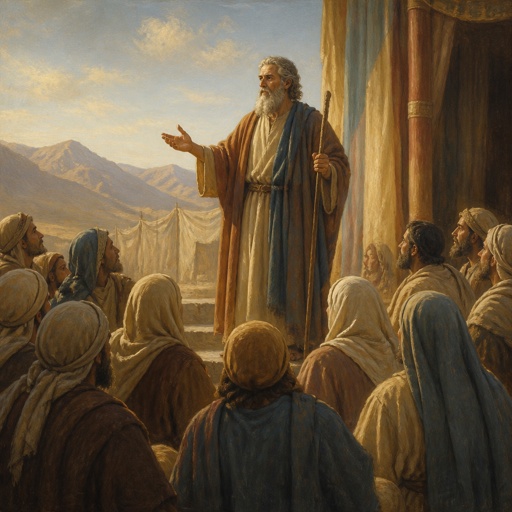
"And Moses said unto the congregation, This is the thing which the LORD commanded to be done." - Leviticus 8:5

Leviticus 16:8

Leviticus 8:30
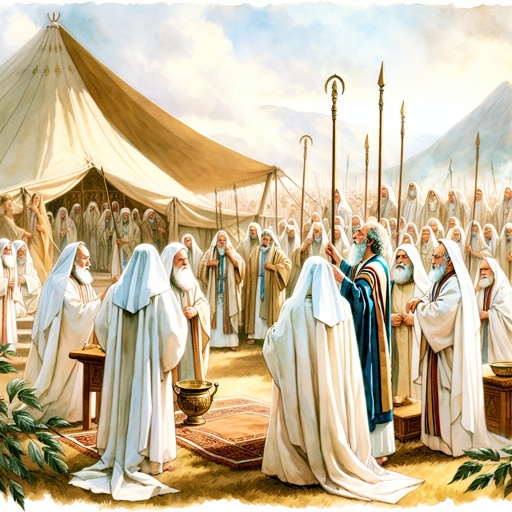
Leviticus 8:1-12

Leviticus 8:8 - "And he put the breastplate upon him: also he put in the breastplate the Urim and the Thummim."

Leviticus 6:8 - "¶ And the LORD spake unto Moses, saying,"
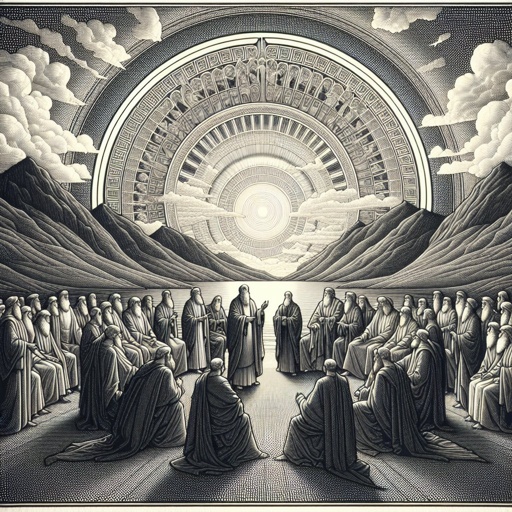
Leviticus 10:8 - "¶ And the LORD spake unto Aaron, saying,"

Leviticus 8:1 - "And the LORD spake unto Moses, saying,"
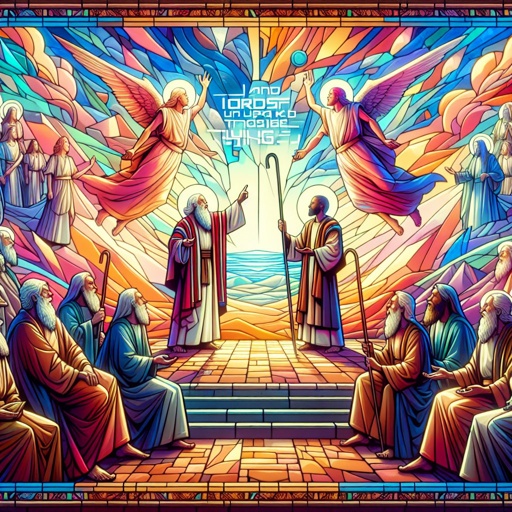
Leviticus 5:14 - "¶ And the LORD spake unto Moses, saying,"

Leviticus 5:5 - "And it shall be, when he shall be guilty in one of these things, that he shall confess that he hath sinned in that thing:"

Leviticus 8:32 - "And that which remaineth of the flesh and of the bread shall ye burn with fire."

Leviticus 23:5 - "In the fourteenth day of the first month at even is the LORD'S passover."

Leviticus 8:6 - "And Moses brought Aaron and his sons, and washed them with water."

Leviticus 8:19 - "And he killed it; and Moses sprinkled the blood upon the altar round about."

Leviticus 8:3 - "And gather thou all the congregation together unto the door of the tabernacle of the congregation."

Leviticus 5:19 - "It is a trespass offering: he hath certainly trespassed against the LORD."

Leviticus 8:20 - "And he cut the ram into pieces; and Moses burnt the head, and the pieces, and the fat."

Leviticus 18:8 - "The nakedness of thy father's wife shalt thou not uncover: it is thy father's nakedness."
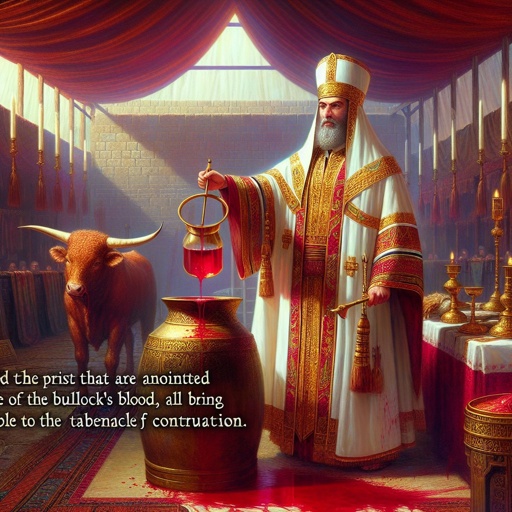
Leviticus 4:5 - "And the priest that is anointed shall take of the bullock's blood, and bring it to the tabernacle of the congregation:"

Leviticus 8:10 - "And Moses took the anointing oil, and anointed the tabernacle and all that was therein, and sanctified them."

Leviticus 11:8 - "Of their flesh shall ye not eat, and their carcase shall ye not touch; they are unclean to you."
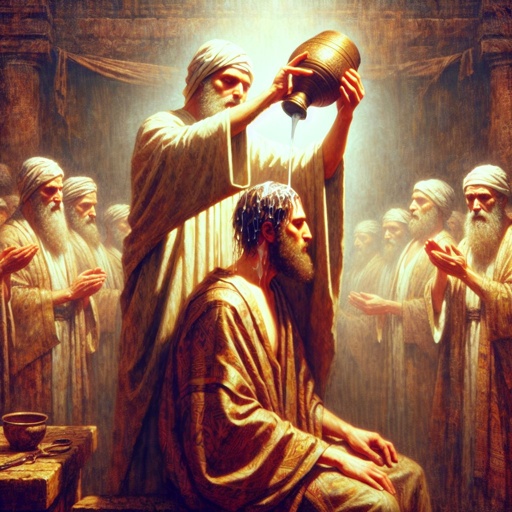
Leviticus 8:12 - "And he poured of the anointing oil upon Aaron's head, and anointed him, to sanctify him."

Leviticus 9:8 - "¶ Aaron therefore went unto the altar, and slew the calf of the sin offering, which was for himself."

Luke 8:5-8

Leviticus 8:36 - "So Aaron and his sons did all things which the LORD commanded by the hand of Moses."

Leviticus 10:5 - "So they went near, and carried them in their coats out of the camp; as Moses had said."
"¶ And the LORD spake unto Aaron, saying," - Leviticus 10:8