The Weight of Our Transgressions: Understanding Atonement in Leviticus 5:6
"And he shall bring his trespass offering unto the LORD for his sin which he hath sinned, a female from the flock, a lamb or a kid of the goats, for a sin offering; and the priest shall make an atonement for him concerning his sin." - Leviticus 5:6
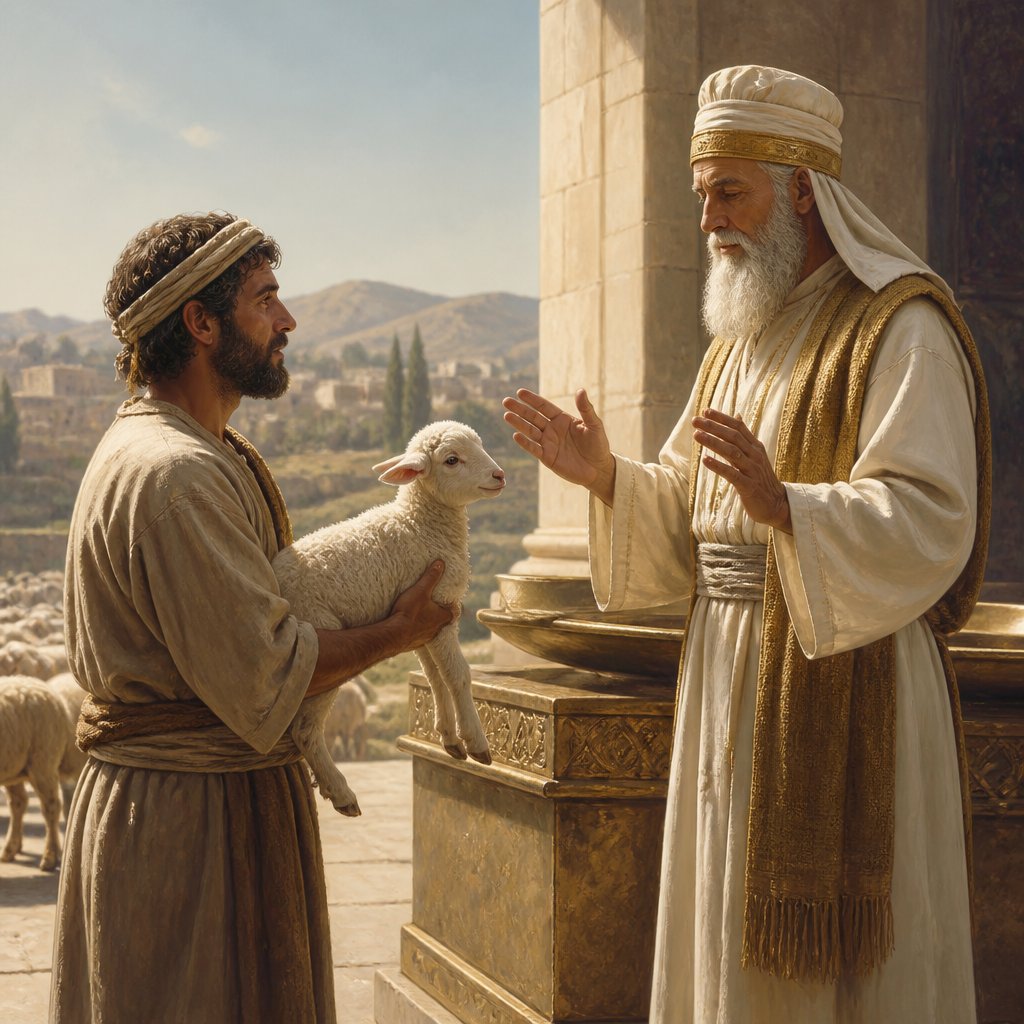
In Leviticus 5:6, we read, "And he shall bring his trespass offering unto the LORD for his sin which he hath sinned, a female from the flock, a lamb or a kid of the goats, for a sin offering; and the priest shall make an atonement for him concerning his sin." This verse encapsulates a profound truth about sin, sacrifice, and divine grace that remains relevant even today.
As we delve into this scripture, it’s essential to consider the cultural and historical context of the Israelites at the time of Moses. The sacrificial system outlined in Leviticus served multiple purposes: it was a means of worship, a way of acknowledging one’s sin, and a tangible representation of atonement. The law required a trespass offering as a recognition of sin, underscoring the seriousness of wrongdoing before God. This was not merely an arbitrary stipulation; rather, it was an indication of how God viewed sin and its consequences.
The phrase "trespass offering" implies wrongdoing, a breach of trust or violation of God’s commands. This wasn’t merely about moral failing; it was a serious matter of separating oneself from God’s holiness. To come before the Lord, an individual had to first acknowledge their transgressions and offer a suitable sacrifice. The selection of a female from the flock, whether a lamb or a goat, signifies the costliness of sin. It required the Israelites to give something of value as a demonstration of remorse and desire for reconciliation with God.
Here, we witness the beautiful interplay between justice and mercy. God’s standard is high, requiring atonement for sin. Yet at the same time, He provides a means of restoration. The act of bringing a sacrifice was not just about the physical offering; it was also a deeply spiritual act. It symbolized the sinner’s recognition of guilt and their desire for cleansing. The priest's role in this process was crucial. He acted as the mediator between God and the sinner, performing the necessary rituals to ensure that atonement was made.
In our contemporary understanding, the concept of atonement can feel distant or even uncomfortable. We live in a society that often minimizes personal responsibility and the ramifications of wrongdoing. Yet, the foundational truth remains: sin separates us from God, and without intervention, we cannot bridge that gap.
In the New Testament, we clearly see how this principle culminates in the ultimate act of atonement through Jesus Christ. The lamb for sacrifice depicted in Leviticus points toward Jesus, the Lamb of God, who takes away the sins of the world (John 1:29). His sacrifice on the cross is the once-and-for-all atonement that no longer requires the shedding of animal blood. Understanding the significance of Leviticus 5:6 leads us to a deeper appreciation of what Jesus accomplished for humanity.
As believers, we are called to examine our own hearts and lives in light of this truth. How often do we acknowledge our transgressions before the Lord? Do we approach Him with the same seriousness and intention as the Israelites did with their sacrifices? There is freedom in recognizing our sins, repenting, and accepting the atonement provided through Christ.
In the quiet moments of prayer and reflection, let us bring before God the weight of our trespasses. May we seek to understand not only the cost of our sin but also the depth of God’s grace and forgiveness. Let us rejoice that we do not have to make sacrifices like those of the Old Testament, for Christ has fulfilled that requirement. Our sins can be laid at the foot of the cross, where Christ intercedes for us, and we can experience genuine reconciliation with God.
In conclusion, Leviticus 5:6 serves as a reminder of the seriousness of sin and the beauty of atonement. It invites us into a deeper relationship with God, one marked by honesty, humility, and gratitude for the grace that covers even our greatest failings.
Want to reflect more on Leviticus 5:6?
Continue your spiritual journey with Bible Chat — an AI-powered tool for exploring God's Word through conversation. Ask questions, discover connections, and deepen your understanding.
Get Our Apps


Leviticus 5:6 Artwork

Leviticus 5:6 - "And he shall bring his trespass offering unto the LORD for his sin which he hath sinned, a female from the flock, a lamb or a kid of the goats, for a sin offering; and the priest shall make an atonement for him concerning his sin."
"And he shall bring his trespass offering unto the LORD for his sin which he hath sinned, a female from the flock, a lamb or a kid of the goats, for a sin offering; and the priest shall make an atonement for him concerning his sin." - Leviticus 5:6

Leviticus 6:5 - "Or all that about which he hath sworn falsely; he shall even restore it in the principal, and shall add the fifth part more thereto, and give it unto him to whom it appertaineth, in the day of his trespass offering."

Leviticus 26: 4-6

Leviticus 26: 4-6

Leviticus 26: 4-6

Leviticus 6:24 - "¶ And the LORD spake unto Moses, saying,"

Leviticus 6:8 - "¶ And the LORD spake unto Moses, saying,"
Leviticus 5:14 - "¶ And the LORD spake unto Moses, saying,"

Leviticus 6:19 - "¶ And the LORD spake unto Moses, saying,"

Leviticus 6:1 - "And the LORD spake unto Moses, saying,"

Leviticus 5:5 - "And it shall be, when he shall be guilty in one of these things, that he shall confess that he hath sinned in that thing:"

Leviticus 23:5 - "In the fourteenth day of the first month at even is the LORD'S passover."

Leviticus 1:6 - "And he shall flay the burnt offering, and cut it into his pieces."

Leviticus 5:19 - "It is a trespass offering: he hath certainly trespassed against the LORD."

Leviticus 8:6 - "And Moses brought Aaron and his sons, and washed them with water."

Leviticus 2:6 - "Thou shalt part it in pieces, and pour oil thereon: it is a meat offering."

Leviticus 8:5 - "And Moses said unto the congregation, This is the thing which the LORD commanded to be done."
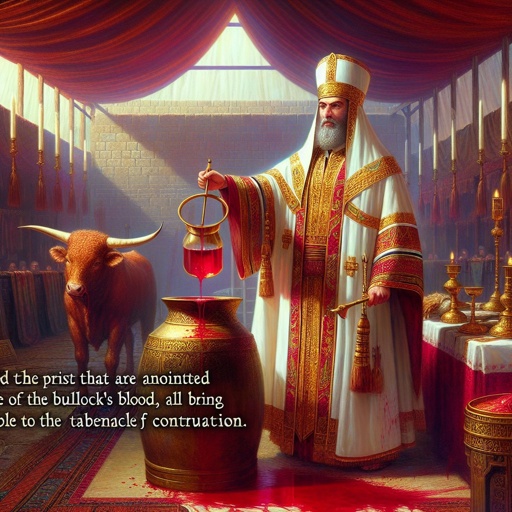
Leviticus 4:5 - "And the priest that is anointed shall take of the bullock's blood, and bring it to the tabernacle of the congregation:"

Leviticus 6:23 - "For every meat offering for the priest shall be wholly burnt: it shall not be eaten."

Leviticus 6:29 - "All the males among the priests shall eat thereof: it is most holy."

Leviticus 6:13 - "The fire shall ever be burning upon the altar; it shall never go out."

Leviticus 6:6 - "And he shall bring his trespass offering unto the LORD, a ram without blemish out of the flock, with thy estimation, for a trespass offering, unto the priest:"

Galatians 5:5-6

Leviticus 10:5 - "So they went near, and carried them in their coats out of the camp; as Moses had said."

Leviticus 14:5 - "And the priest shall command that one of the birds be killed in an earthen vessel over running water:"

Leviticus 11:5 - "And the coney, because he cheweth the cud, but divideth not the hoof; he is unclean unto you."

Leviticus 11:6 - "And the hare, because he cheweth the cud, but divideth not the hoof; he is unclean unto you."

Leviticus 6:14 - "¶ And this is the law of the meat offering: the sons of Aaron shall offer it before the LORD, before the altar."

Leviticus 19:5 - "¶ And if ye offer a sacrifice of peace offerings unto the LORD, ye shall offer it at your own will."