The Heart of Humility: Approaching God with Our Limitations
"¶ But if he be not able to bring two turtledoves, or two young pigeons, then he that sinned shall bring for his offering the tenth part of an ephah of fine flour for a sin offering; he shall put no oil upon it, neither shall he put any frankincense thereon: for it is a sin offering." - Leviticus 5:11
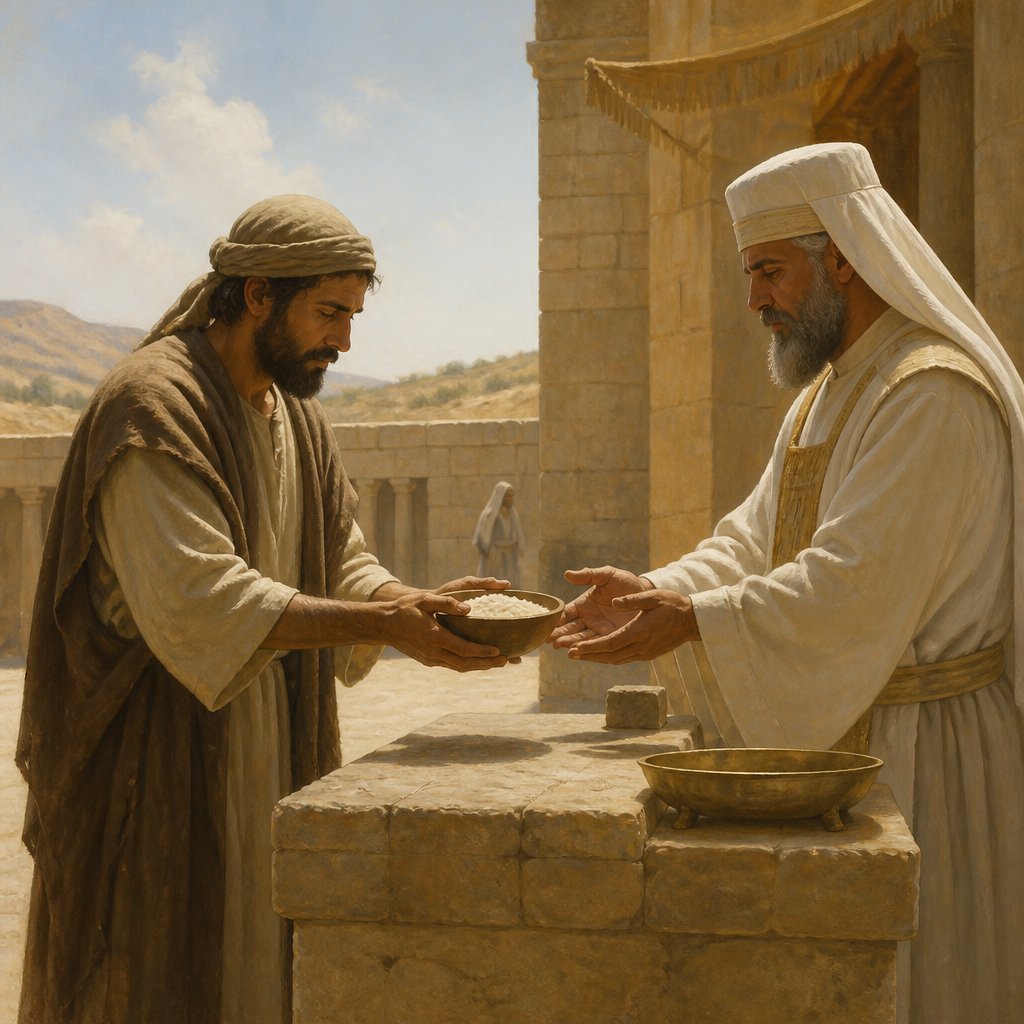
In Leviticus 5:11, we read the words: "But if he be not able to bring two turtledoves, or two young pigeons, then he that sinned shall bring for his offering the tenth part of an ephah of fine flour for a sin offering; he shall put no oil upon it, neither shall he put any frankincense thereon: for it is a sin offering." This scripture not only reflects the meticulous nature of ancient Israelite worship but also reveals the heart of God towards His people, especially in their times of need and limitations.
The context of Leviticus is framed around the laws given to the Israelites to maintain purity, both physically and spiritually. Within these laws, we see a beautiful principle emerge: God desires our hearts above our material offerings. When we think of offerings, it is easy to become preoccupied with the extent of what we bring before God, perhaps measuring our worthiness by external factors such as wealth or abilities. This verse, however, reminds us that God accommodates our circumstances. It illustrates an important truth: God values the sincerity behind our offerings more than the offerings themselves.
The provision for a less costly sin offering—a mere fraction of an ephah of fine flour—demonstrates God's compassion for those who find themselves in dire straits. In ancient Israel, turtledoves and pigeons were common offerings for purification and sin; they were attainable, yet not everyone was equipped to pay for them. If someone sinned and could not afford the standard offerings, they were not excluded from fellowship with God. Rather, they were given an alternative—a humble, bare-bones offering that still held significance. This was an act of obedience, a step towards restoration.
What a profound lesson for us today! In a world that often values status, success, and abundance, God reminds us that it is the heart that seeks Him in humility and honesty that matters most. When we come before God with our weaknesses, He meets us with grace. Matthew 5:3 (KJV) reads, "Blessed are the poor in spirit: for theirs is the kingdom of heaven." Our inability to offer the very best does not negate our participation in God's kingdom; instead, it ushers us into a more profound understanding of His grace and mercy.
Consider how we, too, sometimes carry burdens that feel too heavy to bring to God. Our sin, struggles, and limitations can lead us to believe that we are unworthy of His presence. Yet, like the individual in Leviticus, even our least is enough for God when it's presented from a place of humility and sincerity. He requires authenticity over extravagance. Our offerings do not need to be magnificent; they need to be genuine. We can approach God simply, without pretense, knowing that He is ever willing to meet us in our brokenness.
Moreover, this passage also teaches us about community and accountability in our walks with Christ. The acknowledgment of sin and the act of offering are intertwined; they remind us that sin cannot be brushed aside. There is a process to reconciliation—a way to restore our relationship with God. Confession and repentance are vital steps on this journey. We should never shy away from bringing our new selves to the altar, regardless of whether we come with burdens or blessings.
As we reflect upon Leviticus 5:11, let us not miss the larger narrative of grace that flows through the Old Testament laws. God was always preparing His people for deeper relationships rooted in sincerity. Now, as New Testament believers, we have the ultimate sin offering in Jesus Christ, who invites us to bring our entire selves—flawed, limited, and imperfect—into His presence. Let us remember, it is not the quantity of our offerings that impresses our God, but the humility and faith behind those offerings that resonate in the heavens.
Want to reflect more on Leviticus 5:11?
Continue your spiritual journey with Bible Chat — an AI-powered tool for exploring God's Word through conversation. Ask questions, discover connections, and deepen your understanding.
Get Our Apps


Leviticus 5:11 Artwork
Leviticus 5:11 - "¶ But if he be not able to bring two turtledoves, or two young pigeons, then he that sinned shall bring for his offering the tenth part of an ephah of fine flour for a sin offering; he shall put no oil upon it, neither shall he put any frankincense thereon: for it is a sin offering."
"¶ But if he be not able to bring two turtledoves, or two young pigeons, then he that sinned shall bring for his offering the tenth part of an ephah of fine flour for a sin offering; he shall put no oil upon it, neither shall he put any frankincense thereon: for it is a sin offering." - Leviticus 5:11

Leviticus 11:5 - "And the coney, because he cheweth the cud, but divideth not the hoof; he is unclean unto you."

"And the coney, because he cheweth the cud, but divideth not the hoof; he is unclean unto you." - Leviticus 11:5

Song of Solomon 5:11

Philippians 2:5-11
Leviticus 11:22
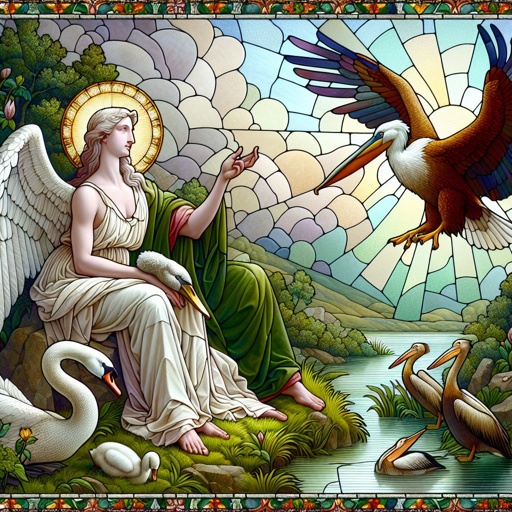
Leviticus 11:18 - "And the swan, and the pelican, and the gier eagle,"

Leviticus 11:17 - "And the little owl, and the cormorant, and the great owl,"

Leviticus 11:14 - "And the vulture, and the kite after his kind;"

Leviticus 11:15 - "Every raven after his kind;"

Leviticus 11:30 - "And the ferret, and the chameleon, and the lizard, and the snail, and the mole."
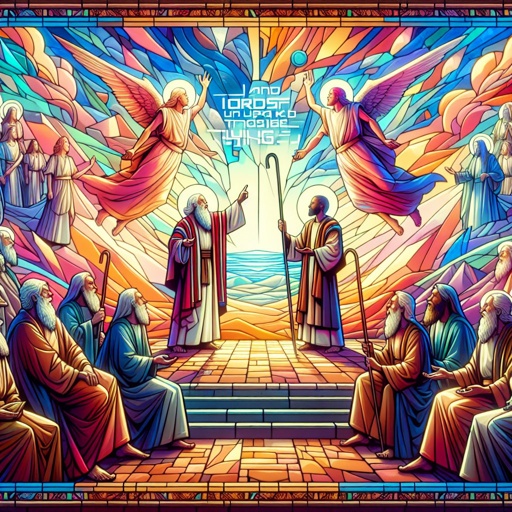
Leviticus 5:14 - "¶ And the LORD spake unto Moses, saying,"

Leviticus 11:19 - "And the stork, the heron after her kind, and the lapwing, and the bat."

Leviticus 5:5 - "And it shall be, when he shall be guilty in one of these things, that he shall confess that he hath sinned in that thing:"

Leviticus 9:11 - "And the flesh and the hide he burnt with fire without the camp."

Leviticus 23:5 - "In the fourteenth day of the first month at even is the LORD'S passover."

Leviticus 11:1 - "And the LORD spake unto Moses and to Aaron, saying unto them,"

Leviticus 11:16 - "And the owl, and the night hawk, and the cuckow, and the hawk after his kind,"

Leviticus 5:19 - "It is a trespass offering: he hath certainly trespassed against the LORD."

Leviticus 11:41 - "And every creeping thing that creepeth upon the earth shall be an abomination; it shall not be eaten."

Leviticus 19:11 - "¶ Ye shall not steal, neither deal falsely, neither lie one to another."

Leviticus 7:11 - "And this is the law of the sacrifice of peace offerings, which he shall offer unto the LORD."

Leviticus 8:5 - "And Moses said unto the congregation, This is the thing which the LORD commanded to be done."
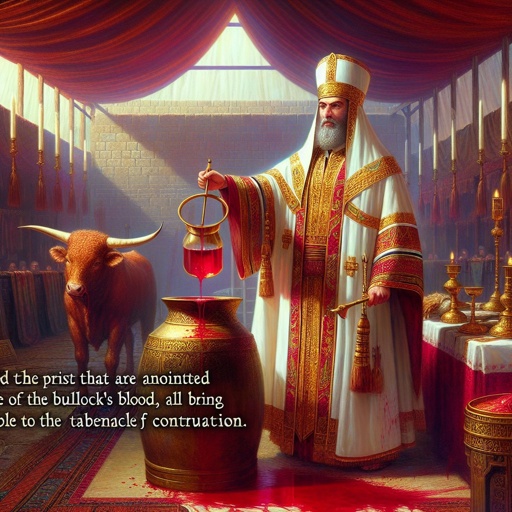
Leviticus 4:5 - "And the priest that is anointed shall take of the bullock's blood, and bring it to the tabernacle of the congregation:"

"And the swan, and the pelican, and the gier eagle," - Leviticus 11:18

Leviticus 11:12 - "Whatsoever hath no fins nor scales in the waters, that shall be an abomination unto you."

Leviticus 11:8 - "Of their flesh shall ye not eat, and their carcase shall ye not touch; they are unclean to you."

Leviticus 26:11 - "And I will set my tabernacle among you: and my soul shall not abhor you."

Leviticus 3:11 - "And the priest shall burn it upon the altar: it is the food of the offering made by fire unto the LORD."