The Altar of Atonement: Understanding the Power of Sacrificial Blood
"And the priest shall put some of the blood upon the horns of the altar of sweet incense before the LORD, which is in the tabernacle of the congregation; and shall pour all the blood of the bullock at the bottom of the altar of the burnt offering, which is at the door of the tabernacle of the congregation." - Leviticus 4:7
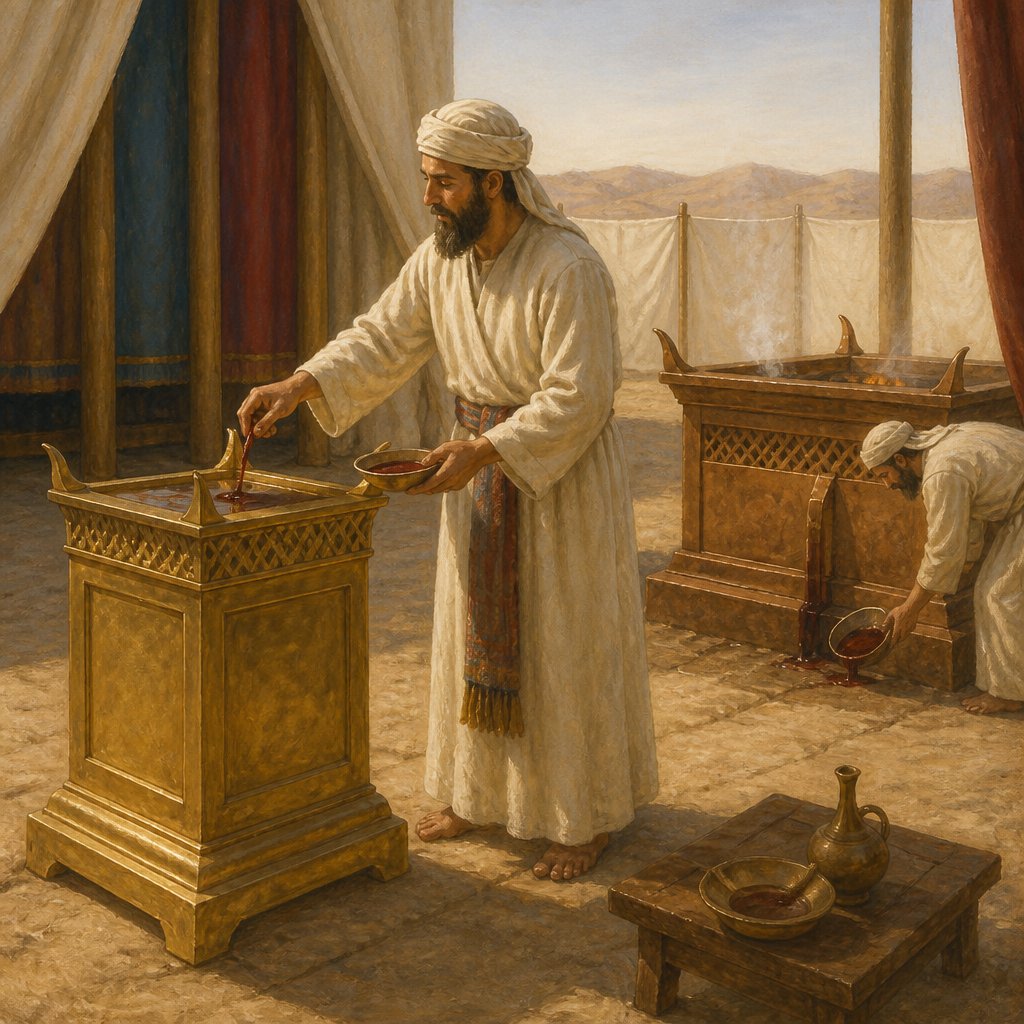
In Leviticus 4:7 we read: "And the priest shall put some of the blood upon the horns of the altar of sweet incense before the LORD, which is in the tabernacle of the congregation; and shall pour all the blood of the bullock at the bottom of the altar of the burnt offering, which is at the door of the tabernacle of the congregation." At first glance, this may seem like an ancient ritual specific to the Israelites. However, as we dive deeper into this scripture, we discover profound truths about atonement, redemption, and communion with God that resonate through time.
The context of Leviticus centers around the holiness of God and the necessity of atonement for sins. The Israelites were a people set apart for God’s purposes, and as such, they had a unique calling to live in righteousness. However, their sinful nature constantly drew them away from the holiness that God required. Thus, God established a sacrificial system to maintain a relationship with His people.
The act of the priest applying blood on the horns of the altar is deeply significant. The horns of the altar represent a place of safety and refuge—an area where the mercy of God is found. By placing the blood of the sacrifice there, the priest was signifying that the blood was a covering for the sins of the people, creating a barrier between their transgressions and the holiness of God. The blood served as a form of protection, allowing them to stay in fellowship with God despite their shortcomings.
In the New Testament, we understand that Jesus Christ fulfilled the sacrifices of the old covenant. In Hebrews 9:12, it reminds us, "Neither by the blood of goats and calves, but by his own blood he entered in once into the holy place, having obtained eternal redemption for us." Just as the priest in Leviticus had to sprinkle the blood on the altar for atonement, Jesus has become our ultimate sacrifice. His blood was shed once and for all, granting us unrestricted access to the Father. What an immense grace we’ve received through Christ!
The action of pouring out all the blood at the altar of burnt offering reveals the completeness of the sacrifice. It is an act of total surrender, representing that our redemption costs everything. The life is in the blood, and by pouring it out, the offerer acknowledges their sin and recognizes the severe consequences of transgression against a holy God. This vivid imagery demonstrates the seriousness of sin and the depths of God's provision for addressing it.
Moreover, consider this: the blood placed upon the altar was not only a means of seeking forgiveness; it also paved the way for worship. The tabernacle was the meeting place of God and humanity, characterized by the sacrifices and offerings. Thus, every atoning act brought the people of Israel closer to the presence of God, enhancing their worship. When we grasp our need for Christ and accept the reality of His sacrifice, we, too, enter into a deeper communion with God.
As we reflect on Leviticus 4:7, ask yourself: How do I view the blood of Christ in my own life? Do I recognize its power and significance? It is easy to take our salvation for granted, but like the Israelites, we must remember that atonement was costly. Our lives should reflect gratitude for the gracious act of redemption that opens the door to God’s presence.
Let us also remember that as believers, we are called to live lives of sacrifice. Romans 12:1 encourages us to present our bodies as living sacrifices, holy and acceptable unto God. As the blood on the altar represented surrender and commitment, so should our lives reflect our dedication to God in everything we do.
In conclusion, Leviticus 4:7 points us toward the heart of God, who desires relationship and reconciliation with His people. The sacrificial system, ultimately fulfilled in Christ, embodies the message of love, mercy, and the high cost of sin. May we ever cherish the blood of Jesus, always bringing our hearts to the altar of worship, continually offering our lives back to Him.
Want to reflect more on Leviticus 4:7?
Continue your spiritual journey with Bible Chat — an AI-powered tool for exploring God's Word through conversation. Ask questions, discover connections, and deepen your understanding.
Get Our Apps


Leviticus 4:7 Artwork
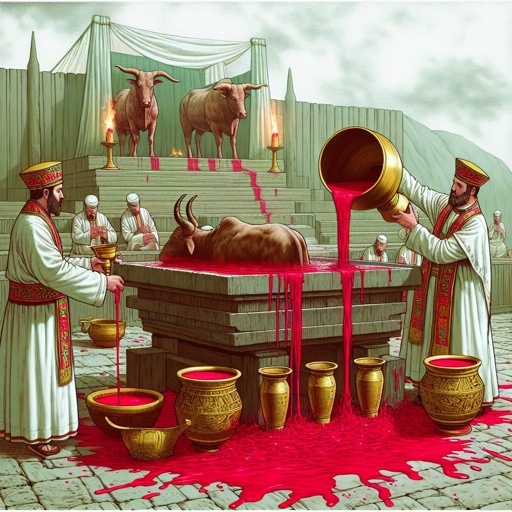
Leviticus 4:7 - "And the priest shall put some of the blood upon the horns of the altar of sweet incense before the LORD, which is in the tabernacle of the congregation; and shall pour all the blood of the bullock at the bottom of the altar of the burnt offering, which is at the door of the tabernacle of the congregation."
"And the priest shall put some of the blood upon the horns of the altar of sweet incense before the LORD, which is in the tabernacle of the congregation; and shall pour all the blood of the bullock at the bottom of the altar of the burnt offering, which is at the door of the tabernacle of the congregation." - Leviticus 4:7

Leviticus 7:4 - "And the two kidneys, and the fat that is on them, which is by the flanks, and the caul that is above the liver, with the kidneys, it shall he take away:"

Leviticus 17:7

leviticus 16:7-10
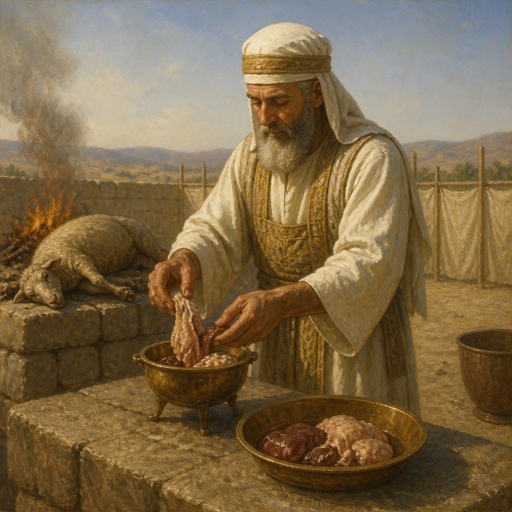
"And the two kidneys, and the fat that is on them, which is by the flanks, and the caul that is above the liver, with the kidneys, it shall he take away:" - Leviticus 7:4

Leviticus 26: 4-6

Leviticus 7:22 - "¶ And the LORD spake unto Moses, saying,"

Leviticus 7:28 - "¶ And the LORD spake unto Moses, saying,"
Leviticus 26: 4-6

Leviticus 26: 4-6

Leviticus 7:1 - "Likewise this is the law of the trespass offering: it is most holy."

Leviticus 7:7 - "As the sin offering is, so is the trespass offering: there is one law for them: the priest that maketh atonement therewith shall have it."

Leviticus 4:1 - "And the LORD spake unto Moses, saying,"

Leviticus 19:7 - "And if it be eaten at all on the third day, it is abominable; it shall not be accepted."

Leviticus 7:17 - "But the remainder of the flesh of the sacrifice on the third day shall be burnt with fire."

Leviticus 27:4 - "And if it be a female, then thy estimation shall be thirty shekels."

Leviticus 3:7 - "If he offer a lamb for his offering, then shall he offer it before the LORD."

Leviticus 7:3 - "And he shall offer of it all the fat thereof; the rump, and the fat that covereth the inwards,"

Leviticus 26:7 - "And ye shall chase your enemies, and they shall fall before you by the sword."
Leviticus 25:7 - "And for thy cattle, and for the beast that are in thy land, shall all the increase thereof be meat."

Leviticus 7:11 - "And this is the law of the sacrifice of peace offerings, which he shall offer unto the LORD."

Leviticus 4:16 - "And the priest that is anointed shall bring of the bullock's blood to the tabernacle of the congregation:"

Leviticus 20:7 - "¶ Sanctify yourselves therefore, and be ye holy: for I am the LORD your God."
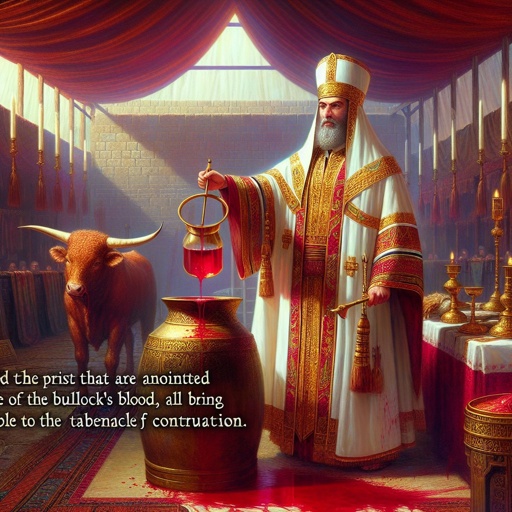
Leviticus 4:5 - "And the priest that is anointed shall take of the bullock's blood, and bring it to the tabernacle of the congregation:"

Leviticus 2:7 - "¶ And if thy oblation be a meat offering baken in the fryingpan, it shall be made of fine flour with oil."

Leviticus 7:31 - "And the priest shall burn the fat upon the altar: but the breast shall be Aaron's and his sons'."

Leviticus 7:9 - "And all the meat offering that is baken in the oven, and all that is dressed in the fryingpan, and in the pan, shall be the priest's that offereth it."

Cycle of sabbath rest year. Leviticus 25:1-7

"¶ And the LORD spake unto Moses, saying," - Leviticus 7:22