The Blood That Cleanses: Understanding Leviticus 4:34
"And the priest shall take of the blood of the sin offering with his finger, and put it upon the horns of the altar of burnt offering, and shall pour out all the blood thereof at the bottom of the altar:" - Leviticus 4:34
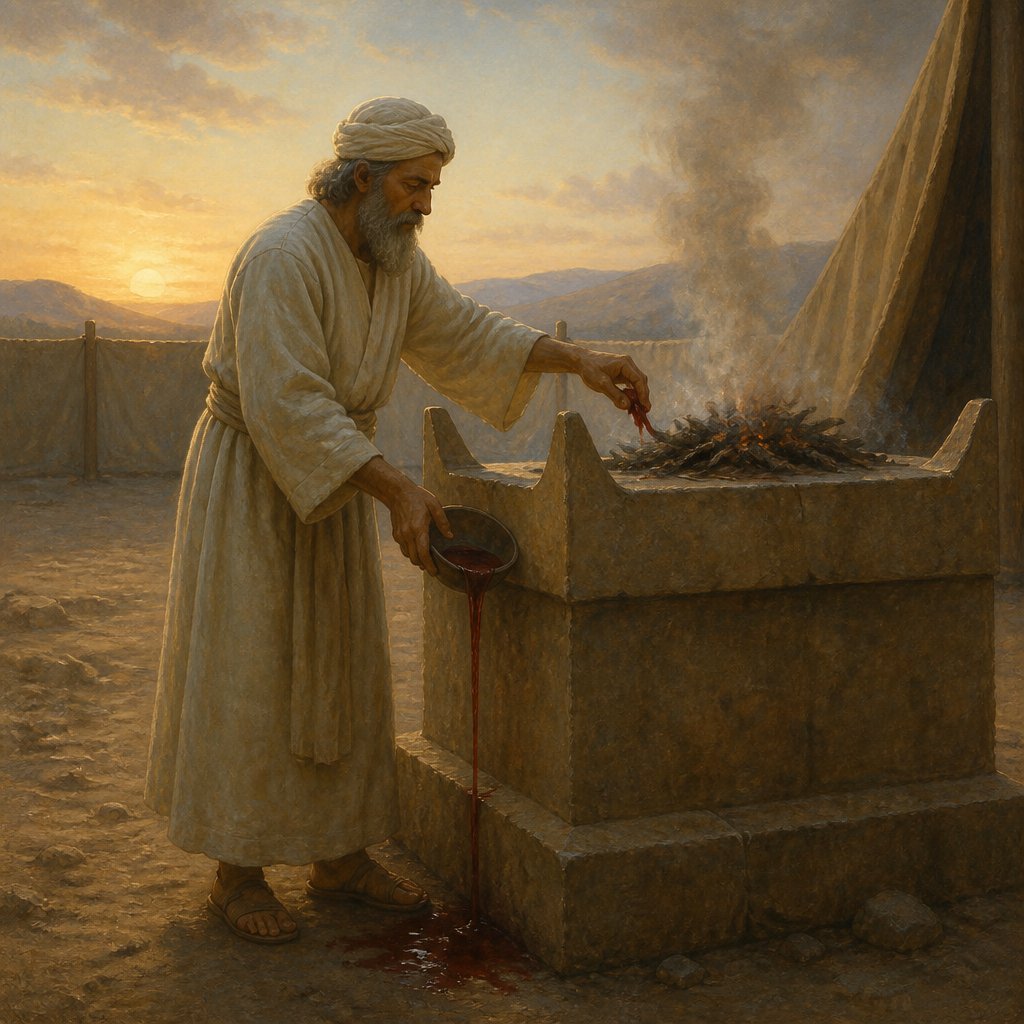
In the book of Leviticus, we find God establishing a deep and comprehensive system of sacrifice as He laid out His covenant with Israel. The verse Leviticus 4:34 states, "And the priest shall take of the blood of the sin offering with his finger, and put it upon the horns of the altar of burnt offering, and shall pour out all the blood thereof at the bottom of the altar." This succinct yet profound declaration unfolds layers of meaning regarding sin, atonement, and our relationship with God.
To understand this verse, we must first grasp its context within the sacrificial system. Sin offerings were specific sacrifices made to atone for unintentional sins committed by individuals or the community. In Israel, sin was not just a moral failing; it was a significant disruption in the relationship between humanity and God. The shedding of blood represented the serious nature of sin and was a symbol of life given. This reflects the profound truth found throughout Scripture: without the shedding of blood, there is no remission of sins (Hebrews 9:22).
The act of the priest taking blood with his finger and placing it on the horns of the altar was a declaration of atonement. The horns of the altar symbolize strength, a place where the sacrifice meets God's justice and mercy. By touching the sacrifice to the altar, the priest was reinforcing the connection between the offering and the divine. It symbolizes the transfer of guilt from the individual to the offering, allowing for the restoration of the relationship with God.
In the act of pouring out the remaining blood at the bottom of the altar, we observe a vital principle: total surrender and commitment to God. The altar was a place of sacrifice, a place where life was given for life. By emptying the blood at the foot of the altar, it conveys the idea of full acknowledgment of sin and a readiness to accept the necessary consequences. It reminds us that coming to God requires humility and recognition of our shortcomings. As we reflect on our own lives, how often do we hold onto guilt or unresolved issues? God desires that we bring these before Him in full surrender.
In the New Testament, we find the ultimate fulfillment of this sacrificial system in Jesus Christ. As He became the Lamb of God, the once-and-for-all sacrifice, His blood was shed for us, reconciling us to the Father (John 1:29; Hebrews 10:10). The process described in Leviticus illustrates not only the seriousness of sin but also God’s relentless pursuit of reconciliation. The practice of sacrifices was never about the death of animals but rather about the heart of the worshiper. God was looking for acknowledgment of sin and a posture of repentance.
As we meditate on Leviticus 4:34, we are reminded of the grace that permeates Scripture. The offering on the altar serves as a precursor to the ultimate sacrifice of Christ, who calls us to come to Him with all our burdens. The horns of the altar cry out for divine mercy, the blood poured out signifies complete cleansing, and the priest’s mediating role points to our need for intercession. Today, we are invited to let go of our sins, fully trusting in the redemptive power of Christ’s blood.
In practical application, we are called to approach God with an open heart. If there are areas of our lives where we feel distant from Him, we can re-examine our commitments, our behaviors, and our relationships. The act of confession and repentance leads us to a place of renewed intimacy with God. Like the Israelites, we must recognize our sinfulness and confidently lay our burdens at the foot of Christ’s altar, knowing that He is faithful and just to cleanse us from all unrighteousness (1 John 1:9).
In conclusion, Leviticus 4:34 is not merely an instruction for ancient rituals but a powerful reminder of our ongoing need for atonement and reconciliation. As we reflect on the blood that cleanses and the priesthood of Christ, let us embrace the grace extended to us and approach the altar of God with hearts that seek restoration and renewal.
Want to reflect more on Leviticus 4:34?
Continue your spiritual journey with Bible Chat — an AI-powered tool for exploring God's Word through conversation. Ask questions, discover connections, and deepen your understanding.
Get Our Apps


Leviticus 4:34 Artwork
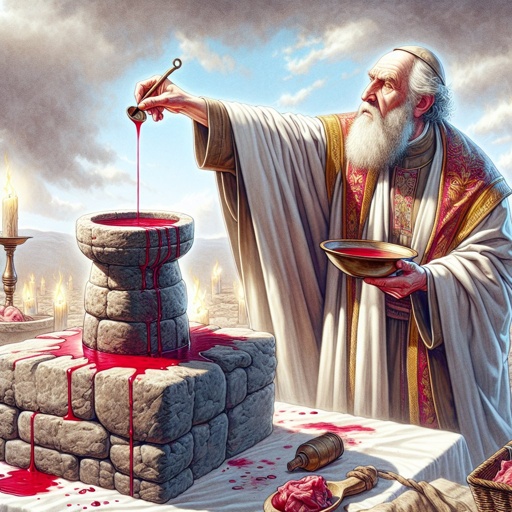
Leviticus 4:34 - "And the priest shall take of the blood of the sin offering with his finger, and put it upon the horns of the altar of burnt offering, and shall pour out all the blood thereof at the bottom of the altar:"
"And the priest shall take of the blood of the sin offering with his finger, and put it upon the horns of the altar of burnt offering, and shall pour out all the blood thereof at the bottom of the altar:" - Leviticus 4:34

Leviticus 25:34 - "But the field of the suburbs of their cities may not be sold; for it is their perpetual possession."

Leviticus 27:34 - "These are the commandments, which the LORD commanded Moses for the children of Israel in mount Sinai."

Leviticus 8:34 - "As he hath done this day, so the LORD hath commanded to do, to make an atonement for you."

Psalm 34:4

Psalm 34:4

Psalm 34:4

Psalm 34:4

Psalm 34:4

Psalm 34:4

Psalm 34:4

Psalm 34:4

Psalm 34:4

Psalm 34:4

Psalm 34:4

Psalm 34:4

Psalm 34:4

Psalm 34:4

Psalm 34:4

Psalm 34:4

Psalm 34:4

Psalm 34:4

Psalm 34:4

Psalm 34:4

Psalm 34:4

Psalm 34:4

Psalm 34:4

Psalm 34:4

Psalm 34:4