The Integrity of Vows: Understanding Leviticus 27:10
"He shall not alter it, nor change it, a good for a bad, or a bad for a good: and if he shall at all change beast for beast, then it and the exchange thereof shall be holy." - Leviticus 27:10
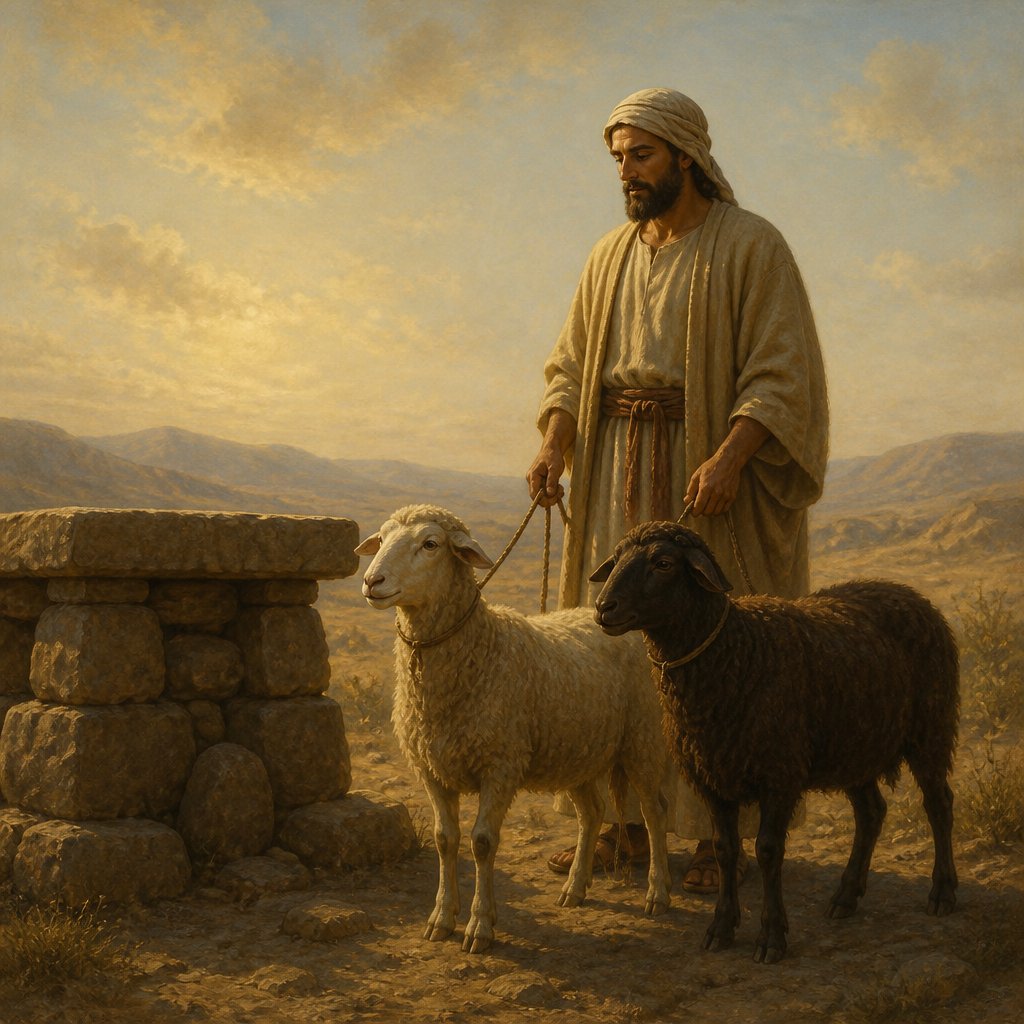
Leviticus 27:10 states, "He shall not alter it, nor change it, a good for a bad, or a bad for a good: and if he shall at all change beast for beast, then it and the exchange thereof shall be holy." This verse, rooted in the context of vows and dedicated possessions, prompts us to consider the weight of our commitments and the integrity of our relationships with God and one another.
In the Old Testament, the context surrounding Leviticus 27 involves God instructing the Israelites on the importance of dedication to Him. Individuals had the opportunity to dedicate their lives, possessions, and livestock to the Lord, often as an expression of gratitude or a fulfillment of a vow. This dedication was not merely a token offering but a serious commitment reflecting one's faith and ethical conduct. The passage warns against the temptation to alter one’s commitment—whether by downgrading a good offering to a lesser one or mistakenly swapping that which is holy for that which is not.
This teaching has profound implications for us today. Let’s break down its significance with specific focus on three aspects: the sanctity of our promises, the inherent value of our gifts, and the holiness of our exchanges with God.
### The Sanctity of Our Promises
When we make promises or commitments, especially those directed to God, we must treat them with gravity. The verse emphasizes that one must not "alter" or change their vow indiscriminately. This reflects a deep-seated principle in Scripture—the need for faithfulness and reliability. In a world where commitments are often rendered meaningless, God calls us to integrity. For instance, when we dedicate our time, resources, or talents to God, altering that commitment because of convenience or procrastination could indicate a lack of reverence for God and what He has entrusted us with.
Jesus echoes this in Matthew 5:37, saying, "But let your communications be, Yea, yea; Nay, nay: for whatsoever is more than these cometh of evil." Thus, as we reflect on our commitments, we must ask: are we honoring our word? Are we giving our all, or are we offering God our leftovers?
### The Inherent Value of Our Gifts
The latter part of Leviticus 27:10 mentions that exchanges made in appropriate contexts—that is, a swap of an equal offering—shall be considered holy. The value of what we offer to God matters. Good intentions are valid, but our physical acts (such as tithing, serving, and participating in church activities) need to align. Here we learn that both the quality of our offerings and our intent behind them are vital: they must demonstrate our love and reverence for God.
In our modern context, this encourages us to examine the offerings we present to God. Are they from the best of our abilities and resources? When served with a genuine spirit, what we offer is also a reflection of our understanding of God's holiness.
### The Holiness of Our Exchanges with God
The final concept we glean from this verse is the aura of holiness surrounding all offerings and exchanges we make in divine relationships. When fleeting moments of life tempt us to trivialize our commitments to God, we can find solace in understanding that everything we offer is sacred. Our labor in worship, our gifts in service, and even our sacrifices carry weighty significance as they not only speak of our devotion but reinforce the very fabric of our relationship with God.
In conclusion, Leviticus 27:10 calls us to a deeper awareness of the promises we make. As we navigate through our spiritual journeys, let us guard our integrity in honoring our commitments, recognizing that what we offer to God is indeed holy. Let it be our aim that we present ourselves, our gifts, and our vows back to the Lord with unwavering devotion, acknowledging His worthiness.
As you reflect this week, let us pray for strength to remain faithful, for wisdom in our exchanges, and for hearts that joyfully offer our best to the Lord. God desires our whole hearts; let us not settle for the good when He calls us to the best.
Want to reflect more on Leviticus 27:10?
Continue your spiritual journey with Bible Chat — an AI-powered tool for exploring God's Word through conversation. Ask questions, discover connections, and deepen your understanding.
Get Our Apps


Leviticus 27:10 Artwork

Leviticus 27:10 - "He shall not alter it, nor change it, a good for a bad, or a bad for a good: and if he shall at all change beast for beast, then it and the exchange thereof shall be holy."
"He shall not alter it, nor change it, a good for a bad, or a bad for a good: and if he shall at all change beast for beast, then it and the exchange thereof shall be holy." - Leviticus 27:10

Leviticus 27

Leviticus 27

Leviticus 27

Leviticus 27:1 - "And the LORD spake unto Moses, saying,"

Leviticus 27:4 - "And if it be a female, then thy estimation shall be thirty shekels."

Leviticus 27:27 - "And if it be of an unclean beast, then he shall redeem it according to thine estimation, and shall add a fifth part of it thereto: or if it be not redeemed, then it shall be sold according to thy estimation."

Leviticus 26:27 - "And if ye will not for all this hearken unto me, but walk contrary unto me;"

Leviticus 27:34 - "These are the commandments, which the LORD commanded Moses for the children of Israel in mount Sinai."

Leviticus 27:25 - "And all thy estimations shall be according to the shekel of the sanctuary: twenty gerahs shall be the shekel."

Leviticus 10:10 - "And that ye may put difference between holy and unholy, and between unclean and clean;"

leviticus 16:7-10

Leviticus 27:13 - "But if he will at all redeem it, then he shall add a fifth part thereof unto thy estimation."

Leviticus 27:30 - "And all the tithe of the land, whether of the seed of the land, or of the fruit of the tree, is the LORD'S: it is holy unto the LORD."

Leviticus 27:17 - "If he sanctify his field from the year of jubile, according to thy estimation it shall stand."

Leviticus 18:27 - "(For all these abominations have the men of the land done, which were before you, and the land is defiled;)"

"And the LORD spake unto Moses, saying," - Leviticus 27:1

Leviticus 27:31 - "And if a man will at all redeem ought of his tithes, he shall add thereto the fifth part thereof."

Leviticus 27:12 - "And the priest shall value it, whether it be good or bad: as thou valuest it, who art the priest, so shall it be."

Leviticus 27:20 - "And if he will not redeem the field, or if he have sold the field to another man, it shall not be redeemed any more."

Leviticus 19:27 - "Ye shall not round the corners of your heads, neither shalt thou mar the corners of thy beard."

Leviticus 27:22 - "And if a man sanctify unto the LORD a field which he hath bought, which is not of the fields of his possession;"

Leviticus 10:20 - "And when Moses heard that, he was content."
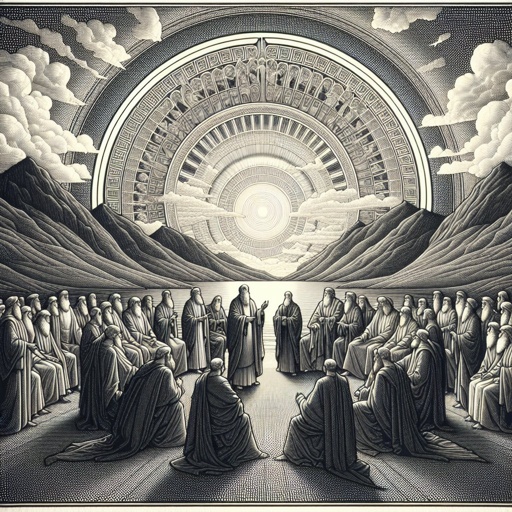
Leviticus 10:8 - "¶ And the LORD spake unto Aaron, saying,"

Luke 10:27

Leviticus 27:32 - "And concerning the tithe of the herd, or of the flock, even of whatsoever passeth under the rod, the tenth shall be holy unto the LORD."

Leviticus 27:26 - "¶ Only the firstling of the beasts, which should be the LORD'S firstling, no man shall sanctify it; whether it be ox, or sheep: it is the LORD'S."

Leviticus 27:7 - "And if it be from sixty years old and above; if it be a male, then thy estimation shall be fifteen shekels, and for the female ten shekels."
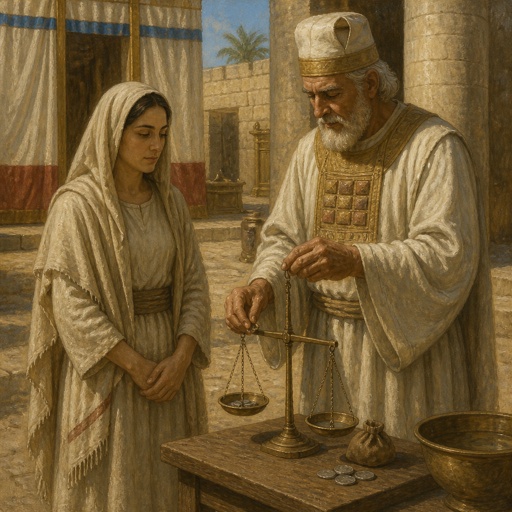
"And if it be a female, then thy estimation shall be thirty shekels." - Leviticus 27:4