Offering from the Heart: A Reflection on Leviticus 22:18
"Speak unto Aaron, and to his sons, and unto all the children of Israel, and say unto them, Whatsoever he be of the house of Israel, or of the strangers in Israel, that will offer his oblation for all his vows, and for all his freewill offerings, which they will offer unto the LORD for a burnt offering;" - Leviticus 22:18
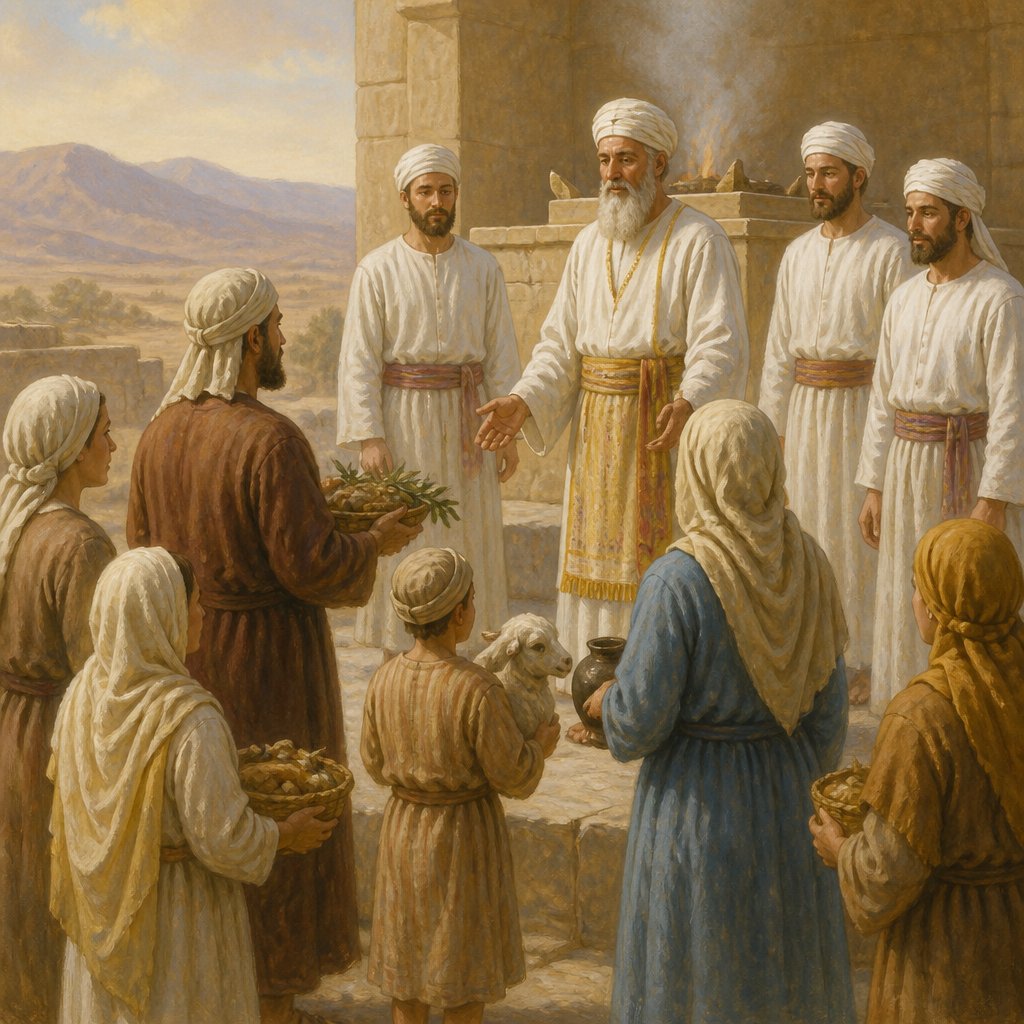
In Leviticus 22:18, the Lord commands the Israelites, saying, "Speak unto Aaron, and to his sons, and unto all the children of Israel, and say unto them, Whatsoever he be of the house of Israel, or of the strangers in Israel, that will offer his oblation for all his vows, and for all his freewill offerings, which they will offer unto the LORD for a burnt offering." This verse opens a profound conversation about the nature of offerings and obligations in our relationship with God.
At first glance, Leviticus presents a system of meticulous regulations, rituals, and sacrifice that can seem distant or irrelevant to modern believers. However, understanding the heart behind these regulations is vital. God is not simply interested in the act of offering itself but rather in the intention of the heart that brings the offering. The phrase "Whatsoever he be" illustrates that God’s grace extends beyond merely the insiders of the covenant community to the strangers as well. This inclusivity of worship reflects God's universal call to all people, inviting them to be part of His community.
In the context of the ancient Israelites, offerings served multiple purposes: they were expressions of gratitude, acknowledgments of divine authority, and requests for atonement. When one brought an oblation, it was not just a religious chore; it was a personal response to God's goodness. Similarly, our offerings today—whether they be of our time, treasure, or talents—should emerge not from obligation but from an overflow of gratitude and love for God.
Paul echoes this sentiment in the New Testament when he urges believers to offer themselves as living sacrifices, holy and acceptable to God (Romans 12:1). Here we find a beautiful continuity; while the modalities of worship have changed, the underlying principle remains the same: God seeks our hearts. Our sacrifices today are not confined to the altar but rather manifest in how we live out our faith in daily life.
The phrase "for all his vows" indicates a commitment to follow through with promises made before God. This speaks to the integrity that must inherently accompany our worship. In a world filled with distractions, it can be easy to make vows flippantly and then neglect their fulfillment. Yet, God emphasizes the importance of sincerity and commitment. Each time we step into worship, whether corporately or in solitude, we are called to reflect on what we owe God and to ensure that our actions align with the convictions we carry.
Moreover, God speaks to the "freewill offerings"—those given cheerfully and willingly. These sacrifices symbolize a heart found in joyful surrender. How often do we approach our routines and responsibilities without joy? Whether it is our service in the church, our involvement in the community, or our relationships, we are reminded to engage wholeheartedly. When we offer freely, we convey an understanding of the sacrificial love that Christ demonstrated on the cross, giving Himself out of pure love.
As we meditate on this verse, we should ask ourselves: What are the oblations I am offering to God? Are they reflective of my heartfelt devotion, or have I slipped into ritualistic obligation? As part of our call, let us strive to cultivate a heart that delights in giving, recognizes commitments, and celebrates the essence of worship as relational and revelatory.
The Lord's invitation here in Leviticus speaks not just to the Israelites, but to us as His people today. Whether we feel like 'insiders' or 'strangers' in our walk with Him, we are welcomed to present our offerings, not out of mere duty, but driven by the deep love and gratitude we have for the God who first loved us. Let every act of worship be infused with an understanding that we are part of a larger narrative—a narrative that invites all into the transformative power of God’s grace.
Want to reflect more on Leviticus 22:18?
Continue your spiritual journey with Bible Chat — an AI-powered tool for exploring God's Word through conversation. Ask questions, discover connections, and deepen your understanding.
Get Our Apps


Leviticus 22:18 Artwork

Leviticus 22:18 - "Speak unto Aaron, and to his sons, and unto all the children of Israel, and say unto them, Whatsoever he be of the house of Israel, or of the strangers in Israel, that will offer his oblation for all his vows, and for all his freewill offerings, which they will offer unto the LORD for a burnt offering;"
"Speak unto Aaron, and to his sons, and unto all the children of Israel, and say unto them, Whatsoever he be of the house of Israel, or of the strangers in Israel, that will offer his oblation for all his vows, and for all his freewill offerings, which they will offer unto the LORD for a burnt offering;" - Leviticus 22:18

Leviticus 18:22 - "Thou shalt not lie with mankind, as with womankind: it is abomination."

"Thou shalt not lie with mankind, as with womankind: it is abomination." - Leviticus 18:22
Leviticus 11:22

Leviticus 23:15-22

Leviticus 23:17-22

Leviticus 22:17 - "¶ And the LORD spake unto Moses, saying,"
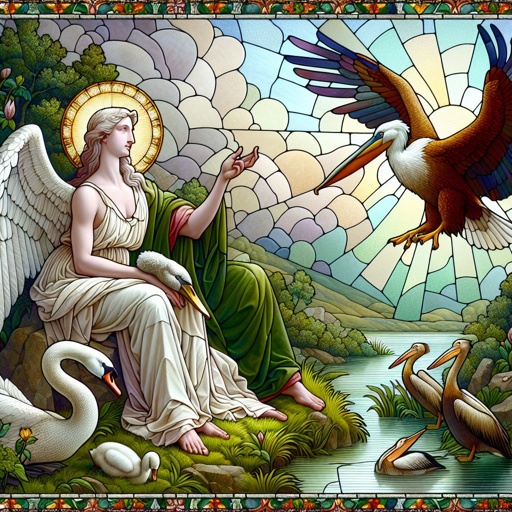
Leviticus 11:18 - "And the swan, and the pelican, and the gier eagle,"

Leviticus 7:22 - "¶ And the LORD spake unto Moses, saying,"

Leviticus 22:1 - "And the LORD spake unto Moses, saying,"

Leviticus 22:26 - "¶ And the LORD spake unto Moses, saying,"

Leviticus 18:1 - "And the LORD spake unto Moses, saying,"

Leviticus 20:22-26 simple picture

Picture to summarize Leviticus 20:22-26

Leviticus 18:18 - "Neither shalt thou take a wife to her sister, to vex her, to uncover her nakedness, beside the other in her life time."

Leviticus 13:18 - "¶ The flesh also, in which, even in the skin thereof, was a boil, and is healed,"

Leviticus 22:20 - "But whatsoever hath a blemish, that shall ye not offer: for it shall not be acceptable for you."

Leviticus 24:18 - "And he that killeth a beast shall make it good; beast for beast."

Genesis 22-18

Psalm 22:18

Mathew 18:22

Psalm 22:18

Leviticus 13:22 - "And if it spread much abroad in the skin, then the priest shall pronounce him unclean: it is a plague."

Leviticus 21:22 - "He shall eat the bread of his God, both of the most holy, and of the holy."

Genesis 18-22

Revelation 22:18

Psalm 22:18

Psalm 22:18

Leviticus 22:33 - "That brought you out of the land of Egypt, to be your God: I am the LORD."