Feasting in the Presence of Holiness
"He shall eat the bread of his God, both of the most holy, and of the holy." - Leviticus 21:22
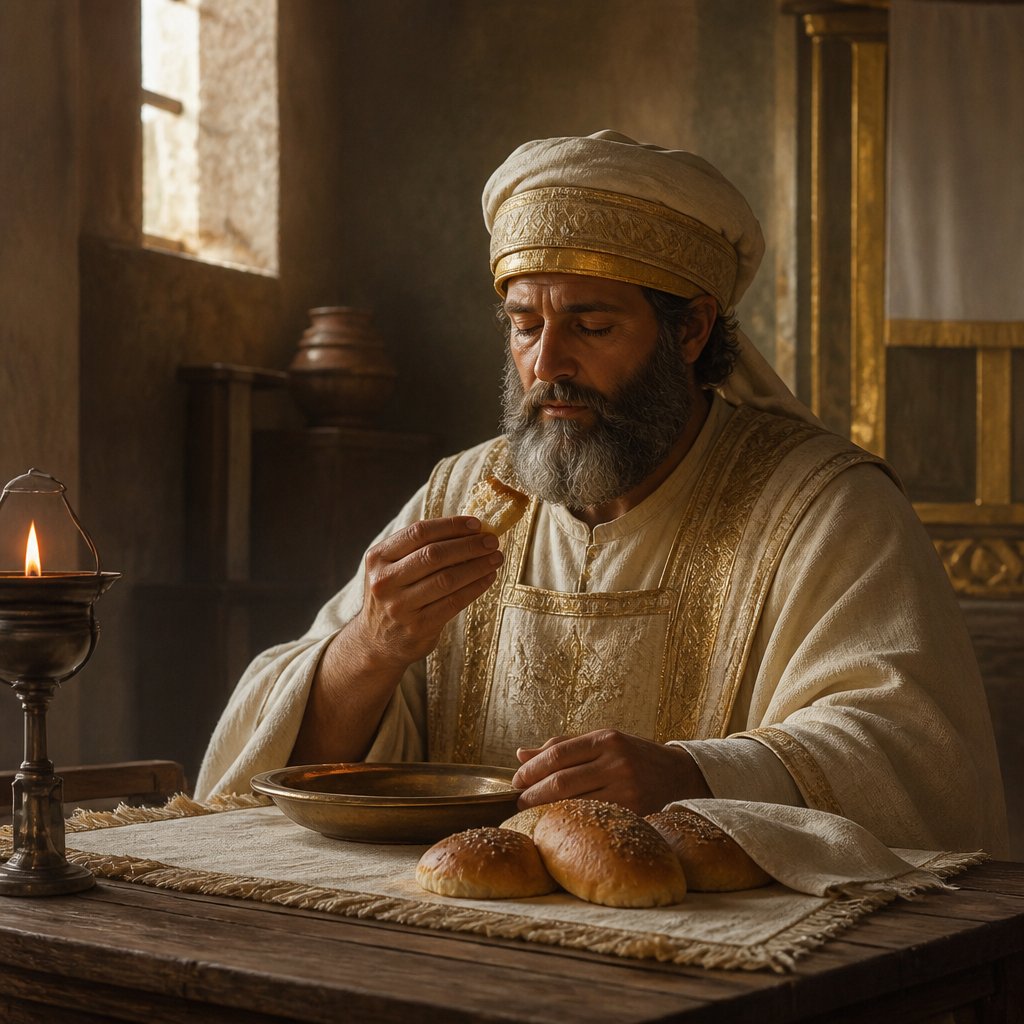
As we delve into the rich tapestry of Leviticus 21:22, we encounter a divine principle rooted in the heart of God's intention for His people: "He shall eat the bread of his God, both of the most holy, and of the holy." This scripture, while addressing the life of the priests within Israel, unveils a broader spiritual truth that transcends its original context and speaks to our relationship with our Creator today.
In the Old Testament, ceremonial laws were crucial for the Levites, those ordained as priests to mediate between God and the people. The bread mentioned here refers to the Divine provisions made through the offerings and sacrifices laid upon the altar, particularly the bread of Presence, which symbolized the fellowship one could have with God. This bread was a tangible reminder that God desires communion with His creation and invites us into His sacred space.
In studying this verse, we must ask: what does it mean to "eat the bread of his God, both of the most holy, and of the holy?" The phrase "most holy" indicates those offerings that were set apart for the immediate presence of God in the holy of holies, while the "holy" pertains to offerings that, though still sacred, were accessible to a wider community. This hierarchy reveals God’s desire to maintain purity, holiness, and reverence in our approach to Him.
Yet beyond the ceremonial aspect, we can extrapolate a deeper understanding about nourishment and sustenance. As believers, we often speak about the spiritual food that nourishes our souls, but it is critical to recognize the nature of this spiritual bread. It is not merely about participating in religious rituals; it is about engaging in a transformative relationship with God. Jesus referenced this notion when He boldly declared, “I am the bread of life” (John 6:35). Just as priests subsisted on the bread offered in the temple, we thrive by consuming Christ — the source of our spiritual vitality.
In modern times, it's easy to drift from this principle, relying instead on the 'bread' of the world: material wealth, status, and fleeting pleasures. However, these ultimately leave our souls longing for true fulfillment. In contrast, eating the bread of our God signifies a commitment to divine sustenance — partaking in His Word, seeking His presence through prayer, and immersing ourselves in the richness of worship. It’s an acknowledgment that our spiritual lives thrive only when they are rooted in the holiness and love of God.
Moreover, understanding the nature of God’s holiness should compel us to approach Him with reverence. Holiness is not simply a standard; it's the essence of who God is. To eat the bread of the most holy indicates that we are invited to interact with His purity, grace, and transformational power. This invitation doesn’t stem from our own merit, but solely from His desire to bring us close, enabling us to experience His love and truth in profound ways. In this communion, our lives are shaped, renewed, and restored to reflect His image.
So, what does this mean for our daily lives? It beckons us to cultivate a deeper hunger for God's presence. Let us be reminded that each time we sit down with the Scriptures or engage in prayer, we enter into fellowship with the Almighty — we are eating the very bread that sustains our spirits. We are not only recipients of His holy nourishment, but also participants in the divine calling to share this bread with others around us.
In this journey of faith, may we savor the bread of life and strive to share it with others. As we do so, let us always remember that it is only through grace that we are allowed to partake in this holy feast, reflecting the sacred communion that God offers every believer. Let us pray for a deeper hunger for His Word and a willingness to share the abundance of His table with a world that so desperately seeks true nourishment.
Want to reflect more on Leviticus 21:22?
Continue your spiritual journey with Bible Chat — an AI-powered tool for exploring God's Word through conversation. Ask questions, discover connections, and deepen your understanding.
Get Our Apps


Leviticus 21:22 Artwork

Leviticus 21:22 - "He shall eat the bread of his God, both of the most holy, and of the holy."
"He shall eat the bread of his God, both of the most holy, and of the holy." - Leviticus 21:22

Leviticus 22:21 - "And whosoever offereth a sacrifice of peace offerings unto the LORD to accomplish his vow, or a freewill offering in beeves or sheep, it shall be perfect to be accepted; there shall be no blemish therein."
Leviticus 11:22

Leviticus 23:21

Leviticus 23:21

Leviticus 23:21

Leviticus 23:21

Leviticus 23:21

Leviticus 23:21

Leviticus 21:19 - "Or a man that is brokenfooted, or brokenhanded,"

Leviticus 23:15-22

Leviticus 23:17-22

Leviticus 22:17 - "¶ And the LORD spake unto Moses, saying,"

Leviticus 7:22 - "¶ And the LORD spake unto Moses, saying,"

Leviticus 22:1 - "And the LORD spake unto Moses, saying,"

Leviticus 22:26 - "¶ And the LORD spake unto Moses, saying,"

Leviticus 21:16 - "¶ And the LORD spake unto Moses, saying,"

Leviticus 18:22 - "Thou shalt not lie with mankind, as with womankind: it is abomination."

Leviticus 21:13 - "And he shall take a wife in her virginity."

Matthew 9:21-22

Matthew 9:21-22

Matthew 9:21-22

Matthew 9:21-22

Matthew 9:21-22

Leviticus 20:22-26 simple picture

Picture to summarize Leviticus 20:22-26

"Or a man that is brokenfooted, or brokenhanded," - Leviticus 21:19

Genesis 21:22

Genesis 22-21