Holiness in the Midst of Grief: A Call to Sacred Living
"Neither shall he go in to any dead body, nor defile himself for his father, or for his mother;" - Leviticus 21:11
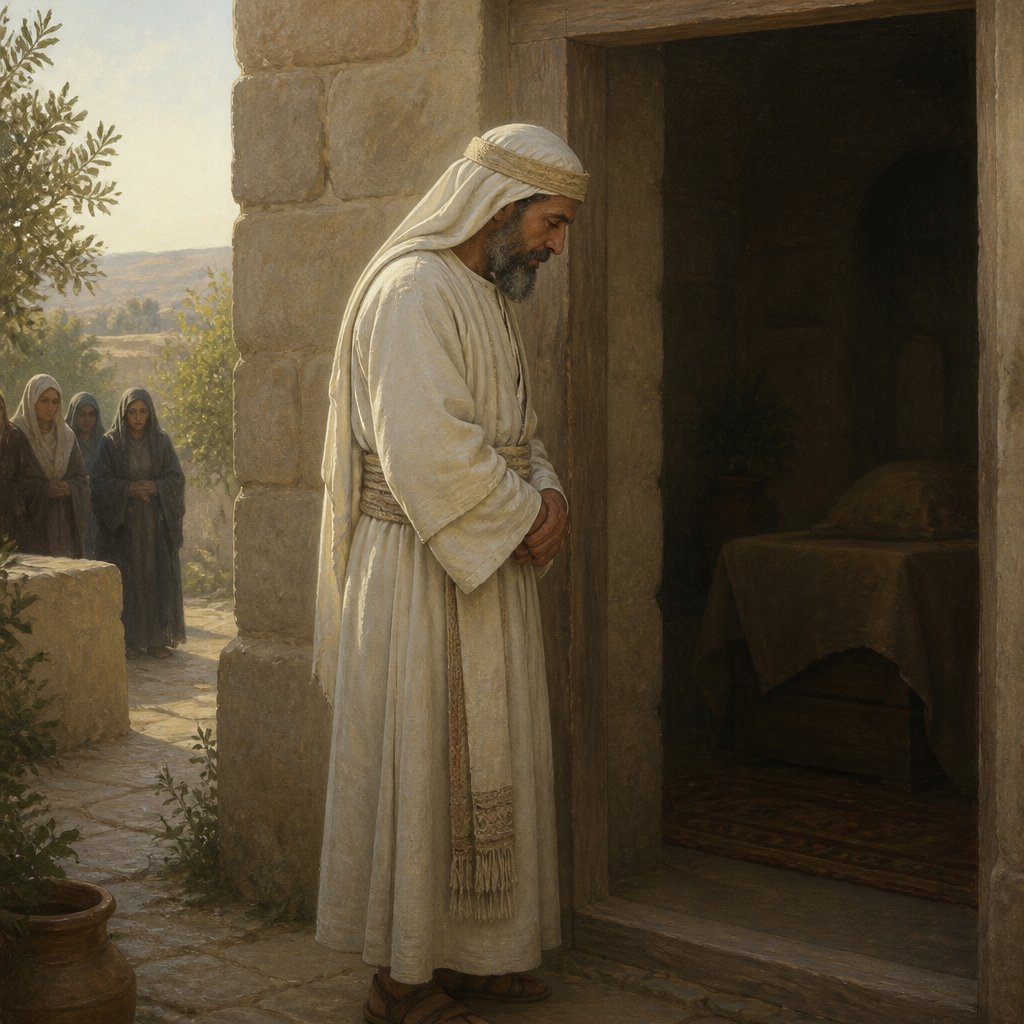
Leviticus 21:11 from the King James Version states, "Neither shall he go in to any dead body, nor defile himself for his father, or for his mother." This commandment from the Mosaic Law speaks to the sacredness of the priestly role and the high calling of holiness that God imparts upon His servants. To understand the depth of this passage, we must explore the cultural context of Old Testament Israel, the significance of priesthood, and the broader implications for our personal lives today.
In ancient Israel, priests held a distinct position in society—not only as mediators between God and the people but also as exemplars of holiness. Their lives were to reflect the purity required of God, setting them apart for sacred duties. The prohibitions regarding contact with the dead highlight a foundational principle of Jewish law: being ceremonially clean was essential for those who served in the presence of the Almighty. To approach God, one needed to be pure, unmarred by the inevitable decay of sin and mortality—this is intrinsically linked to the understanding of holiness.
The instruction "Neither shall he go in to any dead body" implies the proximity to death itself, which embodies sin and the fallen state of humanity. The verse further clarifies that even familial ties—our bonds with parents—should not compromise the priest's commitment to sanctity. This can be a hard pill to swallow in our culture today, which often blurs the lines between duty and personal attachment, especially during moments of sorrow and loss. Love for our parents, indeed, pulls at our hearts, yet the call of duty to God’s holiness is paramount.
From a spiritual perspective, this verse teaches us that handling death and personal grief is not just a physical reality but also a spiritual challenge. While our culture often encourages us to grieve authentically and deeply, the Scripture reminds us that our grief must not lead us away from God’s designs or distract us from our commitment to Him. It invites us to consider how we can process emotional pain without losing sight of who we are called to be in Christ.
In 1 Peter 2:9, we are reminded, "But ye are a chosen generation, a royal priesthood, an holy nation, a peculiar people; that ye should shew forth the praises of him who hath called you out of darkness into his marvelous light." As believers in Jesus Christ, we are called into a priestly role; our lives are meant to reflect God’s glory and holiness. Like the priests of old, we face the challenge of remaining committed to God's standards, even when it requires personal sacrifice.
This should cause us to ponder questions of our own allegiance: are we living such sacred lives that we are conscious of how events and relationships might draw us away from our devotion to Christ? Do we allow ourselves to become entangled in grief to the point where it overshadows our relationship with God? We must acknowledge our emotional responses to loss; however, while we navigate these difficult waters, we must remember to keep our eyes on the holiness that God has called us to embody.
Ultimately, Leviticus 21:11 teaches that holiness transcends even our most cherished human connections in service to God. As we go through our lives, may we strive to honor our calling as a royal priesthood, not allowing the distractions of this world—be it grief, relationships, or personal desires—to dilute the sanctity of our commitment to the Lord. Let us live as vessels marked by holiness, shining brightly in a world that desperately needs the hope and light of Christ.
Want to reflect more on Leviticus 21:11?
Continue your spiritual journey with Bible Chat — an AI-powered tool for exploring God's Word through conversation. Ask questions, discover connections, and deepen your understanding.
Get Our Apps


Leviticus 21:11 Artwork

Leviticus 21:11 - "Neither shall he go in to any dead body, nor defile himself for his father, or for his mother;"
"Neither shall he go in to any dead body, nor defile himself for his father, or for his mother;" - Leviticus 21:11

Leviticus 11:21 - "Yet these may ye eat of every flying creeping thing that goeth upon all four, which have legs above their feet, to leap withal upon the earth;"

Leviticus 23:21

Leviticus 23:21

Leviticus 23:21

Leviticus 23:21

Leviticus 23:21

Leviticus 23:21

Leviticus 21:19 - "Or a man that is brokenfooted, or brokenhanded,"
Leviticus 11:22

Leviticus 21:16 - "¶ And the LORD spake unto Moses, saying,"

Leviticus 21:13 - "And he shall take a wife in her virginity."
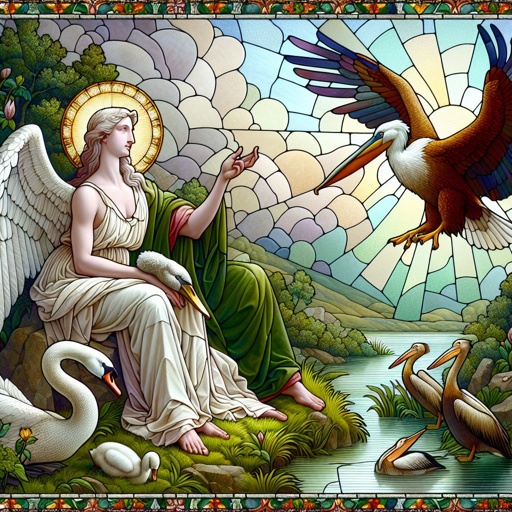
Leviticus 11:18 - "And the swan, and the pelican, and the gier eagle,"

"Or a man that is brokenfooted, or brokenhanded," - Leviticus 21:19

Leviticus 11:17 - "And the little owl, and the cormorant, and the great owl,"

Leviticus 11:14 - "And the vulture, and the kite after his kind;"

Leviticus 11:15 - "Every raven after his kind;"

Leviticus 11:30 - "And the ferret, and the chameleon, and the lizard, and the snail, and the mole."

Leviticus 21:22 - "He shall eat the bread of his God, both of the most holy, and of the holy."

Leviticus 21:24 - "And Moses told it unto Aaron, and to his sons, and unto all the children of Israel."

Habakkuk 2:1-3

Luke 2:1-20

Leviticus 11:19 - "And the stork, the heron after her kind, and the lapwing, and the bat."

Leviticus 9:21 - "And the breasts and the right shoulder Aaron waved for a wave offering before the LORD; as Moses commanded."

Leviticus 9:11 - "And the flesh and the hide he burnt with fire without the camp."

1 Timothy 2:1-7

Leviticus 21:4 - "But he shall not defile himself, being a chief man among his people, to profane himself."

Leviticus 21:20 - "Or crookbackt, or a dwarf, or that hath a blemish in his eye, or be scurvy, or scabbed, or hath his stones broken;"

1 Timothy 2:1-7