The Aroma of Obedience: A Deep Dive into Leviticus 1:13
"But he shall wash the inwards and the legs with water: and the priest shall bring it all, and burn it upon the altar: it is a burnt sacrifice, an offering made by fire, of a sweet savour unto the LORD." - Leviticus 1:13
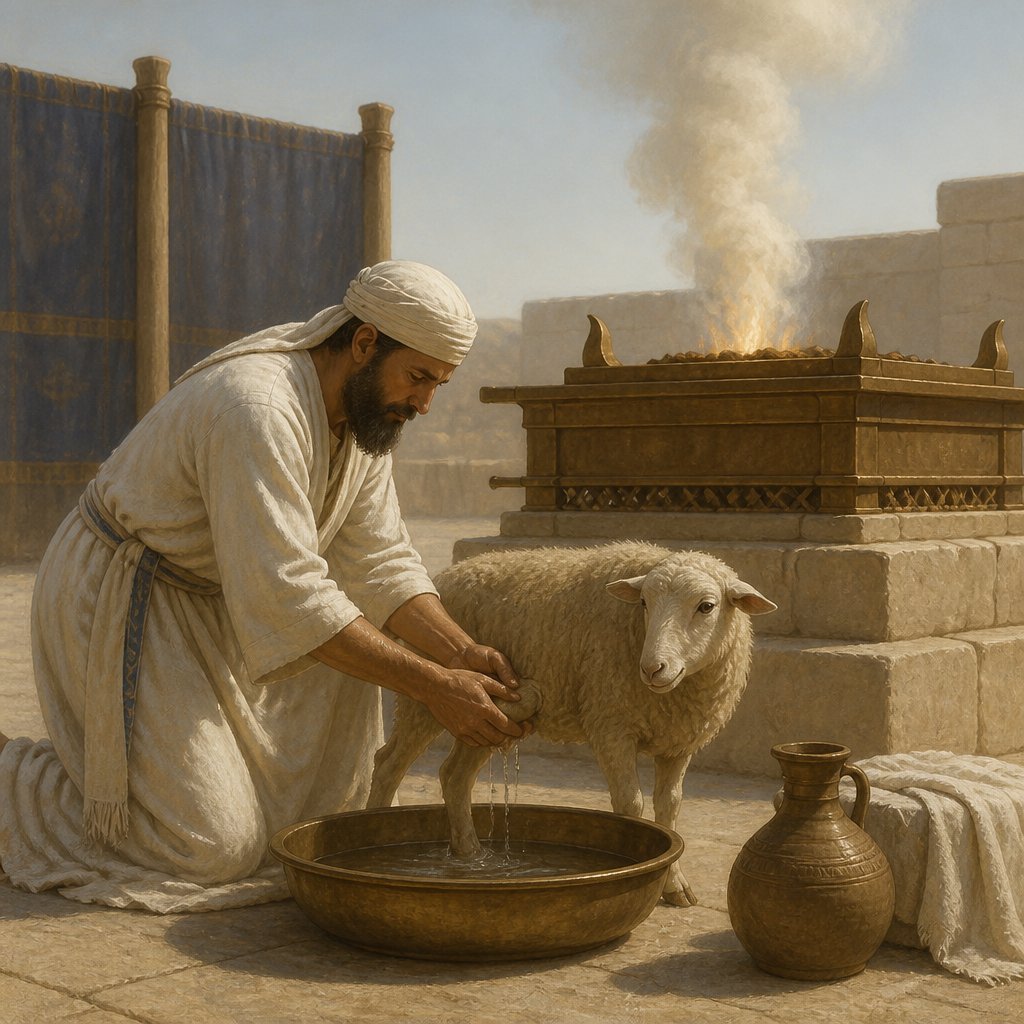
The Old Testament often presents us with practices and rituals that may seem archaic and irrelevant to our modern lives. However, every detail within the biblical texts serves a purpose and speaks to the character of God and His relationship with humanity. Leviticus 1:13 provides us with profound insights into the nature of sacrifice, the sanctity of worship, and the essence of obedience to God’s commandments. The verse states: "But he shall wash the inwards and the legs with water: and the priest shall bring it all, and burn it upon the altar: it is a burnt sacrifice, an offering made by fire, of a sweet savour unto the LORD."
To truly appreciate this Scripture, we must first understand the context within which it was written. The book of Leviticus is part of the Torah and outlines the laws and rituals that the Israelites were to follow after their deliverance from Egyptian bondage. It serves as a guide for maintaining holiness within the community, emphasizing that God desires not just sacrifices but offerings that come from a heart of obedience and reverence.
In the mentioned verse, we see the procedure for offering a burnt sacrifice. The act of washing the inwards and legs with water symbolizes purification and preparation. This washing is crucial because it emphasizes that the sacrifice must be clean and acceptable before God. Water in Scripture often symbolizes cleansing and renewal. Just as the animal must be washed, we too must undergo a spiritual cleansing. Jesus calls us to a life of purification (John 15:3) through His Word, which sanctifies us and prepares us for acceptable worship.
The role of the priest is also critical in this passage. The priest was the intermediary between God and the people, and it was his duty to present the offering in a manner pleasing to God. In our context, Christ serves as our High Priest (Hebrews 4:14-16), who continually intercedes for us. He perfectly fulfills what the earthly priests could only foreshadow. The implication here is not just about the ritual of sacrifice but also about our relationship with Jesus, who makes it possible for our offerings—our prayers, our lives—to be acceptable before God. We find assurance in knowing that through Christ, we are made clean and our offerings can be a sweet savour unto the Lord.
The latter part of the verse goes on to express that the burnt sacrifice is "an offering made by fire, of a sweet savour unto the LORD." This phrase captures the heart of worship in the Old Covenant. The sweetness of the aroma represented the acceptance of the offering by God. This concept of aroma points to something deeper—a heart that is aligned with God’s will and purpose. It beckons us to consider what we bring to God in our everyday lives. Are our acts of worship, our sacrifices—be they time, resources, or service—an aroma that brings delight and joy to Him?
In our contemporary terms, we are also called to be living sacrifices (Romans 12:1), wanting our lives to reflect the glory of God in everything we do. Worship is not confined to songs sung on Sunday or prayers offered in times of need; it is the totality of our being offered back to God, cleansed by His grace and empowered by His Spirit.
As we meditate on Leviticus 1:13, let this insightful reminder rest in our hearts—God desires our whole selves, purified and pleasing. Our offering must reflect a heart that seeks to honor Him above all else. While the specifics of animal sacrifices are no longer applicable, the heart of the matter remains vital. Let us, therefore, strive to emulate the principle of this scripture, presenting ourselves before God as holy, cleansed, and ready to be a sweet aroma to the One who loves us dearly.
Want to reflect more on Leviticus 1:13?
Continue your spiritual journey with Bible Chat — an AI-powered tool for exploring God's Word through conversation. Ask questions, discover connections, and deepen your understanding.
Get Our Apps


Leviticus 1:13 Artwork

Leviticus 1:13 - "But he shall wash the inwards and the legs with water: and the priest shall bring it all, and burn it upon the altar: it is a burnt sacrifice, an offering made by fire, of a sweet savour unto the LORD."
"But he shall wash the inwards and the legs with water: and the priest shall bring it all, and burn it upon the altar: it is a burnt sacrifice, an offering made by fire, of a sweet savour unto the LORD." - Leviticus 1:13

Leviticus 13:1 - "And the LORD spake unto Moses and Aaron, saying,"

"And the LORD spake unto Moses and Aaron, saying," - Leviticus 13:1

Leviticus 1:3 - "If his offering be a burnt sacrifice of the herd, let him offer a male without blemish: he shall offer it of his own voluntary will at the door of the tabernacle of the congregation before the LORD."

Leviticus 24:13 - "And the LORD spake unto Moses, saying,"

Leviticus 21:13 - "And he shall take a wife in her virginity."

Leviticus 13:35 - "But if the scall spread much in the skin after his cleansing;"

Leviticus 13:29 - "¶ If a man or woman have a plague upon the head or the beard;"

Leviticus 13:18 - "¶ The flesh also, in which, even in the skin thereof, was a boil, and is healed,"

Leviticus 13:14 - "But when raw flesh appeareth in him, he shall be unclean."

Leviticus 13:47 - "¶ The garment also that the plague of leprosy is in, whether it be a woollen garment, or a linen garment;"

Leviticus 13:9 - "¶ When the plague of leprosy is in a man, then he shall be brought unto the priest;"

Leviticus 13:22 - "And if it spread much abroad in the skin, then the priest shall pronounce him unclean: it is a plague."

Leviticus 25:13 - "In the year of this jubile ye shall return every man unto his possession."

Leviticus 6:13 - "The fire shall ever be burning upon the altar; it shall never go out."

Leviticus 13:19 - "And in the place of the boil there be a white rising, or a bright spot, white, and somewhat reddish, and it be shewed to the priest;"

Leviticus 13:48 - "Whether it be in the warp, or woof; of linen, or of woollen; whether in a skin, or in any thing made of skin;"

Leviticus 13:50 - "And the priest shall look upon the plague, and shut up it that hath the plague seven days:"

Leviticus 13:13 - "Then the priest shall consider: and, behold, if the leprosy have covered all his flesh, he shall pronounce him clean that hath the plague: it is all turned white: he is clean."

Leviticus 27:13 - "But if he will at all redeem it, then he shall add a fifth part thereof unto thy estimation."

Leviticus 13:38 - "¶ If a man also or a woman have in the skin of their flesh bright spots, even white bright spots;"

Leviticus 13:16 - "Or if the raw flesh turn again, and be changed unto white, he shall come unto the priest;"

Leviticus 13:15 - "And the priest shall see the raw flesh, and pronounce him to be unclean: for the raw flesh is unclean: it is a leprosy."

Leviticus 13:40 - "And the man whose hair is fallen off his head, he is bald; yet is he clean."

Leviticus 13:8 - "And if the priest see that, behold, the scab spreadeth in the skin, then the priest shall pronounce him unclean: it is a leprosy."

Leviticus 18:13 - "Thou shalt not uncover the nakedness of thy mother's sister: for she is thy mother's near kinswoman."

"And the LORD spake unto Moses, saying," - Leviticus 24:13

Leviticus 13:23 - "But if the bright spot stay in his place, and spread not, it is a burning boil; and the priest shall pronounce him clean."

Leviticus 11:13 - "¶ And these are they which ye shall have in abomination among the fowls; they shall not be eaten, they are an abomination: the eagle, and the ossifrage, and the ospray,"