The Call to Humility: Embracing Our God-Given Purpose
"But the olive tree said unto them, Should I leave my fatness, wherewith by me they honour God and man, and go to be promoted over the trees?" - Judges 9:9
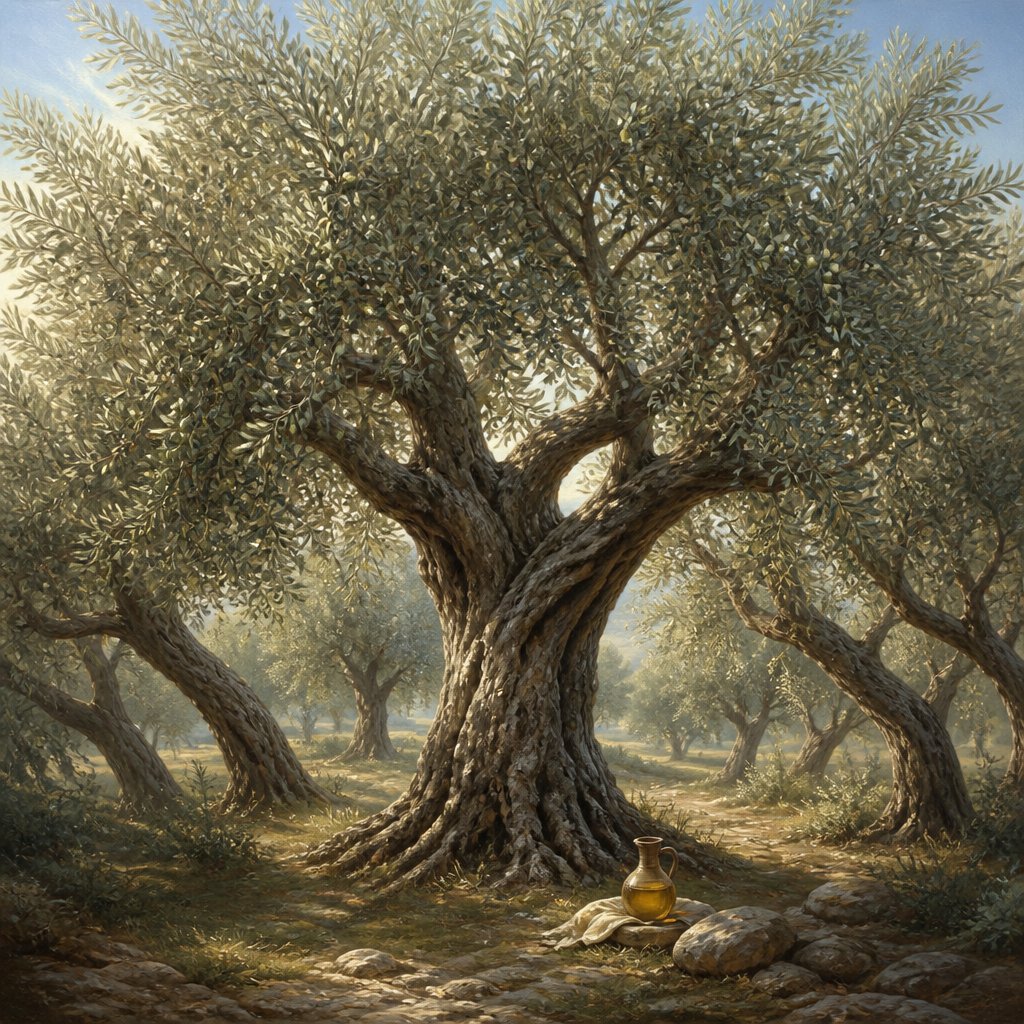
In the narrative of Judges 9, we are drawn into the vivid imagery of trees choosing a king, representing a deeper, spiritual dialogue about purpose, humility, and the weight of our choices. The verse at hand, Judges 9:9 (KJV), reads: "But the olive tree said unto them, Should I leave my fatness, wherewith by me they honour God and man, and go to be promoted over the trees?"
At first glance, this may seem like a simple fable, a whimsical tale about trees, but it offers profound lessons about our ambitions and calling in life. The olive tree, a symbol of peace and prosperity, finds itself in a position where it must choose between its inherent role and the allure of power and prestige. It is not merely the promise of a crown that speaks to the olive tree; it is a question of purpose and how it can best serve God's plan.
The olive tree begins with a bold declaration about what it has to offer: its "fatness." This fatness symbolizes nourishment and sustenance – it is the bounty through which the tree contributes to both humanity and the divine. The oil derived from olives has been revered for centuries, utilized in sacred rituals and common meals alike. In this assertion, the tree highlights an essential truth: it finds honor not in ruling over others but in fulfilling its unique assignment in God’s creation.
This poses a powerful question for all of us: What is our fatness? What gifts and contributions do we have to honor God and others? Often, in our own lives, we are tempted to step outside of our purposed paths in pursuit of visibility, recognition, or power. The olive tree's response serves as a clarion call to reconsider our priorities. Are we willing to abandon our gifts for the trappings of leadership? Or can we remain steadfast, serving faithfully in our designated roles?
This vine of humility runs deep throughout Scripture. In Matthew 23:11 (KJV) Jesus teaches, "But he that is greatest among you shall be your servant." The echo of this truth reverberates through the ages, challenging us to redefine what greatness means in the kingdom of God. It nudges us toward a posture of humility and service. Like the olive tree, we are called to contribute to the world in ways that honor God rather than seeking the accolades that often accompany leadership roles.
Additionally, the olive tree's reluctance to leave its station emphasizes that true honor comes not from power but from purpose. In pursuing our divine assignments – whether as a teacher, a parent, a friend, or a witness – we must prioritize what has everlasting significance over what may fade with time. The trees grasp the olive tree's crucial role, indicating that they recognize the value of its oil as essential to life. In the same vein, our contributions, however small they may seem, hold immense value in God’s economy.
The choice of the olive tree implores us to examine our hearts. Are we resting in our roles, producing fruit and fulfilling our purposes? Or are we weary and longing for the world's fleeting recognition? In moments of doubt or discontent, we can draw strength from the assurance that we are designed with precision and intention. We must align ourselves with God's will, trusting that our honor lies in our fatness, in the ability to serve and sustain life around us.
As we move through our daily lives, let us commit to seeking God’s guidance in our pursuits, allowing ourselves to flourish in service rather than ambition. Like the olive tree, we need not leave behind our rich contributions to chase an enticing promise. Instead, we can celebrate the beauty of our unique purposes and embrace the honor that comes from being integrated within God’s plan – a plan that honors Him and, in turn, honors us.
Want to reflect more on Judges 9:9?
Continue your spiritual journey with Bible Chat — an AI-powered tool for exploring God's Word through conversation. Ask questions, discover connections, and deepen your understanding.
Get Our Apps


Judges 9:9 Artwork

Judges 9:9 - "But the olive tree said unto them, Should I leave my fatness, wherewith by me they honour God and man, and go to be promoted over the trees?"
"But the olive tree said unto them, Should I leave my fatness, wherewith by me they honour God and man, and go to be promoted over the trees?" - Judges 9:9

Judges 9:8-15

Judges 9:50 - "¶ Then went Abimelech to Thebez, and encamped against Thebez, and took it."

Judges 9:22 - "¶ When Abimelech had reigned three years over Israel,"

Judges 15:9 - "¶ Then the Philistines went up, and pitched in Judah, and spread themselves in Lehi."

Judges 9:39 - "And Gaal went out before the men of Shechem, and fought with Abimelech."

Judges 21:9 - "For the people were numbered, and, behold, there were none of the inhabitants of Jabesh-gilead there."

Judges 9:42 - "And it came to pass on the morrow, that the people went out into the field; and they told Abimelech."

Judges 9:10 - "And the trees said to the fig tree, Come thou, and reign over us."

Judges 9:12 - "Then said the trees unto the vine, Come thou, and reign over us."

Judges 9:47 - "And it was told Abimelech, that all the men of the tower of Shechem were gathered together."

Judges 9:32 - "Now therefore up by night, thou and the people that is with thee, and lie in wait in the field:"

Judges 9:14 - "Then said all the trees unto the bramble, Come thou, and reign over us."

Judges 9:46 - "¶ And when all the men of the tower of Shechem heard that, they entered into an hold of the house of the god Berith."

Judges 9:21 - "And Jotham ran away, and fled, and went to Beer, and dwelt there, for fear of Abimelech his brother."

Psalms 98:9 - "Before the LORD; for he cometh to judge the earth: with righteousness shall he judge the world, and the people with equity."

Judges 9:30 - "¶ And when Zebul the ruler of the city heard the words of Gaal the son of Ebed, his anger was kindled."

Job 9:24 - "The earth is given into the hand of the wicked: he covereth the faces of the judges thereof; if not, where, and who is he?"

Judges 1:9 - "¶ And afterward the children of Judah went down to fight against the Canaanites, that dwelt in the mountain, and in the south, and in the valley."

Judges 9:41 - "And Abimelech dwelt at Arumah: and Zebul thrust out Gaal and his brethren, that they should not dwell in Shechem."

Judges 9:53 - "And a certain woman cast a piece of a millstone upon Abimelech's head, and all to brake his skull."

Judges 9:55 - "And when the men of Israel saw that Abimelech was dead, they departed every man unto his place."

Judges 20:9 - "But now this shall be the thing which we will do to Gibeah; we will go up by lot against it;"

Judges 9:52 - "And Abimelech came unto the tower, and fought against it, and went hard unto the door of the tower to burn it with fire."

Judges 5:9 - "My heart is toward the governors of Israel, that offered themselves willingly among the people. Bless ye the LORD."

Judges 9:23 - "Then God sent an evil spirit between Abimelech and the men of Shechem; and the men of Shechem dealt treacherously with Abimelech:"

Judges 9:17 - "(For my father fought for you, and adventured his life far, and delivered you out of the hand of Midian:"

Judges 2:9 - "And they buried him in the border of his inheritance in Timnath-heres, in the mount of Ephraim, on the north side of the hill Gaash."

Judges 9:34 - "¶ And Abimelech rose up, and all the people that were with him, by night, and they laid wait against Shechem in four companies."