The Echo of our Words: The Weight of Despised Authority
"Then said Zebul unto him, Where is now thy mouth, wherewith thou saidst, Who is Abimelech, that we should serve him? is not this the people that thou hast despised? go out, I pray now, and fight with them." - Judges 9:38
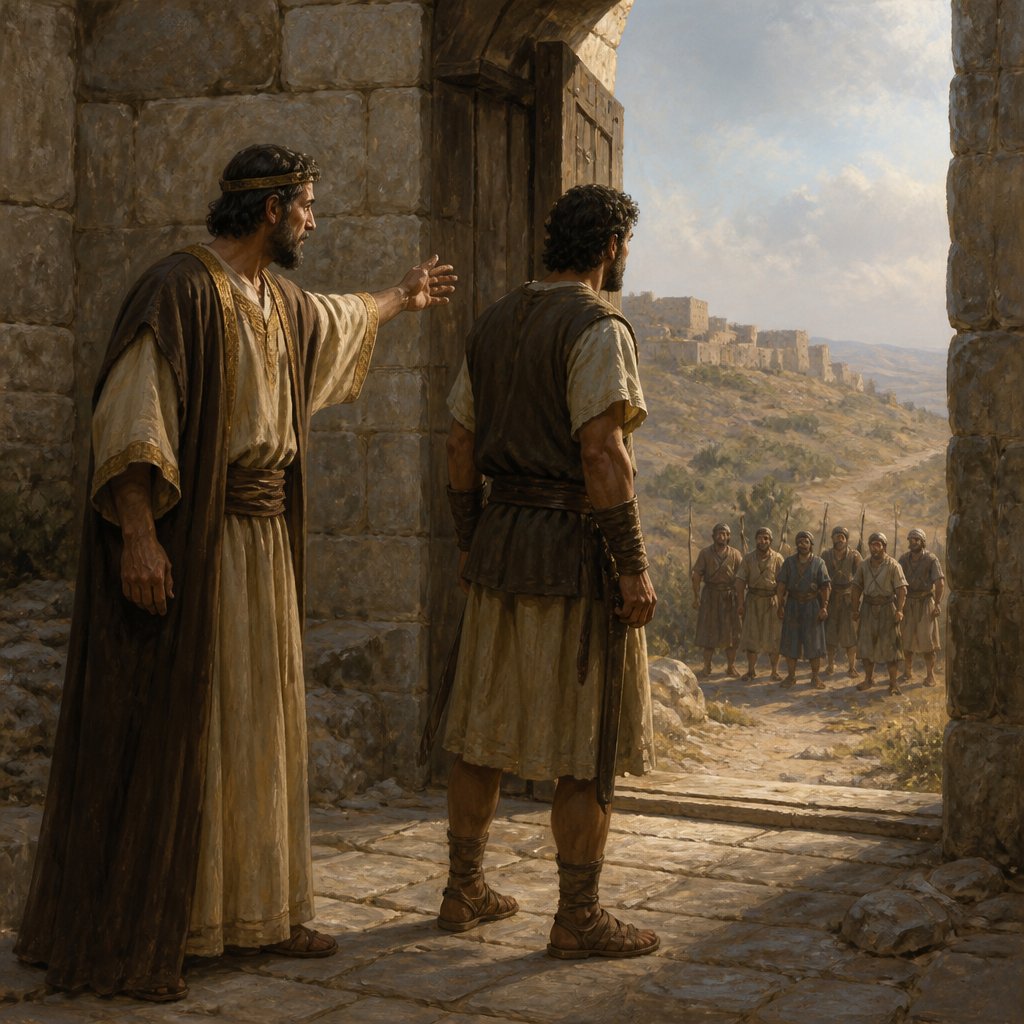
The life of Jephthah in the Book of Judges reveals a crucial theme in our spiritual journey - the intersection of our words and actions, particularly in the context of authority and leadership. In Judges 9:38, Zebul confronts Gaal, saying, "Then said Zebul unto him, Where is now thy mouth, wherewith thou saidst, Who is Abimelech, that we should serve him? is not this the people that thou hast despised? go out, I pray now, and fight with them." This moment is charged with tension as Gaal, who had previously dismissed Abimelech’s authority, must now face the consequences of those very words.
Abimelech was the son of a concubine and proclaimed king of Shechem. His rise to power was contentious and filled with manipulations, yet he had managed to rally a significant following, using charisma and shrewdness. Gaal’s brash declarations about Abimelech reveal a critical failure to respect the established order, and his words are soon met with a stark challenge. Zebul, loyal to Abimelech, serves as a voice reminding Gaal that the disdain he exhibited could not only backfire but lead to his own undoing. This encounter beckons us to reflect on the weight our words carry, especially concerning authority figures, be they in our workplaces, churches, or communities.
When Gaal mocked Abimelech’s claim and questioned, "Who is Abimelech?" he underestimated the consequences of his flippant words. Such a question may seem innocuous at first; however, it encapsulates a disdainful attitude that can often breed rebellion. Throughout scripture, we see calls to honor those in authority. Romans 13:1 states, "Let every soul be subject unto the higher powers. For there is no power but of God: the powers that be are ordained of God." In our jesting, in our criticisms, and in our dismissals, we may lose sight of this divine order and the foundation God has set in place.
The nature of Gaal’s challenge reveals a universal truth: we often forget that our disdain toward authority figures reflects our deeper issues with respect and submission. Whether Gaal harbored righteous intentions or simply spoke out of turn, his bravado highlights a common pitfall — the transient nature of bravado once scrutinized by the reality of confrontation. When Zebul urges him, "go out, I pray now, and fight with them," he signifies that Gaal must not only verbalize his disdain but must prepare to back up those words with action, bearing the full weight of their implications.
Zebul’s retort serves as a cautionary tale; it illustrates how we can become too careless with our words. In a world rife with conflict and discontent, it’s tempting to speak without consideration, desiring to appear brave or enlightened when instead we may merely be sowing discord. Indeed, Proverbs 18:21 assures us that, "Death and life are in the power of the tongue: and they that love it shall eat the fruit thereof." It suggests that our words can lead to outcomes we may not be prepared to face.
In the spiritual sense, as followers of Christ, we are called to build up rather than tear down. The very essence of the Gospel challenges us to model our speech after the one who spoke with authority and grace. The transformative power found in our Savior's example calls us to a higher standard, urging us to use our words to foster unity and understanding, rather than division and disrespect.
Today, let us choose our words carefully. As we navigate our relationships, let us remind ourselves of the authority figures in our lives, recognizing that they serve a purpose in God’s design. Rather than dismissing them lightly, let us approach these subjects with humility, reflecting on how we can uplift and engage positively. Above all, may our speech be filled with wisdom, as we echo our commitments to mutual respect and love, challenging ourselves to use our voices not to despise, but to honor and serve in accordance with God’s divine order.
Want to reflect more on Judges 9:38?
Continue your spiritual journey with Bible Chat — an AI-powered tool for exploring God's Word through conversation. Ask questions, discover connections, and deepen your understanding.
Get Our Apps


Judges 9:38 Artwork
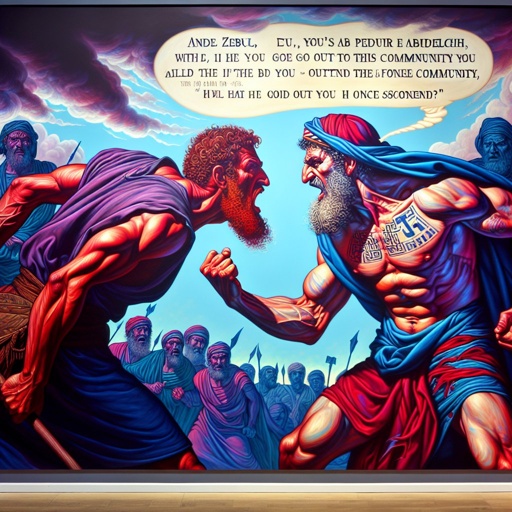
Judges 9:38 - "Then said Zebul unto him, Where is now thy mouth, wherewith thou saidst, Who is Abimelech, that we should serve him? is not this the people that thou hast despised? go out, I pray now, and fight with them."
"Then said Zebul unto him, Where is now thy mouth, wherewith thou saidst, Who is Abimelech, that we should serve him? is not this the people that thou hast despised? go out, I pray now, and fight with them." - Judges 9:38

Ezekiel 16:38 - "And I will judge thee, as women that break wedlock and shed blood are judged; and I will give thee blood in fury and jealousy."

Mark 9:38

Matthew 9:37-38

Judges 6:38 - "And it was so: for he rose up early on the morrow, and thrust the fleece together, and wringed the dew out of the fleece, a bowl full of water."

Judges 20:38 - "Now there was an appointed sign between the men of Israel and the liers in wait, that they should make a great flame with smoke rise up out of the city."

Judges 11:38 - "And he said, Go. And he sent her away for two months: and she went with her companions, and bewailed her virginity upon the mountains."

Judges 9:8-15

John 9:38 - "And he said, Lord, I believe. And he worshipped him."

Job 38:9 - "When I made the cloud the garment thereof, and thick darkness a swaddlingband for it,"

Judges 9:37-38 And Gaal spake again and said, See there come people down by the middle of the land, and another company come along by the plain of Meonenim.Then said Zebul unto him, Where is now thy mouth, wherewith thou saidst, Who is Abimelech, that we should serve him? is not this the people that thou hast despised? go out, I pray now, and fight with them.

Matthew 9:38 - "Pray ye therefore the Lord of the harvest, that he will send forth labourers into his harvest."

Psalms 38:9 - "Lord, all my desire is before thee; and my groaning is not hid from thee."

1 Chronicles 9:38 - "And Mikloth begat Shimeam. And they also dwelt with their brethren at Jerusalem, over against their brethren."

Judges 9:50 - "¶ Then went Abimelech to Thebez, and encamped against Thebez, and took it."

Isaiah 38:9 - "¶ The writing of Hezekiah king of Judah, when he had been sick, and was recovered of his sickness:"

"And I will judge thee, as women that break wedlock and shed blood are judged; and I will give thee blood in fury and jealousy." - Ezekiel 16:38

Judges 9:22 - "¶ When Abimelech had reigned three years over Israel,"

Judges 15:9 - "¶ Then the Philistines went up, and pitched in Judah, and spread themselves in Lehi."

Judges 9:39 - "And Gaal went out before the men of Shechem, and fought with Abimelech."

Nehemiah 9:38 - "And because of all this we make a sure covenant, and write it; and our princes, Levites, and priests, seal unto it."

Judges 21:9 - "For the people were numbered, and, behold, there were none of the inhabitants of Jabesh-gilead there."

Exodus 38:9 - "¶ And he made the court: on the south side southward the hangings of the court were of fine twined linen, an hundred cubits:"

Judges 9:42 - "And it came to pass on the morrow, that the people went out into the field; and they told Abimelech."

Judges 9:10 - "And the trees said to the fig tree, Come thou, and reign over us."

Judges 9:12 - "Then said the trees unto the vine, Come thou, and reign over us."

Judges 9:47 - "And it was told Abimelech, that all the men of the tower of Shechem were gathered together."

Psalms 98:9 - "Before the LORD; for he cometh to judge the earth: with righteousness shall he judge the world, and the people with equity."

Judges 9:9 - "But the olive tree said unto them, Should I leave my fatness, wherewith by me they honour God and man, and go to be promoted over the trees?"