Mighty in Our Weakness: Divine Identity Revealed
"And the angel of the LORD appeared unto him, and said unto him, The LORD is with thee, thou mighty man of valour." - Judges 6:12
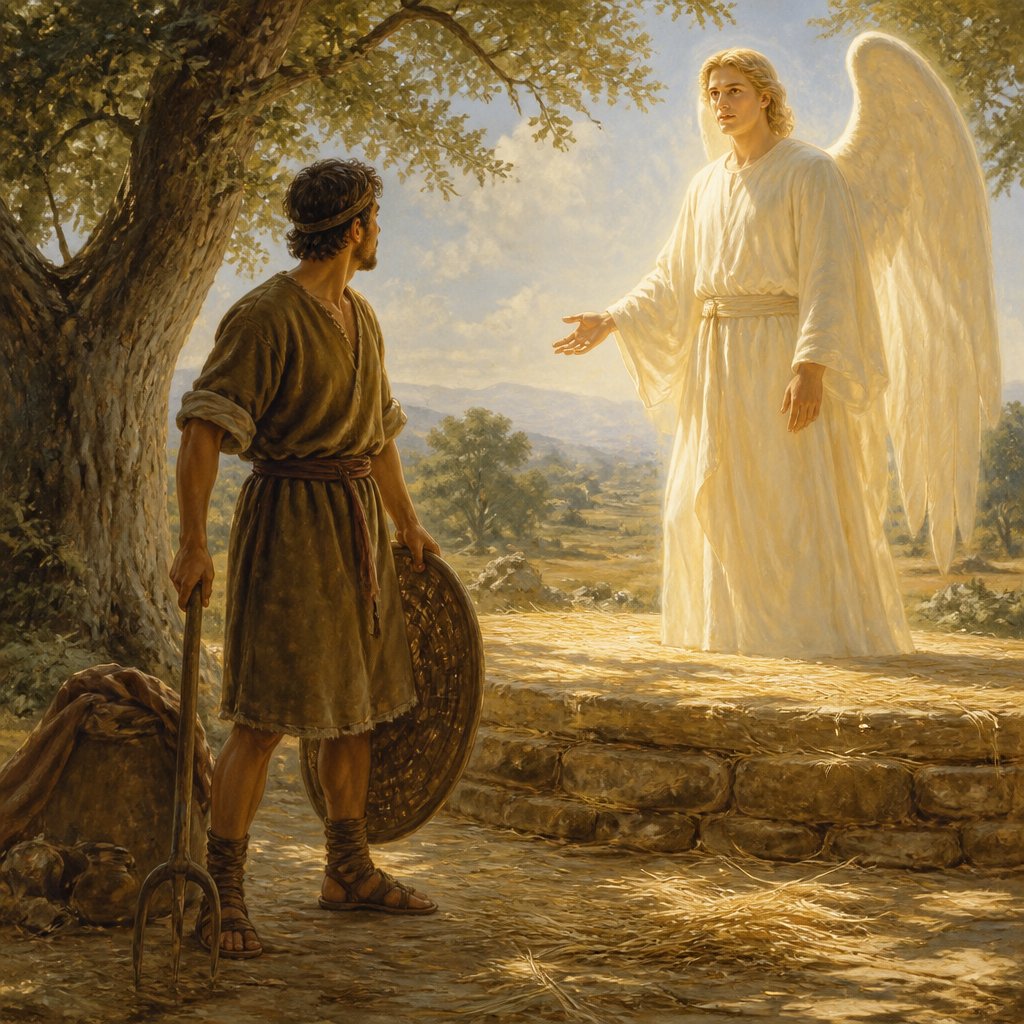
In the unfolding drama of Judges 6, we encounter a pivotal moment in the narrative of Gideon, a man chosen by God to deliver His people from oppression. The verse, "And the angel of the LORD appeared unto him, and said unto him, The LORD is with thee, thou mighty man of valour" (Judges 6:12, KJV), speaks volumes about identity, calling, and divine presence. This moment of encounter is not merely an introduction; it is God’s declaration of purpose over Gideon’s life.
Gideon finds himself in an unassuming situation, hiding from the Midianite oppressors. The backdrop is one of despair and weakness. The Israelites are suffering, and Gideon himself feels the weight of defeat both personally and as a member of God’s chosen people. How often do we find ourselves in similar places? Circumstances of hardship can lead us to low self-esteem and a loss of purpose. Like Gideon, we may hide away, grappling with our feelings of inadequacy and despair, unable to see the light of God’s promises through the shadows of our difficulties.
When the angel of the LORD visits Gideon, He addresses him as a "mighty man of valour." However, the irony lies in the fact that at this moment, Gideon does not perceive himself in such a light. He deflects this title, questioning, "How am I supposed to save Israel?" (Judges 6:15). The angel’s greeting serves to uplift and challenge Gideon with a truth that transcends his current reality; it anticipates the potential within him as declared by the Creator Himself.
In the same way, God calls out to us in our weakness, reaching beyond our self-doubt to declare our identity as He sees it. This is a profound moment of grace. Just as Gideon’s thoughts directed him to view himself through the lens of his circumstances and fears, we too often let our present struggles dictate who we are rather than embracing God’s vision for us. He sees beyond our limitations; He sees us as victors, as bearers of His grace and glory.
This invitation to recognize Gideon’s potential prompts us to ask, how does God see us? Many of us struggle with labels attached to us or feelings of unworthiness based on our past behavior or current social standing. Yet, through this scripture, we are reminded that our value and identity come from being called and chosen by God. His presence defines us, not our failures. When He says, "The LORD is with thee," He emphasizes that no matter our circumstances, we are never alone. God’s nearness provides strength and affirmation.
Additionally, God’s empowering presence acts as a catalyst for Gideon’s transformation. He does not merely receive a positive affirmation but is commissioned with a mission that seems impossible. God assures Gideon of His presence as he embarks on a daunting task. Often, the assignments from God come with challenges that can seem insurmountable—this is not merely a test of our capabilities but rather a unique opportunity for God’s power to be revealed through our weaknesses.
As we reflect on Judges 6:12, let’s consider our own lives and the whispers of insecurity that play in our minds. Are we able to embrace God’s declaration over us as "mighty" despite our frailties? Are we ready to step out in faith, trusting that God is with us? The beautiful truth is that through our struggles and trials, God is shaping us into who we are meant to be, molding us with each step we take.
In conclusion, let us be encouraged that the same angel of the LORD who declared Gideon as a mighty man of valor is speaking to us today. In the trials we face, God is not limited by our fears, our qualifications, or our history. Rather, He offers us strength, courage, and the assurance that His presence goes with us. May we rise to embrace our identity as loved, called, and empowered children of the Most High, ready to step boldly into the tasks He has laid before us. Remember, in God’s kingdom, the most unlikely can become the most valiant.
Want to reflect more on Judges 6:12?
Continue your spiritual journey with Bible Chat — an AI-powered tool for exploring God's Word through conversation. Ask questions, discover connections, and deepen your understanding.
Get Our Apps


Judges 6:12 Artwork

Judges 6:12 - "And the angel of the LORD appeared unto him, and said unto him, The LORD is with thee, thou mighty man of valour."
"And the angel of the LORD appeared unto him, and said unto him, The LORD is with thee, thou mighty man of valour." - Judges 6:12

Judges 12:6 - "Then said they unto him, Say now Shibboleth: and he said Sibboleth: for he could not frame to pronounce it right. Then they took him, and slew him at the passages of Jordan: and there fell at that time of the Ephraimites forty and two thousand."

Judges 12:12 - "And Elon the Zebulonite died, and was buried in Aijalon in the country of Zebulun."

Judges 12:11 - "¶ And after him Elon, a Zebulonite, judged Israel; and he judged Israel ten years."

Judges 6:6 - "And Israel was greatly impoverished because of the Midianites; and the children of Israel cried unto the LORD."

Judges 12:8 - "¶ And after him Ibzan of Beth-lehem judged Israel."

Judges 12:10 - "Then died Ibzan, and was buried at Beth-lehem."

Judges 12:13 - "¶ And after him Abdon the son of Hillel, a Pirathonite, judged Israel."

"And Elon the Zebulonite died, and was buried in Aijalon in the country of Zebulun." - Judges 12:12

Job 12:17 - "He leadeth counsellors away spoiled, and maketh the judges fools."

1 Corinthians 6:2 - "Do ye not know that the saints shall judge the world? and if the world shall be judged by you, are ye unworthy to judge the smallest matters?"

Judges 12:7 - "And Jephthah judged Israel six years. Then died Jephthah the Gileadite, and was buried in one of the cities of Gilead."

Judges 4:12 - "And they shewed Sisera that Barak the son of Abinoam was gone up to mount Tabor."

Judges 9:12 - "Then said the trees unto the vine, Come thou, and reign over us."

Judges 3:6 - "And they took their daughters to be their wives, and gave their daughters to their sons, and served their gods."

Luke 6:37 - "Judge not, and ye shall not be judged: condemn not, and ye shall not be condemned: forgive, and ye shall be forgiven:"

Judges 17:12 - "And Micah consecrated the Levite; and the young man became his priest, and was in the house of Micah."

1 Corinthians 5:12 - "For what have I to do to judge them also that are without? do not ye judge them that are within?"

Judges 6:36-40 – Gideon’s fleece test for dew.

John 12:47 - "And if any man hear my words, and believe not, I judge him not: for I came not to judge the world, but to save the world."

Judges 12:15 - "And Abdon the son of Hillel the Pirathonite died, and was buried in Pirathon in the land of Ephraim, in the mount of the Amalekites."

Judges 12:14 - "And he had forty sons and thirty nephews, that rode on threescore and ten ass colts: and he judged Israel eight years."

Judges 6:7 - "¶ And it came to pass, when the children of Israel cried unto the LORD because of the Midianites,"

Psalms 141:6 - "When their judges are overthrown in stony places, they shall hear my words; for they are sweet."

"¶ And after him Ibzan of Beth-lehem judged Israel." - Judges 12:8

"Then died Ibzan, and was buried at Beth-lehem." - Judges 12:10

2 Chronicles 19:6 - "And said to the judges, Take heed what ye do: for ye judge not for man, but for the LORD, who is with you in the judgment."

"¶ And after him Elon, a Zebulonite, judged Israel; and he judged Israel ten years." - Judges 12:11

Judges 6:23 - "And the LORD said unto him, Peace be unto thee; fear not: thou shalt not die."