The Courage of Shamgar: Deliverance from the Ordinary
"¶ And after him was Shamgar the son of Anath, which slew of the Philistines six hundred men with an ox goad: and he also delivered Israel." - Judges 3:31

Judges 3:31 (KJV) reads, "And after him was Shamgar the son of Anath, which slew of the Philistines six hundred men with an ox goad: and he also delivered Israel." This verse, though brief, paints a compelling picture of God's ability to use the most ordinary of circumstances and objects to bring about extraordinary deliverance.
Shamgar, a name not as widely recognized as other judges in Israel's history, emerges from obscurity with a powerful story. He stands as a testament to the fact that God does not always choose the most powerful or the most skilled to accomplish His purposes. Instead, He delights in using those who may seem unremarkable, equipping them to achieve great victories. In Shamgar's case, it was not a sword or spear but an ox goad—a simple agricultural tool—through which God executed His plan.
The context surrounding Shamgar’s story is critical. The Israelites faced oppression and subjugation under the Philistines, a formidable group representing both military might and cultural influence. Israel, in its disobedience, often found itself subjugated, struggling to maintain its identity and covenant with God. During such desperate times, God raised up judges to deliver His people, and Shamgar was one of those unlikely heroes.
The text highlights a few profound truths about Shamgar’s life and the nature of Godly deliverance. First, we see that God's deliverance often comes through unconventional means. An ox goad was not a traditional weapon of warfare; it was typically used to prod oxen in plowing fields. However, Shamgar's willingness to take the tool at hand and turn it into an instrument of courage is a challenge to us all. It reminds us that we must be willing to use what God has given us, no matter how inadequate it may seem, to achieve His glory.
Shamgar’s triumph over six hundred Philistines signifies that when God is on our side, numbers do not matter. He alone can bring victory against overwhelming odds. There are moments in our lives when we feel outnumbered—by doubt, fear, sinful habits, or societal pressures. Like Shamgar, we may think we are ill-equipped to face these giants. Yet, Shamgar teaches us that strength lies not in our capabilities but in our willingness to act in faith.
Moreover, it’s crucial to recognize that Shamgar acted after the notable Judge Ehud’s leadership, which implies that he stepped up in a time when Israel may not have had a strong figure or leader. This could resonate with many in today’s world who feel pressured during transitional periods or times of crisis. Shamgar's legacy inspires us to rise to the occasion, even if we must step outside the norms and traditions of leadership in our communities.
The phrase "he also delivered Israel" serves as a reminder that the work of one individual, through the power of God, can have ripples of impact beyond what we can understand. Shamgar’s act of bravery not only brought immediate physical liberation but reminded the Israelites of God’s faithfulness to deliver His people through the most unexpected avenues.
As we meditate on this verse today, let us embrace the truth that God can use us, just as He used Shamgar. He calls each of us to take up our "ox goads"—our unique gifts, resources, and abilities—and confront the challenges we face, whether they be external or internal. Let us trust in God’s empowerment and the strength that faith can offer against all odds, knowing that in our obedience, He will do exceedingly abundantly above all that we ask or think (Ephesians 3:20).
In conclusion, Shamgar’s story ignites our faith to believe that no matter how small or insignificant our tools may seem, when offered to God with courage, they have the power to turn the tide against insurmountable challenges. May we, like Shamgar, recognize our God-given potential and step forth bravely into our callings, knowing that deliverance could lie just within reach.
Want to reflect more on Judges 3:31?
Continue your spiritual journey with Bible Chat — an AI-powered tool for exploring God's Word through conversation. Ask questions, discover connections, and deepen your understanding.
Get Our Apps


Judges 3:31 Artwork

Judges 3:31

Judges 3:31 - "¶ And after him was Shamgar the son of Anath, which slew of the Philistines six hundred men with an ox goad: and he also delivered Israel."
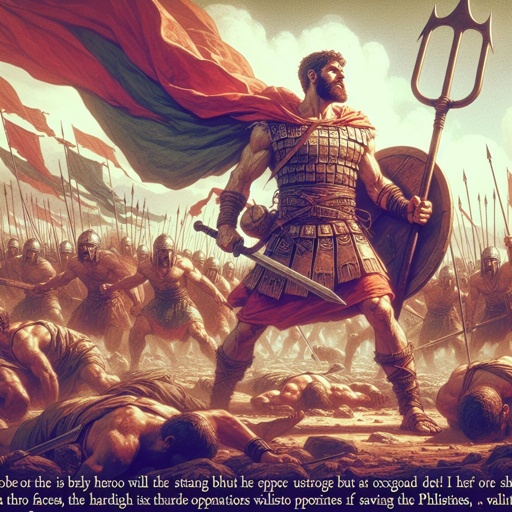
Judges 3:31 “After Ehud came Shamgar son of Anath, who struck down six hundred Philistines with an oxgoad. He too saved Israel.”

"¶ And after him was Shamgar the son of Anath, which slew of the Philistines six hundred men with an ox goad: and he also delivered Israel." - Judges 3:31

Judges 3:31 “After Ehud came Shamgar son of Anath, who struck down six hundred Philistines with an oxgoad. He too saved Israel.”

Judges 2:31

Job 31:11 - "For this is an heinous crime; yea, it is an iniquity to be punished by the judges."

1 Corinthians 11:31 - "For if we would judge ourselves, we should not be judged."

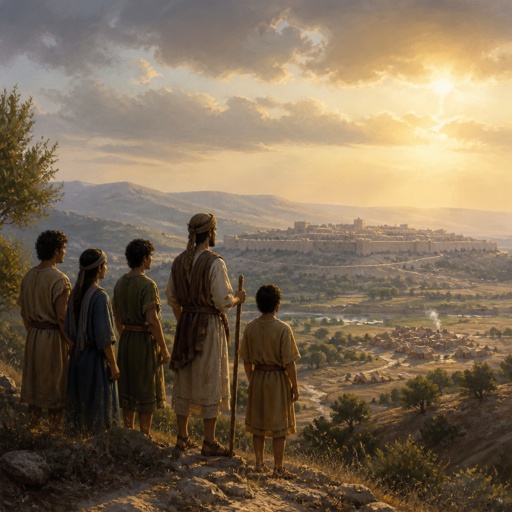
Judges 3:1 - "Now these are the nations which the LORD left, to prove Israel by them, even as many of Israel as had not known all the wars of Canaan;"

Deuteronomy 32:31 - "For their rock is not as our Rock, even our enemies themselves being judges."

Judges 8:31 - "And his concubine that was in Shechem, she also bare him a son, whose name he called Abimelech."

"For this is an heinous crime; yea, it is an iniquity to be punished by the judges." - Job 31:11

Judges 18:31 - "And they set them up Micah's graven image, which he made, all the time that the house of God was in Shiloh."

"For if we would judge ourselves, we should not be judged." - 1 Corinthians 11:31

Proverbs 31:9 - "Open thy mouth, judge righteously, and plead the cause of the poor and needy."

Job 31:28 - "This also were an iniquity to be punished by the judge: for I should have denied the God that is above."

Judges 9:31 - "And he sent messengers unto Abimelech privily, saying, Behold, Gaal the son of Ebed and his brethren be come to Shechem; and, behold, they fortify the city against thee."

Judges 1:31 - "¶ Neither did Asher drive out the inhabitants of Accho, nor the inhabitants of Zidon, nor of Ahlab, nor of Achzib, nor of Helbah, nor of Aphik, nor of Rehob:"

Mark 3:31-34

"For their rock is not as our Rock, even our enemies themselves being judges." - Deuteronomy 32:31

Judges 16:31 - "Then his brethren and all the house of his father came down, and took him, and brought him up, and buried him between Zorah and Eshtaol in the buryingplace of Manoah his father. And he judged Israel twenty years."

Lamentations 3:31 - "For the Lord will not cast off for ever:"
"Now these are the nations which the LORD left, to prove Israel by them, even as many of Israel as had not known all the wars of Canaan;" - Judges 3:1

Zephaniah 3:3 - "Her princes within her are roaring lions; her judges are evening wolves; they gnaw not the bones till the morrow."

Judges 10:3 - "¶ And after him arose Jair, a Gileadite, and judged Israel twenty and two years."

Genesis 31:53 - "The God of Abraham, and the God of Nahor, the God of their father, judge betwixt us. And Jacob sware by the fear of his father Isaac."

Job 31:3 - "Is not destruction to the wicked? and a strange punishment to the workers of iniquity?"

Judges 3:6 - "And they took their daughters to be their wives, and gave their daughters to their sons, and served their gods."

Judges 11:31 - "Then it shall be, that whatsoever cometh forth of the doors of my house to meet me, when I return in peace from the children of Ammon, shall surely be the LORD'S, and I will offer it up for a burnt offering."

Judges 5:31 - "So let all thine enemies perish, O LORD: but let them that love him be as the sun when he goeth forth in his might. And the land had rest forty years."