The Cost of Conquest: A Reflection on Judges 1:8
"Now the children of Judah had fought against Jerusalem, and had taken it, and smitten it with the edge of the sword, and set the city on fire." - Judges 1:8
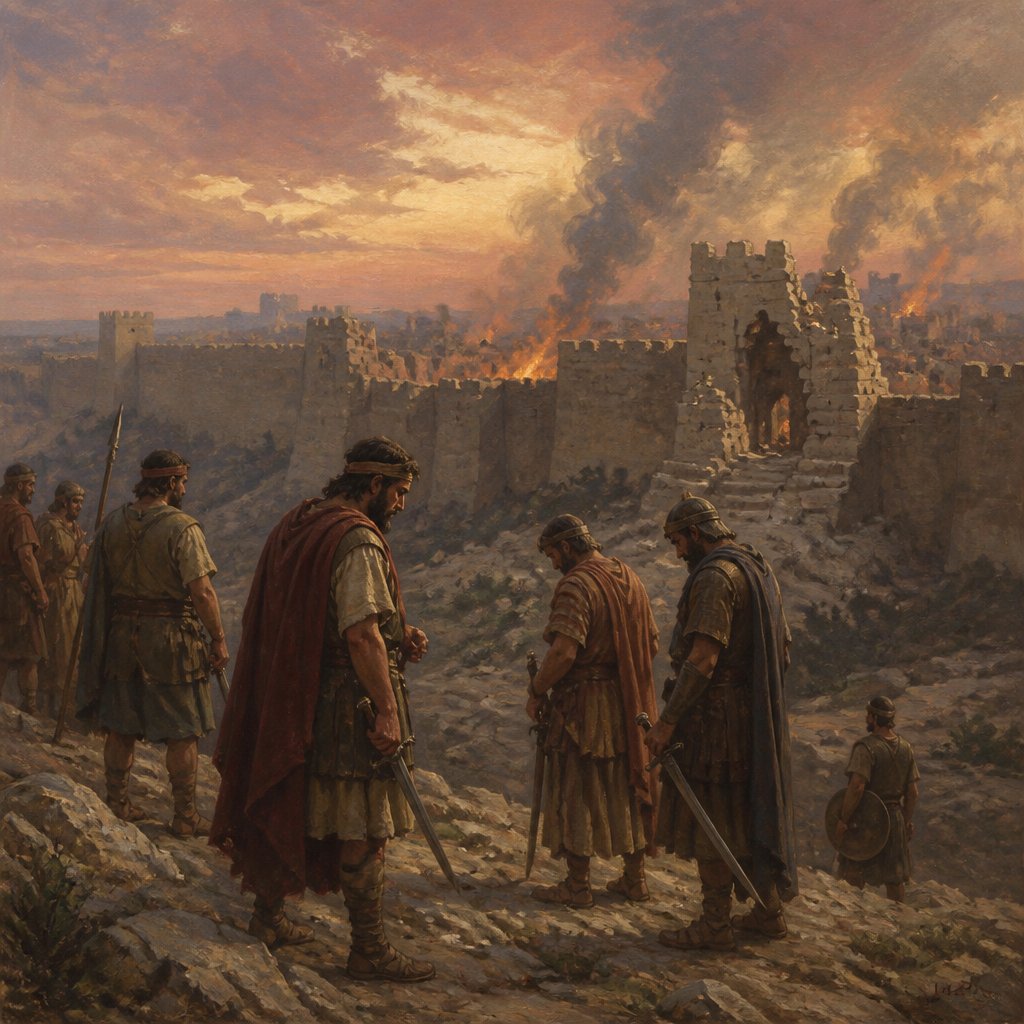
The verse in Judges 1:8—“Now the children of Judah had fought against Jerusalem, and had taken it, and smitten it with the edge of the sword, and set the city on fire”—invokes a vivid and powerful image of conflict, conquest, and divine purpose. It serves as a salient reminder of the severe circumstances surrounding the Israelites as they sought to claim the Promised Land, a land that was to be a dwelling place of peace and obedience to God, yet marked by struggle and often violent confrontation.
In examining this verse, we enter a historical context where the children of Judah, a tribe of Israel, embarked on a critical mission to secure their inheritance. The land of Canaan was promised to the descendants of Abraham, Isaac, and Jacob; thus, the engagement with Jerusalem was not just a military expedition, but a fulfillment of divine promise and destiny.
To take a moment to dissect the layers intertwined in this account: Jerusalem, often referred to as Zion in the scriptures, is a city steeped in spiritual significance. It was to become the central hub of worship for the Israelites, the city where the temple would reside, ultimately becoming the heart of their religious and national identity. In thus "fighting against Jerusalem," we see the stark reality of spiritual warfare at play. There is an inherent danger when spiritual promises collide with human sin, pride, and rebellion.
The phrase
Want to reflect more on Judges 1:8?
Continue your spiritual journey with Bible Chat — an AI-powered tool for exploring God's Word through conversation. Ask questions, discover connections, and deepen your understanding.
Get Our Apps


Judges 1:8 Artwork

Judges 1:8 - "Now the children of Judah had fought against Jerusalem, and had taken it, and smitten it with the edge of the sword, and set the city on fire."
"Now the children of Judah had fought against Jerusalem, and had taken it, and smitten it with the edge of the sword, and set the city on fire." - Judges 1:8

1 Samuel 8:1 - "And it came to pass, when Samuel was old, that he made his sons judges over Israel."

1 Samuel 8:2 - "Now the name of his firstborn was Joel; and the name of his second, Abiah: they were judges in Beer-sheba."

Judges 9:8-15

1 Samuel 8:6 - "¶ But the thing displeased Samuel, when they said, Give us a king to judge us. And Samuel prayed unto the LORD."

John 8:15 - "Ye judge after the flesh; I judge no man."

"And it came to pass, when Samuel was old, that he made his sons judges over Israel." - 1 Samuel 8:1

Judges 12:8 - "¶ And after him Ibzan of Beth-lehem judged Israel."

Judges 8:1 - "And the men of Ephraim said unto him, Why hast thou served us thus, that thou calledst us not, when thou wentest to fight with the Midianites? And they did chide with him sharply."

Judges 1:18 - "Also Judah took Gaza with the coast thereof, and Askelon with the coast thereof, and Ekron with the coast thereof."

1 Samuel 8:20 - "That we also may be like all the nations; and that our king may judge us, and go out before us, and fight our battles."

Judges 8:17 - "And he beat down the tower of Penuel, and slew the men of the city."

Judges 8:29 - "And Jerubbaal the son of Joash went and dwelt in his own house."

Proverbs 8:16 - "By me princes rule, and nobles, even all the judges of the earth."

Judges 8:13 - "¶ And Gideon the son of Joash returned from battle before the sun was up,"

Judges 8:8 - "¶ And he went up thence to Penuel, and spake unto them likewise: and the men of Penuel answered him as the men of Succoth had answered him."

1 Samuel 8:5 - "And said unto him, Behold, thou art old, and thy sons walk not in thy ways: now make us a king to judge us like all the nations."

Psalms 7:8 - "The LORD shall judge the people: judge me, O LORD, according to my righteousness, and according to mine integrity that is in me."

Judges 2:8 - "And Joshua the son of Nun, the servant of the LORD, died, being an hundred and ten years old."

1 Kings 8:32 - "Then hear thou in heaven, and do, and judge thy servants, condemning the wicked, to bring his way upon his head; and justifying the righteous, to give him according to his righteousness."

"Now the name of his firstborn was Joel; and the name of his second, Abiah: they were judges in Beer-sheba." - 1 Samuel 8:2

"¶ And after him Ibzan of Beth-lehem judged Israel." - Judges 12:8

Gideon's ephod in Judges 8:29 and peoplw worshipping him

Judges 18:8 - "And they came unto their brethren to Zorah and Eshtaol: and their brethren said unto them, What say ye?"

"Ye judge after the flesh; I judge no man." - John 8:15

Judges 8:30 - "And Gideon had threescore and ten sons of his body begotten: for he had many wives."

Judges 5:8 - "They chose new gods; then was war in the gates: was there a shield or spear seen among forty thousand in Israel?"

Judges 8:16 - "And he took the elders of the city, and thorns of the wilderness and briers, and with them he taught the men of Succoth."

Judges 8:31 - "And his concubine that was in Shechem, she also bare him a son, whose name he called Abimelech."