The Allure of False Security: A Reflection on Judges 18:20
"And the priest's heart was glad, and he took the ephod, and the teraphim, and the graven image, and went in the midst of the people." - Judges 18:20
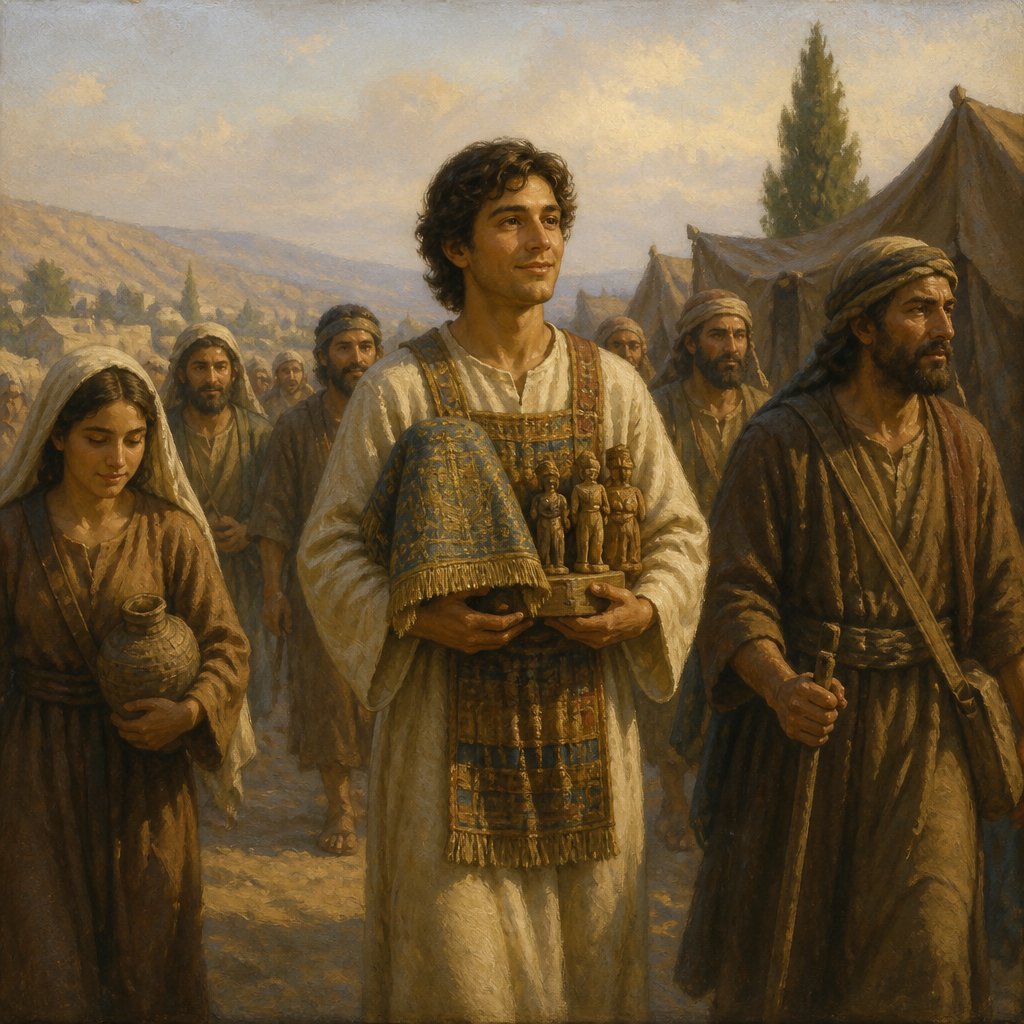
Judges 18:20 reads, "And the priest's heart was glad, and he took the ephod, and the teraphim, and the graven image, and went in the midst of the people." This verse encapsulates a moment in biblical history that speaks volumes about human nature, leadership, and the seduction of idolatry. To grasp the profound implications within this passage, we must first understand its context within the Book of Judges and apply it to our own spiritual journey.
In the time of the Judges, Israel was caught in a cyclical pattern of sin, oppression, and deliverance. The lack of a unified leadership led tribes to seek their own interests apart from God's covenant. The story of Micah's idolatry presents a critical examination of faith, worship, and leadership. In Judges 18, the tribe of Dan, in search of a new territory, encounters Micah’s shrine and priests, one of whom becomes a significant figure in this narrative. The ephod, teraphim, and graven images represent unholy substitutes for God, embodying the dangerous tendency to turn to worldly representations of security and guidance.
The text tells us that the priest's heart was glad. This very reaction reveals a shocking truth about our lives: we often find joy in things that we should not. What was it that inspired this joy? Was it the recognition, the position of power, or perhaps the material benefits that came with leaving Micah’s house? This priest, who was supposed to uphold the law of God and lead the people in true worship, made a conscious choice to abandon his responsibilities for personal gain. His gladness was short-sighted and indicative of misplaced priorities. As leaders in our own spheres, we must be vigilant against similar temptations—even when they come cloaked in the guise of happiness.
The priest took the ephod, the teraphim, and the graven image. Each of these items reveals layers of meaning. The ephod was a priestly garment used in seeking God’s will, but here it is tarnished by its association with idolatry—the teraphim represent household gods of fortune and protection, while the graven image signifies a tangible representation meant to act as an object of worship. By taking these things into the midst of the people, the priest symbolizes the dangers of corrupting true worship. Instead of leading them to genuine relationship with the living God, he led them into a muddled understanding of faith mixed with superstition.
In our contemporary context, we often find ourselves entangled with 'ephods' of our own making in the forms of careers, relationships, or earthly possessions, which promise comfort or guidance but ultimately lead us away from God. We must examine what brings us gladness. Is it rooted in our faithfulness to God and His people, or is it found in the comforts of modern idolatry? Is our heart glad for the right reasons?
We are called to be vigilant shepherds of our hearts. Jeremiah 17:9 warns us that "The heart is deceitful above all things, and desperately wicked: who can know it?" We should pray for discernment to recognize when our hearts are led astray by false securities. Let us remember that true gladness comes from knowing and obeying God, not from the hollow satisfaction of materialism or idols.
As we meditate on Judges 18:20, let us commit ourselves to pursuing the fullness of God's presence—discarding personal gain and worldly comforts. May we seek Him first, allowing our hearts to be glad in His steadfast love and unchanging promises. In doing so, we become instruments of true worship that lead others back to the heart of God rather than away from it.
Let us pray: "Lord, help us to turn our hearts away from idols and distractions. Make Your presence our greatest joy, and let us find gladness in following You wholeheartedly. Amen."
Want to reflect more on Judges 18:20?
Continue your spiritual journey with Bible Chat — an AI-powered tool for exploring God's Word through conversation. Ask questions, discover connections, and deepen your understanding.
Get Our Apps


Judges 18:20 Artwork

Judges 18:20 - "And the priest's heart was glad, and he took the ephod, and the teraphim, and the graven image, and went in the midst of the people."
"And the priest's heart was glad, and he took the ephod, and the teraphim, and the graven image, and went in the midst of the people." - Judges 18:20

Judges 20:18 - "¶ And the children of Israel arose, and went up to the house of God, and asked counsel of God, and said, Which of us shall go up first to the battle against the children of Benjamin? And the LORD said, Judah shall go up first."

Judges 15:20 - "And he judged Israel in the days of the Philistines twenty years."

Judges 20:29 - "And Israel set liers in wait round about Gibeah."

Judges 20:20 - "And the men of Israel went out to battle against Benjamin; and the men of Israel put themselves in array to fight against them at Gibeah."

Judges 20:19 - "And the children of Israel rose up in the morning, and encamped against Gibeah."

Judges 5:20 - "They fought from heaven; the stars in their courses fought against Sisera."

Judges 18:18 - "And these went into Micah's house, and fetched the carved image, the ephod, and the teraphim, and the molten image. Then said the priest unto them, What do ye?"

Judges 21:20 - "Therefore they commanded the children of Benjamin, saying, Go and lie in wait in the vineyards;"

Judges 20:27 - "And the children of Israel enquired of the LORD, (for the ark of the covenant of God was there in those days,"

Judges 20:44 - "And there fell of Benjamin eighteen thousand men; all these were men of valour."

Judges 20:24 - "And the children of Israel came near against the children of Benjamin the second day."

Judges 18:13 - "And they passed thence unto mount Ephraim, and came unto the house of Micah."

Judges 20:7 - "Behold, ye are all children of Israel; give here your advice and counsel."

Judges 18: Micah’s Influence: A Spiritual Ripple Effect

Judges 2:18 - "And when the LORD raised them up judges, then the LORD was with the judge, and delivered them out of the hand of their enemies all the days of the judge: for it repented the LORD because of their groanings by reason of them that oppressed them and vexed them."

Judges 18:21 - "So they turned and departed, and put the little ones and the cattle and the carriage before them."

Ezekiel 20:4 - "Wilt thou judge them, son of man, wilt thou judge them? cause them to know the abominations of their fathers:"

Exodus 18:26 - "And they judged the people at all seasons: the hard causes they brought unto Moses, but every small matter they judged themselves."

Judges 14:20 - "But Samson's wife was given to his companion, whom he had used as his friend."

Judges 5:18 - "Zebulun and Naphtali were a people that jeoparded their lives unto the death in the high places of the field."

Judges 1:20 - "And they gave Hebron unto Caleb, as Moses said: and he expelled thence the three sons of Anak."

"And he judged Israel in the days of the Philistines twenty years." - Judges 15:20

Matthew 18:20

Judges 20:9 - "But now this shall be the thing which we will do to Gibeah; we will go up by lot against it;"

Judges 20:11 - "So all the men of Israel were gathered against the city, knit together as one man."

Genesis 20-18

Genesis 18-20

Matthew 18:20