The Strength of Our Stand: Lessons from Jephthah
"¶ And Jephthah sent messengers unto the king of the children of Ammon, saying, What hast thou to do with me, that thou art come against me to fight in my land?" - Judges 11:12
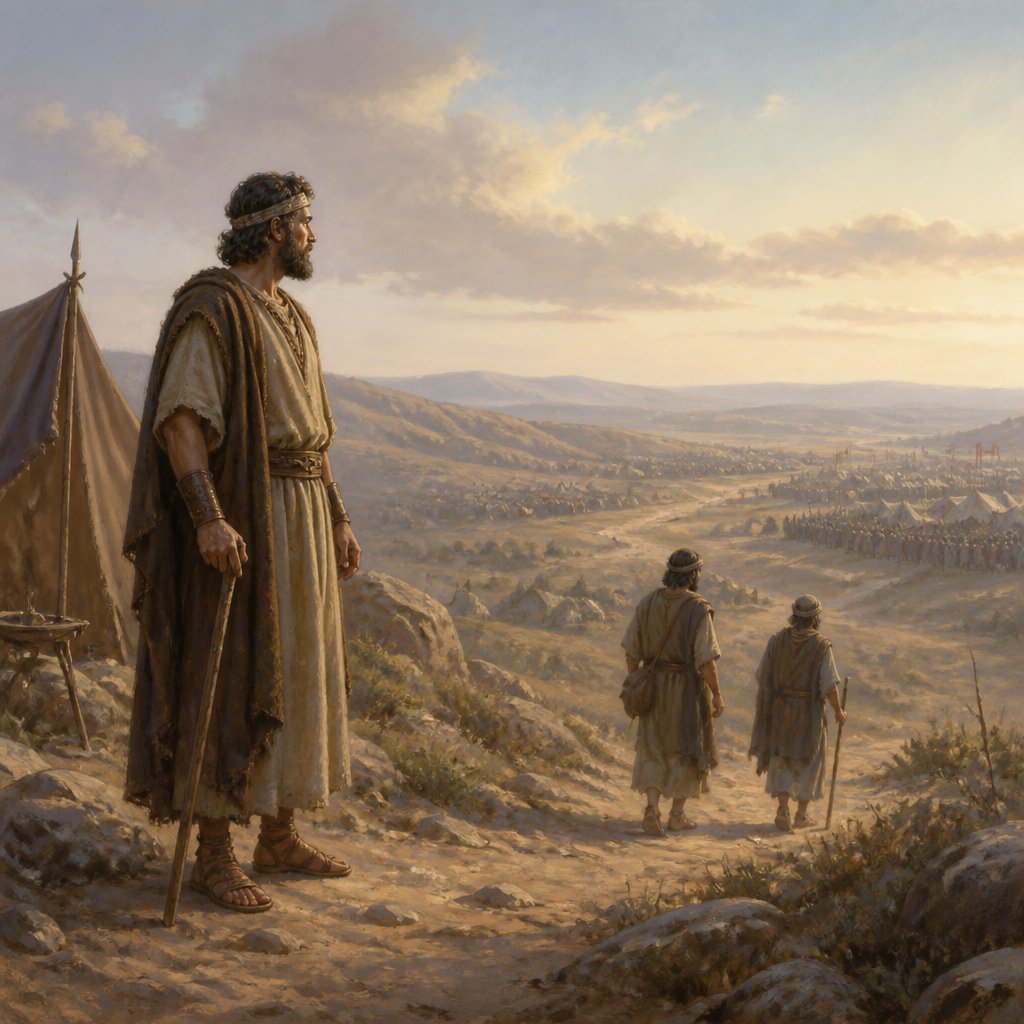
In the book of Judges, we encounter an extraordinary character named Jephthah, a man who rose from humble beginnings to become a formidable judge of Israel. The verse of focus, Judges 11:12 (KJV), states: "And Jephthah sent messengers unto the king of the children of Ammon, saying, What hast thou to do with me, that thou art come against me to fight in my land?" This verse encapsulates the essence of Jephthah's courage, leadership, and a profound message about standing firm in the face of adversity.
To fully appreciate Jephthah’s situation, we must understand the context in which he found himself. The Ammonites were threatening the land of Israel, and as a judge, Jephthah’s role was not only to lead the people but to protect them against their aggressors. Jephthah’s direct confrontation with the king of Ammon teaches us invaluable lessons about boldness and taking a stand for what is rightfully ours.
First, we see Jephthah’s inquiry to the Ammonite king: "What hast thou to do with me?" This question is laden with significance. Jephthah was asserting his identity and the rightful claim over the land of Israel. His challenge was not just a territorial defense; it was an affirmation of his people’s moral and spiritual heritage connected to the land given to them by God. This reminds us today that we can stand firm in our identity as children of God, understanding that we have a divine inheritance which the enemy might try to contest.
Jephthah’s inquiry invites us to reflect: When faced with spiritual, emotional, or physical battles, are we securing our identity in Christ? Do we see ourselves as rightful heirs in a world that often seeks to diminish our worth? The relationship we cultivate with God through prayer and the truth of His Word fortifies our understanding of who we are. Jephthah’s certainty and confidence stemmed from knowing his position and purpose, inviting us to dive deeper into our faith and solidify our identity as beloved children of God.
Secondly, Jephthah’s communication reveals a posture of readiness. The act of sending messengers signifies preparation and assertiveness instead of passivity. It is easy to cower when confronted by threats, but Jephthah understood the importance of addressing conflict directly. His actions prompt us to evaluate our responses when difficulties arise: do we allow fear to paralyze us, or do we summon the courage to confront challenges head-on?
Moreover, Jephthah’s approach encourages us to engage in dialogue rather than let misunderstandings fester. Often, we may find ourselves in conflicts, whether in relationships, workplaces, or faith communities. Jephthah’s message emphasizes clarity and purpose in our communication. By asking the Ammonite king about his intentions, he was not only asserting his territory but also aiming for resolution. Similarly, we are called to seek peace and clarity, even amidst chaos, by openly communicating our values and boundaries.
Lastly, Jephthah’s resolve serves as a reminder of the broader implication of our battles. The fight against the Ammonites wasn’t merely a physical struggle; it represented a spiritual warfare—an ongoing fight between good and evil. Jephthah’s legacy teaches us that while we may face adversities, we should view them through the lens of spiritual significance. We are engaged in a battle that is often beyond our immediate circumstances, and our responses can have ripple effects not only in our lives but in the lives of our community and generations.
In conclusion, Jephthah’s bold proclamation invites us to stand firm in our faith and identity. He illustrates the importance of knowing who we are in Christ, communicating with purpose, and recognizing the larger battle we are involved in. As we face our own Ammonites—whether they come in the form of personal struggles, societal challenges, or spiritual attacks—let us remember Jephthah's strength and courage. May we too send forth our voices with conviction, asking, "What hast thou to do with me?" and firmly reclaim the ground that rightfully belongs to us as followers of Christ.
Want to reflect more on Judges 11:12?
Continue your spiritual journey with Bible Chat — an AI-powered tool for exploring God's Word through conversation. Ask questions, discover connections, and deepen your understanding.
Get Our Apps


Judges 11:12 Artwork

Judges 11:12 - "¶ And Jephthah sent messengers unto the king of the children of Ammon, saying, What hast thou to do with me, that thou art come against me to fight in my land?"
"¶ And Jephthah sent messengers unto the king of the children of Ammon, saying, What hast thou to do with me, that thou art come against me to fight in my land?" - Judges 11:12

Judges 12:11 - "¶ And after him Elon, a Zebulonite, judged Israel; and he judged Israel ten years."

"¶ And after him Elon, a Zebulonite, judged Israel; and he judged Israel ten years." - Judges 12:11

Judges 12:12 - "And Elon the Zebulonite died, and was buried in Aijalon in the country of Zebulun."

Judges 12:8 - "¶ And after him Ibzan of Beth-lehem judged Israel."

Judges 12:10 - "Then died Ibzan, and was buried at Beth-lehem."

John 1:1-2

John 1:1-2

John 1:1-2

John 1:1-2

John 1:1-2

1 Corinthians 11:31 - "For if we would judge ourselves, we should not be judged."

Judges 12:13 - "¶ And after him Abdon the son of Hillel, a Pirathonite, judged Israel."

Job 31:11 - "For this is an heinous crime; yea, it is an iniquity to be punished by the judges."

"And Elon the Zebulonite died, and was buried in Aijalon in the country of Zebulun." - Judges 12:12

Job 12:17 - "He leadeth counsellors away spoiled, and maketh the judges fools."

Psalms 148:11 - "Kings of the earth, and all people; princes, and all judges of the earth:"

Judges 2:11 - "¶ And the children of Israel did evil in the sight of the LORD, and served Baalim:"

Judges 11:14 - "And Jephthah sent messengers again unto the king of the children of Ammon:"

Judges 12:7 - "And Jephthah judged Israel six years. Then died Jephthah the Gileadite, and was buried in one of the cities of Gilead."

Judges 3:11 - "And the land had rest forty years. And Othniel the son of Kenaz died."

Judges 14:11 - "And it came to pass, when they saw him, that they brought thirty companions to be with him."

Judges 4:12 - "And they shewed Sisera that Barak the son of Abinoam was gone up to mount Tabor."

Judges 9:12 - "Then said the trees unto the vine, Come thou, and reign over us."

Judges 17:12 - "And Micah consecrated the Levite; and the young man became his priest, and was in the house of Micah."

1 Corinthians 5:12 - "For what have I to do to judge them also that are without? do not ye judge them that are within?"

Judges 11:11 - "Then Jephthah went with the elders of Gilead, and the people made him head and captain over them: and Jephthah uttered all his words before the LORD in Mizpeh."

Judges 11:4 - "¶ And it came to pass in process of time, that the children of Ammon made war against Israel."

Judges 11:27 - "Wherefore I have not sinned against thee, but thou doest me wrong to war against me: the LORD the Judge be judge this day between the children of Israel and the children of Ammon."