A Covenant of Grace: The Faithfulness of Promise
"And the men answered her, Our life for your's, if ye utter not this our business. And it shall be, when the LORD hath given us the land, that we will deal kindly and truly with thee." - Joshua 2:14
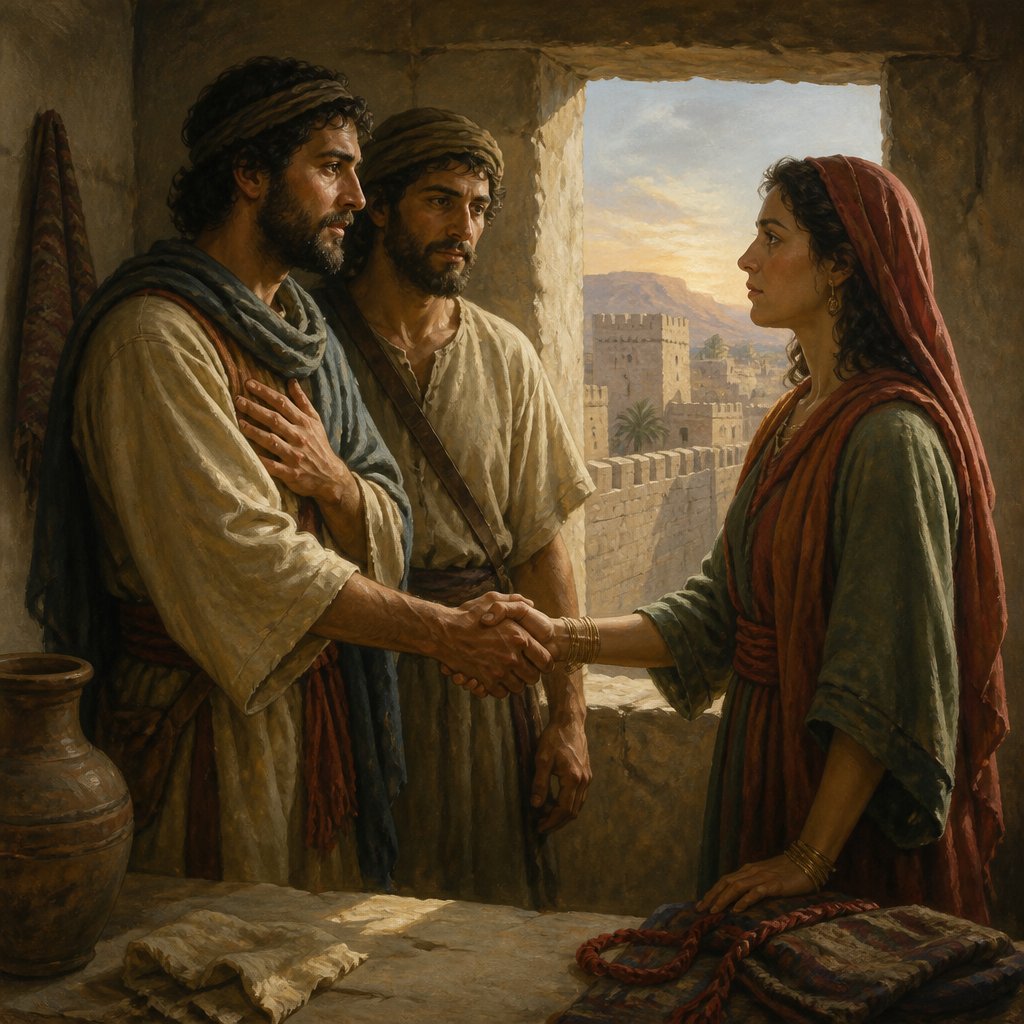
In the heart of the book of Joshua, we find a pivotal moment in the story of Israel’s conquest of Canaan—the meeting of Rahab and the Israelite spies. Joshua 2:14 states, "And the men answered her, Our life for your's, if ye utter not this our business. And it shall be, when the LORD hath given us the land, that we will deal kindly and truly with thee."
This passage highlights a remarkable exchange between Rahab, a woman of faith, and the spies sent by Joshua to scout the land of Jericho. At first glance, this may seem like a simple negotiation. However, a deeper examination reveals profound themes of grace, covenant, and the nature of divine providence.
**The Context of Trust**
Rahab lived in a city destined for destruction, yet she chose to act on the knowledge she had about the God of Israel. In a moment of peril, she hid the spies and acknowledged, "I know that the Lord hath given you the land" (Joshua 2:9). Her faith contrasts sharply with the fear and disbelief that permeated the hearts of the inhabitants of Jericho. Rahab's actions demonstrate that faith often requires courage—the courage to trust God amidst uncertainty and danger.
When the spies reassuringly offered their lives to her in exchange for her silence, it established a sacred agreement—a bond based not only on self-preservation but also on mutual trust. This covenant reflected a commitment to kindness and loyalty: "We will deal kindly and truly with thee."
**The Nature of Grace**
Here, we catch a glimpse of grace at its most transformative. Despite her past and her societal status as a harlot, Rahab found favor in the eyes of God. Her story encapsulates the essence of the Gospel: divine love and acceptance extend beyond the confines of social norms and human judgment. Just as Rahab’s faith initiated a covenant between her and the spies, so too does our faith initiate a relationship with God, through which grace flows abundantly.
**The Promise of Restoration**
The promise made by the spies to Rahab is a powerful reminder of God’s restorative nature. "When the LORD hath given us the land, that we will deal kindly and truly with thee." This promise of kindness signifies a change, not only in Rahab's life but also in her family's future. When God’s people took the city, Rahab’s household was spared because of her faithfulness. The scarlet cord she hung out of her window became a symbol of salvation, mirroring the blood of the Lamb in the New Testament. Just as the blood protected the Israelites during the Passover, the scarlet cord served as a signal of Rahab’s belief and obedience.
**Faith in Action**
This passage urges us to consider the implications of our own faith. Like Rahab, we often find ourselves in circumstances where the odds are stacked against us. The challenge is whether we, too, will act on our faith and make choices that reflect our trust in God’s promises. The spies’ commitment to Rahab teaches us about the importance of standing by our promises, whether in small acts of kindness or larger commitments.
Furthermore, the exchange illustrates the importance of community and support in faith journeys. Rahab’s willingness to protect the spies and their promise to protect her family reminds us that faith is often a shared experience. As believers, we are called to uplift one another and stand firm in our commitments, trusting that God will fulfill His promises.
**Conclusion: A New Identity**
In the end, Rahab was not merely a harlot; she became a heroine of faith, listed in the genealogy of Jesus Christ (Matthew 1:5). Her life reflects the transformative power of faith—God takes our past, the mistakes we've made, and uses them for His glory. As we meditate on Joshua 2:14, let us remember that there is always a path toward restoration and grace, beckoning us to respond to God’s call with open hearts, ready for His transformative love.
Want to reflect more on Joshua 2:14?
Continue your spiritual journey with Bible Chat — an AI-powered tool for exploring God's Word through conversation. Ask questions, discover connections, and deepen your understanding.
Get Our Apps


Joshua 2:14 Artwork

Joshua 2:14 - "And the men answered her, Our life for your's, if ye utter not this our business. And it shall be, when the LORD hath given us the land, that we will deal kindly and truly with thee."
"And the men answered her, Our life for your's, if ye utter not this our business. And it shall be, when the LORD hath given us the land, that we will deal kindly and truly with thee." - Joshua 2:14

Joshua 14:2 - "By lot was their inheritance, as the LORD commanded by the hand of Moses, for the nine tribes, and for the half tribe."

Joshua 14:13 - "And Joshua blessed him, and gave unto Caleb the son of Jephunneh Hebron for an inheritance."

Joshua 3:14

Joshua 3:14

Joshua 3:14

Joshua 3:14
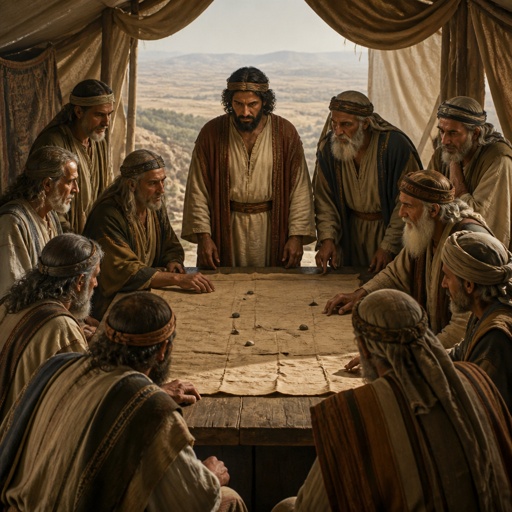
"By lot was their inheritance, as the LORD commanded by the hand of Moses, for the nine tribes, and for the half tribe." - Joshua 14:2

Joshua 4:14 - "¶ On that day the LORD magnified Joshua in the sight of all Israel; and they feared him, as they feared Moses, all the days of his life."

Joshua 21:14 - "And Jattir with her suburbs, and Eshtemoa with her suburbs,"

Joshua 12:14 - "The king of Hormah, one; the king of Arad, one;"

Joshua 9:14 - "And the men took of their victuals, and asked not counsel at the mouth of the LORD."

Joshua 14:14 - "Hebron therefore became the inheritance of Caleb the son of Jephunneh the Kenezite unto this day, because that he wholly followed the LORD God of Israel."

Joshua 14:1 - "And these are the countries which the children of Israel inherited in the land of Canaan, which Eleazar the priest, and Joshua the son of Nun, and the heads of the fathers of the tribes of the children of Israel, distributed for inheritance to them."

Joshua 9:2 - "That they gathered themselves together, to fight with Joshua and with Israel, with one accord."

Joshua 14:5 - "As the LORD commanded Moses, so the children of Israel did, and they divided the land."

"And Joshua blessed him, and gave unto Caleb the son of Jephunneh Hebron for an inheritance." - Joshua 14:13

Joshua 19:14 - "And the border compasseth it on the north side to Hannathon: and the outgoings thereof are in the valley of Jiphthah-el:"

Joshua 14:6 - "¶ Then the children of Judah came unto Joshua in Gilgal: and Caleb the son of Jephunneh the Kenezite said unto him, Thou knowest the thing that the LORD said unto Moses the man of God concerning me and thee in Kadesh-barnea."

Joshua 6:14 - "And the second day they compassed the city once, and returned into the camp: so they did six days."

Joshua 15:14 - "And Caleb drove thence the three sons of Anak, Sheshai, and Ahiman, and Talmai, the children of Anak."

Joshua 17:14 - "And the children of Joseph spake unto Joshua, saying, Why hast thou given me but one lot and one portion to inherit, seeing I am a great people, forasmuch as the LORD hath blessed me hitherto?"

Joshua 5:14 - "And he said, Nay; but as captain of the host of the LORD am I now come. And Joshua fell on his face to the earth, and did worship, and said unto him, What saith my lord unto his servant?"

Joshua 10:14 - "And there was no day like that before it or after it, that the LORD hearkened unto the voice of a man: for the LORD fought for Israel."

Joshua 2:9

Numbers 14:6 - "¶ And Joshua the son of Nun, and Caleb the son of Jephunneh, which were of them that searched the land, rent their clothes:"

Deuteronomy 31:14 - "¶ And the LORD said unto Moses, Behold, thy days approach that thou must die: call Joshua, and present yourselves in the tabernacle of the congregation, that I may give him a charge. And Moses and Joshua went, and presented themselves in the tabernacle of the congregation."

Joshua 5:2 - "¶ At that time the LORD said unto Joshua, Make thee sharp knives, and circumcise again the children of Israel the second time."

Numbers 14:38 - "But Joshua the son of Nun, and Caleb the son of Jephunneh, which were of the men that went to search the land, lived still."