Heirs of Promise: The Legacy of Zelophehad’s Daughters
"¶ But Zelophehad, the son of Hepher, the son of Gilead, the son of Machir, the son of Manasseh, had no sons, but daughters: and these are the names of his daughters, Mahlah, and Noah, Hoglah, Milcah, and Tirzah." - Joshua 17:3
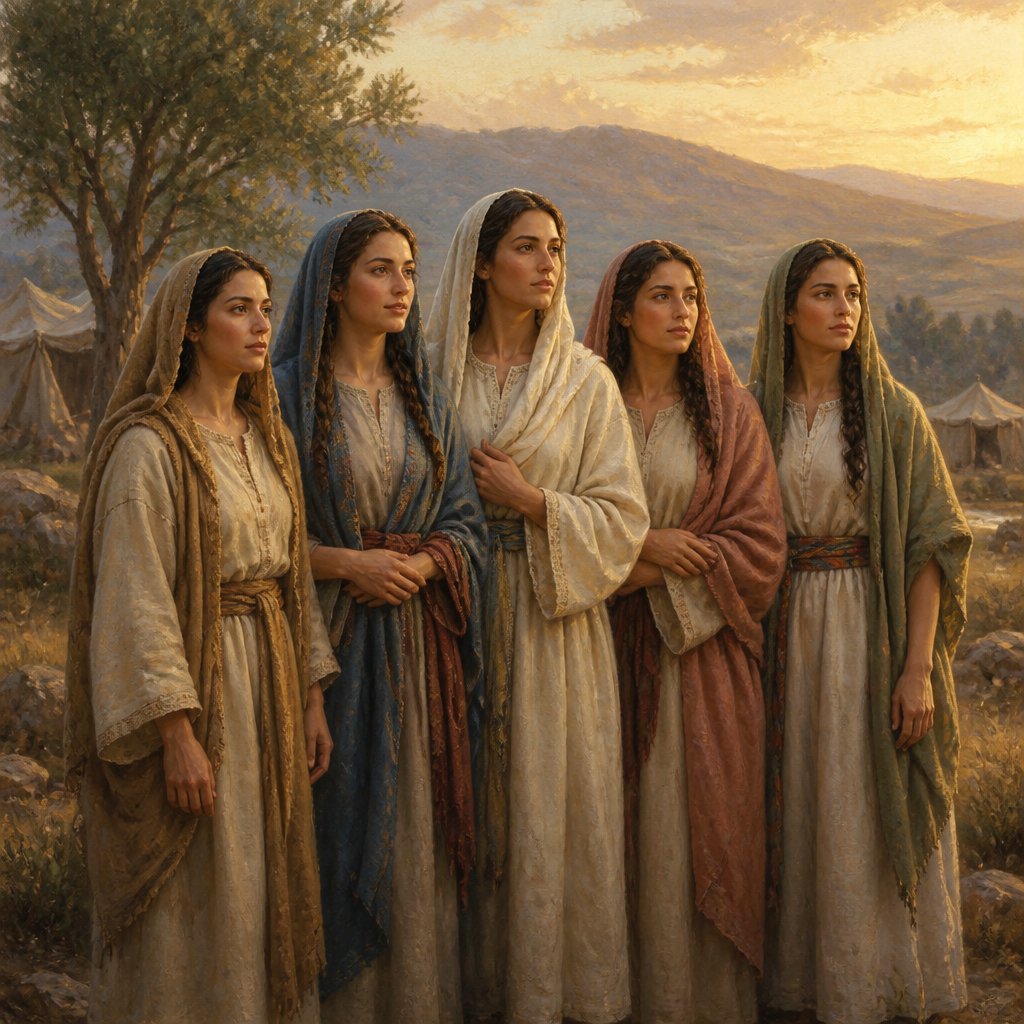
In the book of Joshua, chapter 17, we encounter a remarkable passage that highlights the significance of Zelophehad and his daughters. The King James Version articulates: "But Zelophehad, the son of Hepher, the son of Gilead, the son of Machir, the son of Manasseh, had no sons, but daughters: and these are the names of his daughters, Mahlah, and Noah, Hoglah, Milcah, and Tirzah" (Joshua 17:3). This short verse contains multilayered meanings that speak volumes about inheritance, gender roles, and the faithfulness of God’s promises.
Zelophehad lived in a time where inheritance primarily passed through male lineage. In the patriarchal society of ancient Israel, daughters were often overlooked when it came to matters of land and inheritance. However, Zelophehad’s daughters stood as a challenge to this norm. Bereft of brothers, these women approached Moses to claim their father’s inheritance (Numbers 27:1-11). Their appeal stemmed from a deep understanding of their rights, an awareness of God’s covenant promises, and a boldness to confront societal limitations.
As believers today, we can draw several lessons from the lives of Mahlah, Noah, Hoglah, Milcah, and Tirzah. Firstly, their actions remind us of the importance of knowing and claiming our inheritance in Christ. Just as these daughters sought what was rightfully theirs, we too must be aware of the spiritual inheritance that is available to us as children of God. The Apostle Paul writes in Ephesians 1:11, "In whom also we have obtained an inheritance, being predestinated according to the purpose of him who worketh all things after the counsel of his own will." Like Zelophehad’s daughters, we are called to step forward and claim the promises of God that are ours.
Secondly, their story reminds us of the importance of advocacy and justice. Zelophehad’s daughters knew that their father deserved an inheritance and were willing to stand up against the ingrained customs of their society. In a world that often pushes marginalized voices to the sidelines, we are encouraged to advocate for justice and fairness. Through our actions, we might bring light to issues and stand in the gap for those who cannot advocate for themselves. This not only reflects the heart of God but also paves the way for change in our communities.
Moreover, the significance of their names, each of which carries meaning, can serve as a reflection of our identities in Christ. Each of these daughters embodies different aspects of God’s character and nature. For example, "Mahlah" means "sickness," alluding perhaps to the healing God provides; "Noah" signifies "motion," indicating a faith that progresses; "Hoglah," translating to "partridge," symbolizes a sense of nurturing; "Milcah" translates as "queen," reflecting dignity; and "Tirzah" conveys "delight," portraying the joy found in God’s presence. Their names collectively serve as a beautiful tapestry illustrating that no matter our personal histories or societal roles, we are all valued and delight in the eyes of God.
When the daughters of Zelophehad approached the leaders in Israel, they did not only speak for themselves; they spoke for the generations to come, marking a change in the inheritance laws. They opened the door for future generations of women to stand up for their rights within God’s family. This is a powerful reminder that our actions today can ripple through time, enabling future generations to live with greater freedom and opportunity in their inheritance.
Ultimately, the life of Zelophehad and his daughters is a narrative of faith, courage, and advocacy. As we meditate on Joshua 17:3, let us remember that in Christ, we are heirs to the profound promises of God. May we have the courage to advocate for justice, claim our spiritual heritage, and walk boldly into the future that God has set before us. Like the daughters, let us leave a legacy of faithfulness, grace, and courage for those who come after us.
Want to reflect more on Joshua 17:3?
Continue your spiritual journey with Bible Chat — an AI-powered tool for exploring God's Word through conversation. Ask questions, discover connections, and deepen your understanding.
Get Our Apps


Joshua 17:3 Artwork
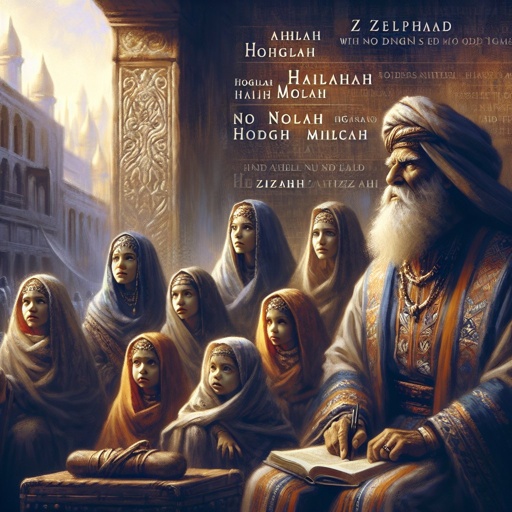
Joshua 17:3 - "¶ But Zelophehad, the son of Hepher, the son of Gilead, the son of Machir, the son of Manasseh, had no sons, but daughters: and these are the names of his daughters, Mahlah, and Noah, Hoglah, Milcah, and Tirzah."
"¶ But Zelophehad, the son of Hepher, the son of Gilead, the son of Machir, the son of Manasseh, had no sons, but daughters: and these are the names of his daughters, Mahlah, and Noah, Hoglah, Milcah, and Tirzah." - Joshua 17:3

Joshua 3:1-17

Joshua 3:17 – "The priests who carried the ark of the covenant of the Lord stood firm on dry ground in the middle of the Jordan."
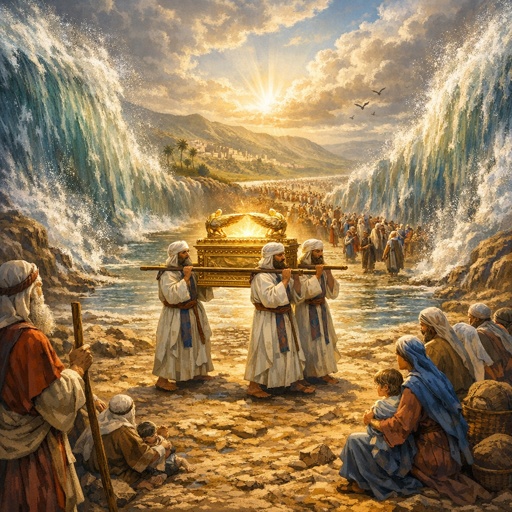
"And the priests that bare the ark of the covenant of the LORD stood firm on dry ground in the midst of Jordan, and all the Israelites passed over on dry ground, until all the people were passed clean over Jordan." - Joshua 3:17

Joshua 10:17 - "And it was told Joshua, saying, The five kings are found hid in a cave at Makkedah."

Joshua 3:17 - "And the priests that bare the ark of the covenant of the LORD stood firm on dry ground in the midst of Jordan, and all the Israelites passed over on dry ground, until all the people were passed clean over Jordan."

Joshua 17:17 - "And Joshua spake unto the house of Joseph, even to Ephraim and to Manasseh, saying, Thou art a great people, and hast great power: thou shalt not have one lot only:"

Joshua 24:17

Joshua 4:17 - "Joshua therefore commanded the priests, saying, Come ye up out of Jordan."

Joshua 24:17

Joshua 24:17

Joshua 6:17-25

Joshua 12:17 - "The king of Tappuah, one; the king of Hepher, one;"

Joshua 5:3 - "And Joshua made him sharp knives, and circumcised the children of Israel at the hill of the foreskins."

Exodus 17:13 - "And Joshua discomfited Amalek and his people with the edge of the sword."

Joshua 9:3 - "¶ And when the inhabitants of Gibeon heard what Joshua had done unto Jericho and to Ai,"

Joshua 3:4

Joshua 3:16

Joshua 3:14

Joshua 3:14

Joshua 1:3

Joshua 3:14

Joshua 3:14

Joshua 3:4

Joshua 3:5 - "And Joshua said unto the people, Sanctify yourselves: for to morrow the LORD will do wonders among you."

Joshua 3:9 - "¶ And Joshua said unto the children of Israel, Come hither, and hear the words of the LORD your God."

Zechariah 3:3 - "Now Joshua was clothed with filthy garments, and stood before the angel."

"And it was told Joshua, saying, The five kings are found hid in a cave at Makkedah." - Joshua 10:17

Joshua 8:3 - "¶ So Joshua arose, and all the people of war, to go up against Ai: and Joshua chose out thirty thousand mighty men of valour, and sent them away by night."