The Eyes That See: Recognizing the Work of Christ
"Then said they to him again, What did he to thee? how opened he thine eyes?" - John 9:26
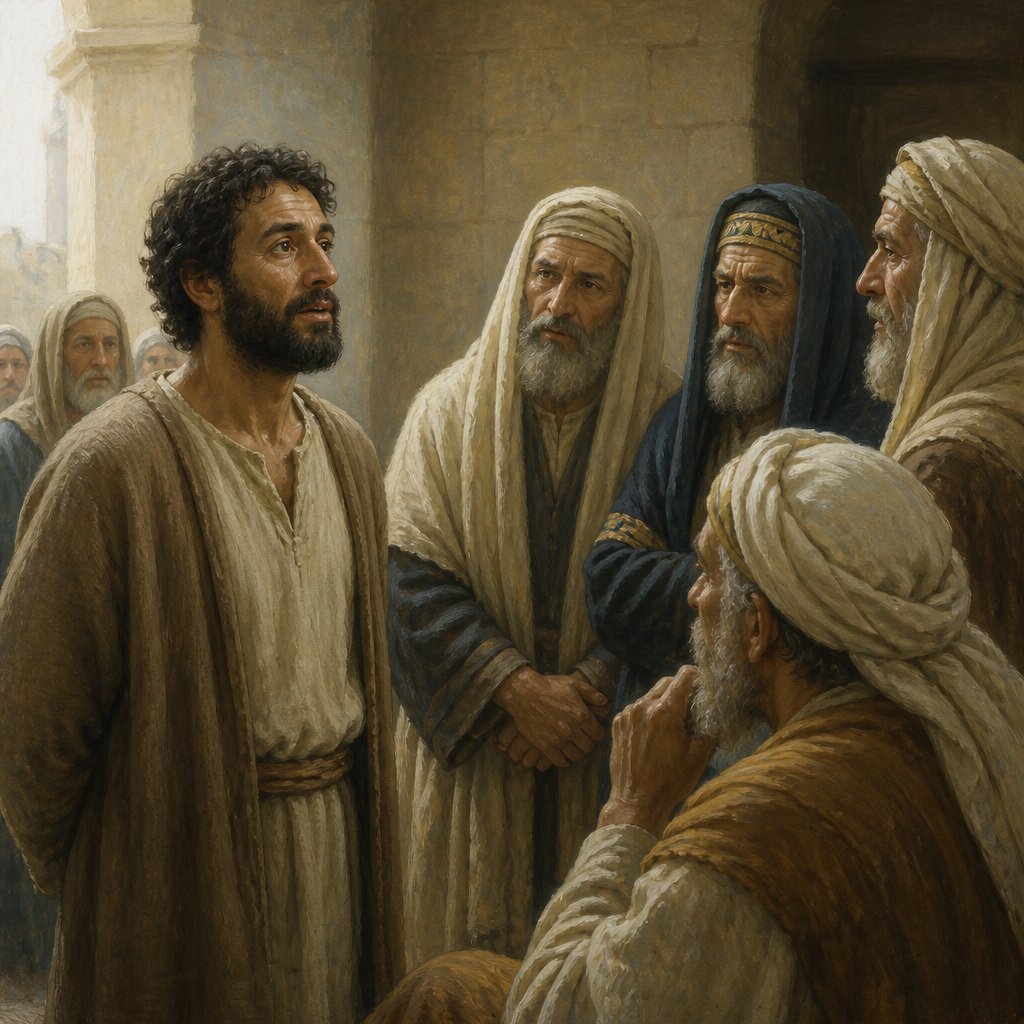
In the Gospel of John, chapter 9, we encounter the powerful story of a man born blind who receives sight through the miraculous intervention of Jesus. The verse at hand, John 9:26 (KJV), captures a moment of inquiry by the Pharisees who, perplexed by the healing, repeatedly question the healed man about the nature of the miracle: "Then said they to him again, What did he to thee? how opened he thine eyes?"
This passage offers a profound lens through which we can explore not only the physical act of healing but also the deeper spiritual implications of sight and understanding in the Christian faith.
When we reflect on the situation of the healed man, we see a story that illustrates transformation—both outwardly in the physical realm and inwardly in the spiritual. The inquiry from the Pharisees reveals a mindset fixated on the mechanics of the miracle rather than its meaning. They are keenly interested in understanding how the miracle was performed, asking questions driven by skepticism and the need for justification, rather than being moved by the grace of healing they were witnessing. How often do we find ourselves in a similar position? Are we more focused on the how and the mechanics of faith, rather than the power and presence of Christ?
The response from the man who received his sight provides a poignant lesson. In verse 25, he confidently proclaims, "One thing I know, that, whereas I was blind, now I see." He does not delve into the technicalities of how Jesus performed the miraculous act; instead, he shares the testimony of his transformation—the undeniable fact that his life was changed. This is a challenge for us as believers. Amid the doubts and questions that arise in our hearts, do we focus on the transformation that Christ has made in our lives?
The Pharisees’ persistence in questioning reflects their struggle with accepting the truth of Jesus’ identity and mission. Their blindness—spiritual rather than physical—prevents them from arriving at the reality of who Jesus is. They are more inclined to preserve their traditions and status than acknowledge the truth standing before them. This raises the question: what is keeping us from fully recognizing and accepting the work God is doing in our lives?
As followers of Christ, we are called to bear witness of His works in our lives. Every believer possesses a testimony, a unique story of how Jesus has opened our eyes to the truth of His love and grace. In our personal testimonies, we are empowered to share not just answers to questions but the living impact of God’s grace.
Our own spiritual journeys often involve periods of questioning—seeking understanding, clarity, and guidance. However, in those moments, it is vital we also make room for the miraculous work of Christ. Rather than seeking only intellectual answers, we should invite God to instill in us deeper insight, spiritual vision that transcends mere knowledge. This depth of understanding comes when we witness and acknowledge God’s hand at work in the lives of those around us and, indeed, in our own lives.
Moreover, in a world filled with skepticism and doubt, we must strive to be vessels of hope and light, pointing others to the source of our changed lives. When questioned about our faith, let us embrace the same boldness as the man born blind. His simple yet powerful proclamation, inspired by his newfound sight, reminds us that our personal experiences with Christ become the strongest testimonies we can share.
In conclusion, may we take time today to reflect on our own spiritual sight. Are we truly seeing Christ at work in our lives and the lives of those around us? Let us cherish the miracle of being able to see, to understand, and to proclaim: ‘I once was blind, but now I see!’ May this transformation in our lives guide us to share our testimonies with courage and conviction, recognizing that the works of Jesus are worthy of being celebrated and spoken about in every moment.
Want to reflect more on John 9:26?
Continue your spiritual journey with Bible Chat — an AI-powered tool for exploring God's Word through conversation. Ask questions, discover connections, and deepen your understanding.
Get Our Apps


John 9:26 Artwork

John 9:26 - "Then said they to him again, What did he to thee? how opened he thine eyes?"
"Then said they to him again, What did he to thee? how opened he thine eyes?" - John 9:26

John 15:26 NLT

John 19:26-27

John 1:26 - "John answered them, saying, I baptize with water: but there standeth one among you, whom ye know not;"

Genesis 26:9

John 11:26 - "And whosoever liveth and believeth in me shall never die. Believest thou this?"

john 21:9

John 10:9

John 10:9

John 10:9

John 4:26 - "Jesus saith unto her, I that speak unto thee am he."

John 10:26 - "But ye believe not, because ye are not of my sheep, as I said unto you."

1 John 2:26 - "These things have I written unto you concerning them that seduce you."

John 3:26 - "And they came unto John, and said unto him, Rabbi, he that was with thee beyond Jordan, to whom thou barest witness, behold, the same baptizeth, and all men come to him."

Matthew 21:26 - "But if we shall say, Of men; we fear the people; for all hold John as a prophet."

John 6:8-9

John 9:1-3

John 13:4-9

John 9:1-41

1 John 1:9

John 5:26 - "For as the Father hath life in himself; so hath he given to the Son to have life in himself;"

Matthew 9:26 - "And the fame hereof went abroad into all that land."

John 15:9-10

John 15:9-10

John 16:9 - "Of sin, because they believe not on me;"

Job 9:26 - "They are passed away as the swift ships: as the eagle that hasteth to the prey."

John 9:9 - "Some said, This is he: others said, He is like him: but he said, I am he."

John 7:26 - "But, lo, he speaketh boldly, and they say nothing unto him. Do the rulers know indeed that this is the very Christ?"

Matthew 26:9 - "For this ointment might have been sold for much, and given to the poor."