The Unseen Victory: Understanding John 9:13
"¶ They brought to the Pharisees him that aforetime was blind." - John 9:13
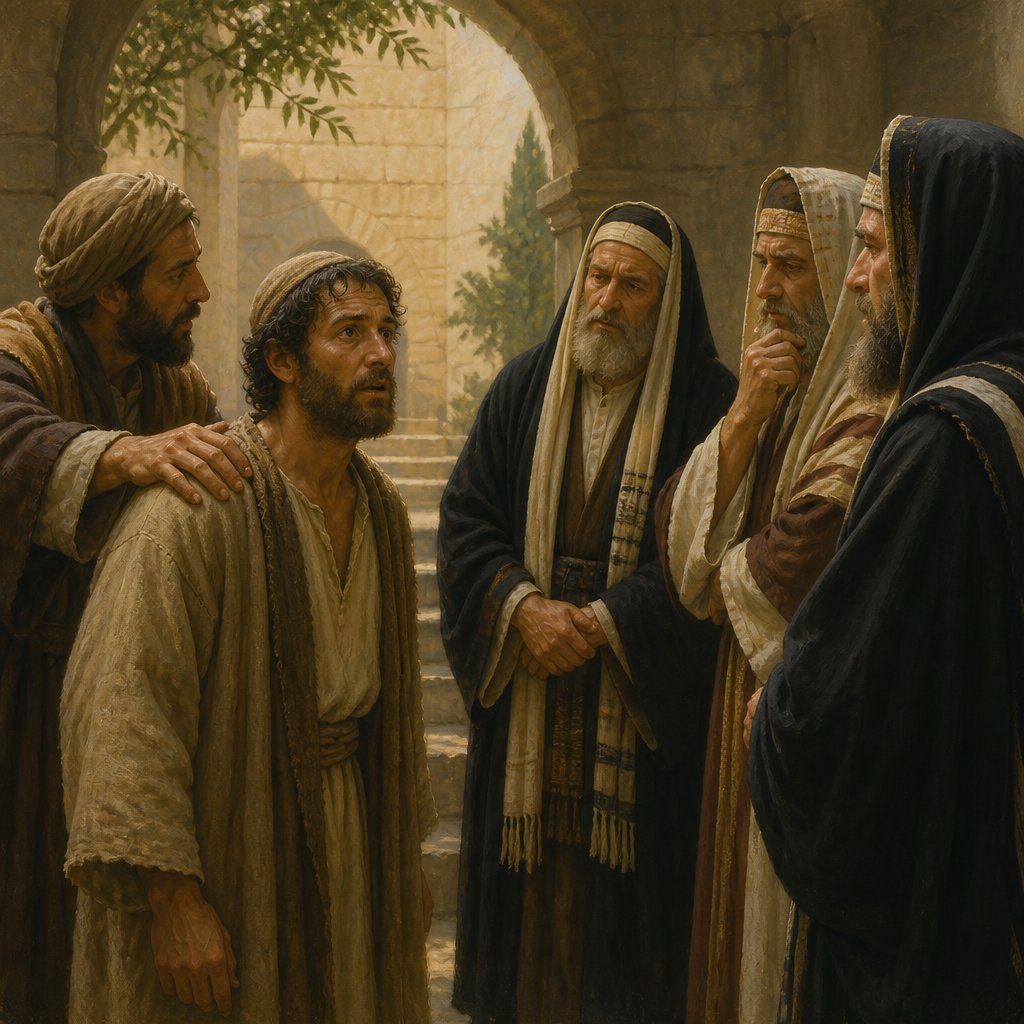
In John 9:13, we read a pivotal moment in the narrative of Jesus’ ministry: "They brought to the Pharisees him that aforetime was blind." This verse introduces us to a remarkable story that is as much about spiritual blindness as it is about the miraculous healing of a man born blind. As we delve into this passage, let us unpack the layers of meaning that challenge us, inspire us, and lead us to a deeper understanding of God’s work in our lives.
To fully appreciate this moment, we must remember the context of the healing that precedes it. Jesus encounters a man who has been blind from birth, a condition that emphasizes his need for a miracle not just physically, but spiritually. The act of healing—a simple application of mud and a directive to wash in the Pool of Siloam—was a demonstration of Jesus's divine authority and compassion. Yet, as the healed man is brought before the Pharisees, the story transforms into an exploration of spiritual perception.
First, let’s consider the actions of those who brought the healed man to the Pharisees. Here, we perceive a dual-layered meaning. On one hand, it represents a societal expectation; the Pharisees were the religious leaders of the day, custodians of the law, and guardians of tradition. For the populace, bringing the healed man to them symbolized an attempt to validate the miracle and determine its legitimacy. However, the nuances signify something deeper—the ongoing conflict between the structure of religion and the transformative power of Jesus.
As we reflect upon this, we must ask ourselves: How often do we, like the crowd, feel the need to bring our experiences of transformation to authorities and institutions for validation? It’s only natural; we seek approval and understanding from those we perceive as knowledgeable. However, the challenge here is that these authorities may lack the spiritual insight to recognize genuine works of God. Indeed, the Pharisees, instead of rejoicing in the man's healing, became embroiled in their own rigidity, focusing on the day of the healing (the Sabbath) rather than the miracle itself.
This narrative confronts the notion of blindness—both physical and spiritual. The healed man had been blind, yet he could now see, while the Pharisees, who saw with their physical eyes, were blind to the truth staring at them. This spiritual blindness leads to a failure to recognize Jesus's divine identity and mission. Herein lies a profound truth: seeing is not just a matter of physical vision; it is about understanding and perceiving God’s action in our lives and world.
Perhaps many of us have felt a spiritual awakening, a prompting from God that others fail to understand, or worse, dismiss. The healed man's journey to enlightenment illustrates the path many believers travel; a simple act of faith can lead to profound transformation that others may struggle to comprehend. As we follow our own spiritual journeys, we must be prepared for the reactions of others, especially when our experiences do not fit within established paradigms.
In our lives, who are the "Pharisees"? We encounter individuals and communities who may question or challenge our faith experiences, asking us to conform to their expectations instead of rejoicing in our unique journeys with Jesus. In those moments, it is crucial to stand firm in the truth of what God has accomplished within us.
As we conclude this reflection on John 9:13, let us not only celebrate the miracle of physical sight but also pray for spiritual vision—to see and recognize the works of God around us and within us. May we lean into our experiences as we encourage others, engaging with compassion, understanding, and grace, as Jesus did. Let us not be blinded by doubts or fear but rather embrace the journey of faith that continues to unfold with each new step.
Thus, the journey of the formerly blind man becomes our journey too—a reminder that as we are healed, we are called to share our testimony, despite any scoffing or opposition we may face. Ultimately, we are witnesses to the unfathomable grace of God, who seeks to open the eyes of every seeker.
Want to reflect more on John 9:13?
Continue your spiritual journey with Bible Chat — an AI-powered tool for exploring God's Word through conversation. Ask questions, discover connections, and deepen your understanding.
Get Our Apps


John 9:13 Artwork

John 9:13 - "¶ They brought to the Pharisees him that aforetime was blind."
"¶ They brought to the Pharisees him that aforetime was blind." - John 9:13

John 9:1-3

John 13:4-9

John 13:9 - "Simon Peter saith unto him, Lord, not my feet only, but also my hands and my head."

John 13
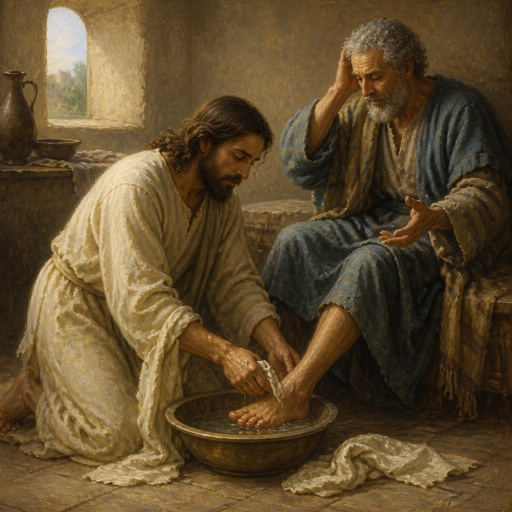
"Simon Peter saith unto him, Lord, not my feet only, but also my hands and my head." - John 13:9

john 21:9

John 13:13 - "Ye call me Master and Lord: and ye say well; for so I am."

John 10:9

John 10:9

John 10:9

JOHN 6:11-13

John 20:11-13

1 John 4:13

John 13:31-35

John 6:8-9

John 9:1-41

1 John 1:9

John 15:9-10

John 15:9-10

John 16:9 - "Of sin, because they believe not on me;"

John 9:9 - "Some said, This is he: others said, He is like him: but he said, I am he."

John 2:13 - "¶ And the Jews' passover was at hand, and Jesus went up to Jerusalem,"

John 10:13 - "The hireling fleeth, because he is an hireling, and careth not for the sheep."

Matthew 11:13 - "For all the prophets and the law prophesied until John."

John 9:1-3 - "As he went along, he saw a man blind from birth. His disciples asked him, "Rabbi, who sinned, this man or his parents, that he was born blind?" "Neither this man nor his parents sinned," said Jesus, "but this happened so that the works of God might be displayed in him."

Luke 9:9 - "And Herod said, John have I beheaded: but who is this, of whom I hear such things? And he desired to see him."

Matthew 17:13 - "Then the disciples understood that he spake unto them of John the Baptist."

John 13:30 - "He then having received the sop went immediately out: and it was night."