The Journey Beyond Our Understanding
"Then said the Jews, Will he kill himself? because he saith, Whither I go, ye cannot come." - John 8:22
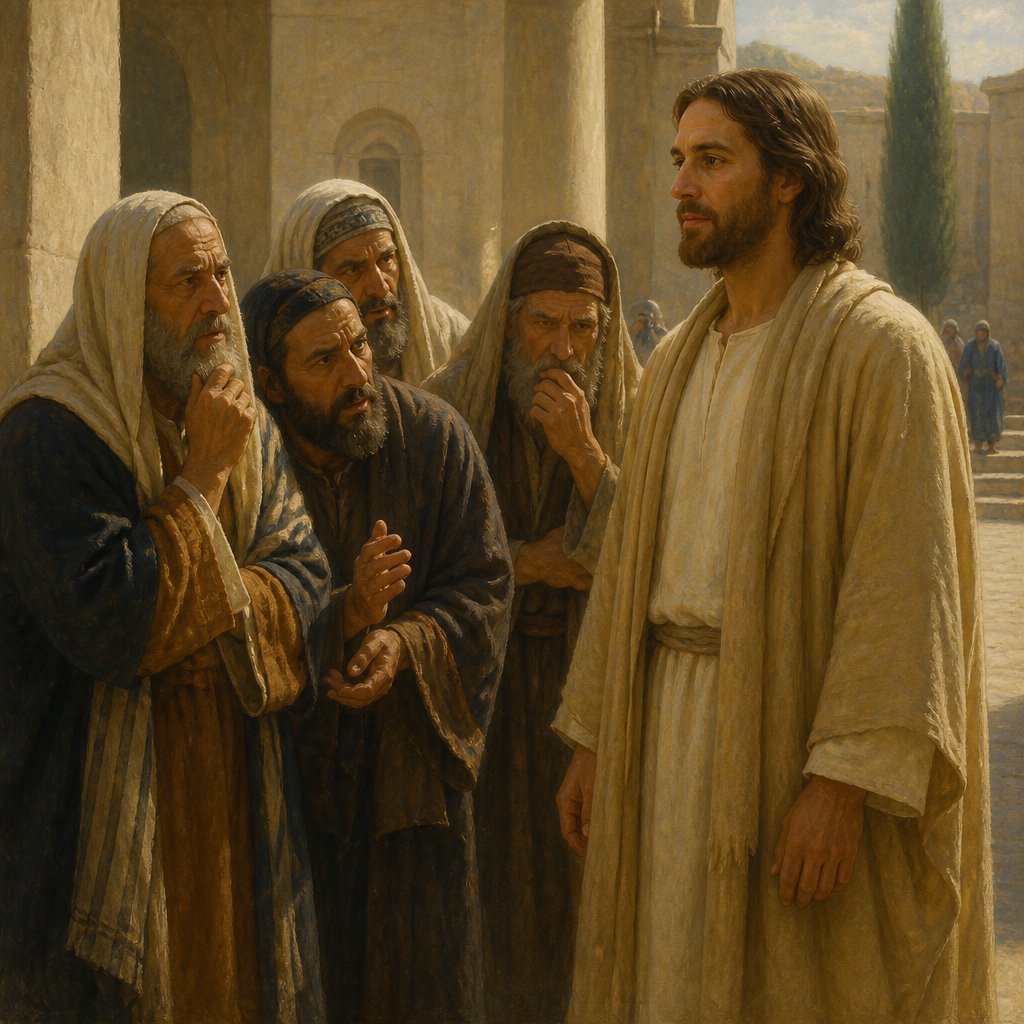
As we delve into John 8:22, where it is recorded, "Then said the Jews, Will he kill himself? because he saith, Whither I go, ye cannot come," we find ourselves at the intersection of misunderstanding and revelation. This verse captures a moment of confusion among the Jewish leaders and hints at the greater truths that Jesus was revealing about his mission and destiny. It invites us into a deeper contemplation about what it means to follow Him and the implications of His departure from this world.
In this passage, the Jews question Jesus’ statement about where He was going. Their immediate thought lands on a startling and dark assumption—that He might take His own life. This response not only reflects their ignorance of His true nature and purpose but also exposes a profound misunderstanding about life, death, and the eternal path that Jesus embodies. His talk of leaving stirred fear and confusion; they could not conceive of a world where their Rabbi would rise beyond this physical existence. They clung to their earthly understanding, and thus, their response mirrors our own struggles when confronted with divine mysteries.
To fully appreciate this passage, we have to recognize the broader narrative in which it exists. Jesus was revealing profound truths about Himself; He was proclaiming His identity as the Light of the World (John 8:12), and His mission was leading Him toward the ultimate sacrifice on the cross—an act they were incapable of understanding in their moment of skepticism.
Jesus often challenged the perceptions of those around Him, prompting reflection beyond the immediate circumstances. When He mentioned returning to the Father, it echoed themes of His preexistence and divine authority. His statement, "Whither I go, ye cannot come," signifies a transition to a heavenly realm and a relationship with the Father that was not accessible at that time. For the Jewish leaders, who were heavily bound by the Law and their traditions, this was a challenging truth to accept.
As we reflect on this verse, we might ask ourselves: Are there aspects of our faith that we, too, misunderstand? How often do we find ourselves clinging to earthly interpretations of God’s will instead of trusting in the divine yet unfathomable plans He has for us?
Consider the idea that Jesus knew their thoughts and questions intimately. He was aware of their inability to grasp the spiritual truths He presented. Yet, He engaged them anyway. This illustrates an essential aspect of our relationship with Christ: He invites us into conversation, urging us to explore our doubts, fears, and questions while gently guiding us toward truth.
In times of uncertainty or fear, we often grapple with questions that echo the doubts of the Jews. "How could God allow this situation?" or "Why would God direct me down such a difficult path?" Much like the Jews feared what Jesus would mean for their understanding of life and death, we sometimes fear the transitions that God asks us to navigate. Yet we are reminded here that Jesus has prepared a way for us, one that transcends our earthly limitations. His death was not an end but a means of redemption leading us to eternal life—a journey we can embrace with faith.
Ultimately, this verse nudges us to trust in God’s greater plan, recognizing that there is much we may not understand in this moment. As we ponder the depth of Jesus’ words, let us prepare our hearts to receive the truths He continues to reveal, even when they challenge our perceptions. In this way, may we move forward with hope, knowing that His path leads us into light and life, unfolding with grace and love.
Want to reflect more on John 8:22?
Continue your spiritual journey with Bible Chat — an AI-powered tool for exploring God's Word through conversation. Ask questions, discover connections, and deepen your understanding.
Get Our Apps


John 8:22 Artwork

John 8:22 - "Then said the Jews, Will he kill himself? because he saith, Whither I go, ye cannot come."
"Then said the Jews, Will he kill himself? because he saith, Whither I go, ye cannot come." - John 8:22

Luke 22:8 - "And he sent Peter and John, saying, Go and prepare us the passover, that we may eat."

Revelation 22:8 - "And I John saw these things, and heard them. And when I had heard and seen, I fell down to worship before the feet of the angel which shewed me these things."
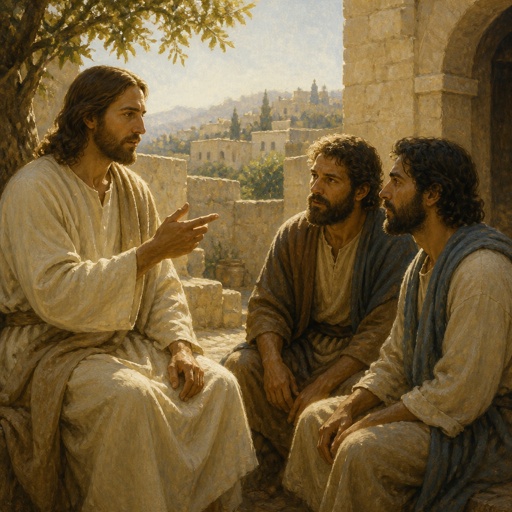
"And he sent Peter and John, saying, Go and prepare us the passover, that we may eat." - Luke 22:8

John 10:22 - "¶ And it was at Jerusalem the feast of the dedication, and it was winter."

John 8

John 8:44

John 8:44

John 8:44

John 8:8 - "And again he stooped down, and wrote on the ground."

John 8:12

John 8:12

John 8:12

John 8:12

Genesis 22-8

John 13:22 - "Then the disciples looked one on another, doubting of whom he spake."
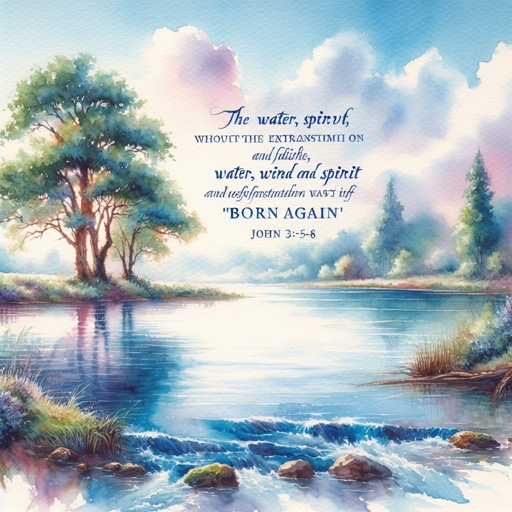
John 3:5-8

John 6:8-9

John 15:1-8

John 3:5-8

John 8:4-11
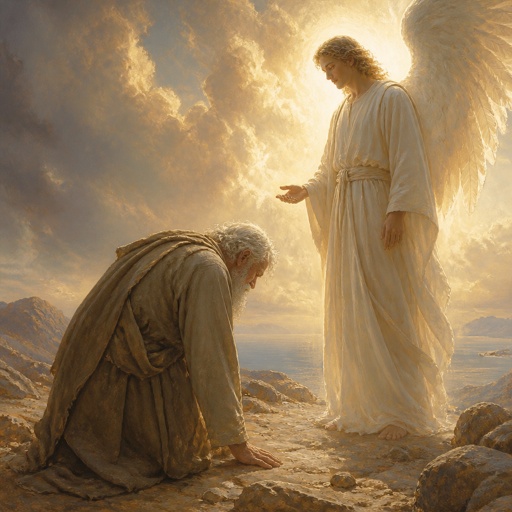
"And I John saw these things, and heard them. And when I had heard and seen, I fell down to worship before the feet of the angel which shewed me these things." - Revelation 22:8

John 5:22 - "For the Father judgeth no man, but hath committed all judgment unto the Son:"

John 19:22 - "Pilate answered, What I have written I have written."

John 3:3-8

John 3:5-8

John 12:22 - "Philip cometh and telleth Andrew: and again Andrew and Philip tell Jesus."

Proverbs 8:22-36

Proverbs 8:22-31