The Mystery of Christ: Knowing Him and the Unknown
"Howbeit we know this man whence he is: but when Christ cometh, no man knoweth whence he is." - John 7:27

John 7:27 (KJV) states, "Howbeit we know this man whence he is: but when Christ cometh, no man knoweth whence he is." This verse, nestled in the midst of a dialogue about Jesus’ identity, speaks volumes about the human inclination to box in the divine, to categorize the mysterious, and to reduce the unfathomable God to our limited understanding.
As the festival of tabernacles unfolded and Jesus taught in the temple, those who heard him were struck by a perplexing duality. They knew from whence he came; they saw him as a man from Nazareth, a carpenter’s son, raised in the humble regions of Galilee. Yet, they were also confronted with a much more profound identity that challenged their comprehension: the coming Christ, the Messiah whose origin would remain a divine mystery.
In the process of knowing Jesus, these onlookers unwittingly represent our struggles in faith. How often do we hear people say, "I know what I believe," or "I know who Jesus is," only to realize that what they claim to know barely scratches the surface of His vastness? The religious authorities and the common people alike were presuming to understand the Messiah's identity based solely on their preconceived notions. They were trapped in their limited worldview, unable to see the greater revelation God had in store.
The idea that when Christ comes, “no man knoweth whence he is,” reflects a profound humility about our understanding of God. It invites us to recognize the mystery of Christ that transcends human explanation. Jesus did not come merely to fit the roles defined by society, religion, or expectation. Instead, he came to redefine what it meant to have a relationship with God and to show us that the Almighty transcends all human categories. As followers of Christ, we have to confront our need to understand Him not just as a man, but as the Son of God, who existed before all time and who is presently seated at the right hand of the Father.
The passage teaches us to welcome the mystery of faith. When we seek to know Christ wholly, we realize that part of that journey involves recognizing that some aspects of His being and work are beyond our grasp. In our rational society, we often feel the need to quantify, to make sense, and to define the divine. But faith, by its very nature, invites a surrender to the unknown. In Isaiah 55:8-9, God reminds us, "For my thoughts are not your thoughts, neither are your ways my ways, saith the Lord. For as the heavens are higher than the earth, so are my ways higher than your ways, and my thoughts than your thoughts."
Moreover, this verse also imparts an exhortation to maintain a posture of awe in recognizing Christ. Understanding that He is both approachable and infinitely transcendent encourages us to press deeper into the relationship. It is easy to become complacent when we presume we have fully grasped who Jesus is. Yet, the journey of faith is one that continually leads us into uncharted territories of His grace, love, and majesty.
In prayer, we might reflect on our tendency to confine God to our understanding and to ask Him to reveal Himself anew. Let us meditate on the fact that Christ indeed knows where He comes from and where He is going, even if we do not yet have a complete grasp of His ways. Embracing this mystery can lead us to deeper faith and even a more intimate relationship with our Savior.
So let us open our hearts, yielding to the transformative power of Christ, whose identity as the Son of God challenges our assumptions and expands our understanding beyond the limitations of our earthly comprehension. As we explore this beautiful mystery, we grow closer to the truth, learning not only who Christ is, but also who we are meant to be in Him.
Want to reflect more on John 7:27?
Continue your spiritual journey with Bible Chat — an AI-powered tool for exploring God's Word through conversation. Ask questions, discover connections, and deepen your understanding.
Get Our Apps


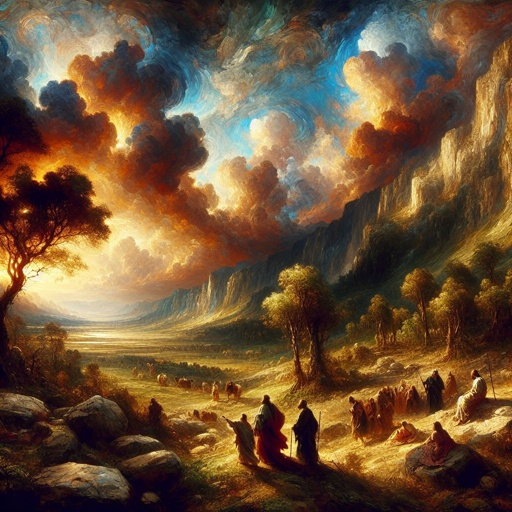
John 7:27 Artwork

John 7:27 - "Howbeit we know this man whence he is: but when Christ cometh, no man knoweth whence he is."

"Howbeit we know this man whence he is: but when Christ cometh, no man knoweth whence he is." - John 7:27

John 20:27

John 20:27

John 19:25-27

1 John 2:27

John 3:27 - "John answered and said, A man can receive nothing, except it be given him from heaven."

1 John 2:27

John 19:25-27

John 19:26-27

1 John 2:27

1 John 2:27

John 18:27 - "Peter then denied again: and immediately the cock crew."

John 8:27 - "They understood not that he spake to them of the Father."

John 19:25-27 with emphasis on Mary
John 7:38

John 15:7

John 7:38

John 7:38

John 15:7

John 7:38

John 7:17-18

John 7:37-39

John 7:17-18

John 7:37-39

Proverbs 7:26-27

John 7:17-18

John 7:17-18

John 10:27 - "My sheep hear my voice, and I know them, and they follow me:"

Matthew 7:24-27