The Testing of Our Faith
"And this he said to prove him: for he himself knew what he would do." - John 6:6

In John 6:6, we encounter a moment laden with significance: "And this he said to prove him: for he himself knew what he would do." This verse occurs in the context of a remarkable narrative where Jesus, amidst a crowd that had gathered after witnessing miracles, poses a question to Philip concerning how they might feed the multitude of over five thousand people. Jesus’ query was not for information, nor was it an expression of uncertainty; rather, it was a decisive moment intended to test Philip’s faith and understanding of who Jesus truly was.
At first glance, one might consider this scenario as an exercise in logistics—a mere inquiry about finances or resources. But in a deeper sense, it becomes a profound spiritual lesson. Jesus already had a plan, yet he chose to engage Philip and the disciples in the process. Herein lies a vital truth: God often tests us not to find out what we will do, but to reveal to us what we are truly made of.
For Philip, the question illuminated his limitations: "Two hundred pennyworth of bread is not sufficient for them, that every one of them may take a little" (John 6:7). This response shows us that Philip was focused on earthly problems—calculating expenses and resources. He had been with Jesus, witnessing His divine authority, yet at that moment, Philip’s doubt overshadowed his faith. How often do we find ourselves in similar situations? Faced with insurmountable challenges, we revert to our human capabilities, measuring problems with our earthly understanding rather than trusting in the boundless power of Christ.
Jesus’ question was designed to stretch Philip's faith, prompting a revelation. In our lives, God often places us in circumstances that defy our understanding, intended to stir our belief and reliance upon Him. The truth is, when we approach hurdles in our lives, be it through financial difficulties, health issues, or strained relationships, our knee-jerk reaction tends to echo Philip’s: we assess the situation through a lens of impossibility, often forgetting the potential of divine intervention.
Moreover, the phrase "for he himself knew what he would do" indicates the sovereignty and foreknowledge of Christ. It assures us that while we may feel lost in uncertainty, our Savior is not surprised by our circumstances. He sees the end from the beginning (Isaiah 46:10) and possesses a master plan that transcends our understanding. God’s ways are often contrary to our ways, yet He invites us to trust Him fully even when we cannot see the ending.
In moments of trial, we are reminded to align our faith with God’s character. He is not a distant God but one who intimately desires a relationship with us. The act of proving or testing draws us closer to Him, encouraging us to seek His wisdom and strength rather than relying solely on our abilities.
As we meditate on John 6:6, let us challenge ourselves: Are we like Philip, steeped in doubt and calculating the impossibilities of our challenges, or are we willing to place our trust in a God who knows what He will do? When we find ourselves stretched and tested, remember that God uses these moments to refine us, to strengthen our faith, and to reveal His miraculous power in ways we cannot comprehend.
The next time you face an overwhelming situation, instead of panicking or resorting to human solutions, take it to the Lord in prayer. Ask Him to reveal His plans to you and grant you the faith to believe that He indeed knows what He will do. Let this verse be a reminder that God’s provision and guidance often come amid our trials; and more importantly, they come to lead us into a deeper trust in His unfathomable goodness and faithfulness. Amen.
Want to reflect more on John 6:6?
Continue your spiritual journey with Bible Chat — an AI-powered tool for exploring God's Word through conversation. Ask questions, discover connections, and deepen your understanding.
Get Our Apps


John 6:6 Artwork

John 6:6 - "And this he said to prove him: for he himself knew what he would do."

"And this he said to prove him: for he himself knew what he would do." - John 6:6

He said this only to test Philip. He himself knew exactly what he was going to do. (Jn 6:6)

John 6:63

John 6:63

John 6:63

John 6:63
John 1:6 - "¶ There was a man sent from God, whose name was John."
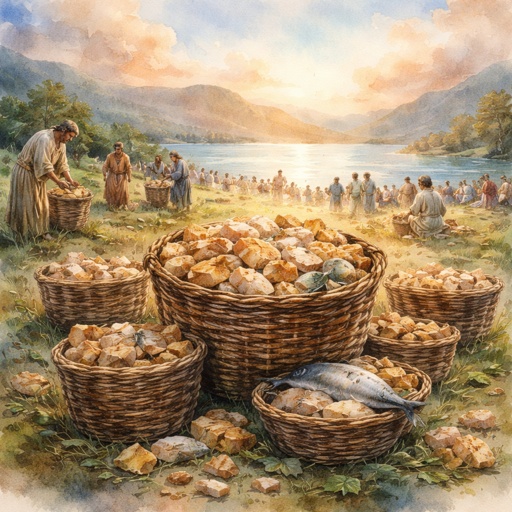
John 6:12

John 6:40

John 21:6

John 14:6

John 6:16

John 21:6

John 6:37

John 21:6

John 21:6

John 6:40

John 6:8-9

JOHN 6:11-13

John 4:6-7

John 6:48 - "I am that bread of life."

John 6:4 - "And the passover, a feast of the Jews, was nigh."

John 6:18 - "And the sea arose by reason of a great wind that blew."

John 6:20 - "But he saith unto them, It is I; be not afraid."

John 14:6 Three dimensional

2 John 1:6 – "And this is love: that we walk in obedience to his commands."

2 John 1:6 – "And this is love: that we walk in obedience to his commands."

John 6:59 - "These things said he in the synagogue, as he taught in Capernaum."

John 6:49 - "Your fathers did eat manna in the wilderness, and are dead."