The Blessing in the Breaking of Bread
"(Howbeit there came other boats from Tiberias nigh unto the place where they did eat bread, after that the Lord had given thanks:)" - John 6:23
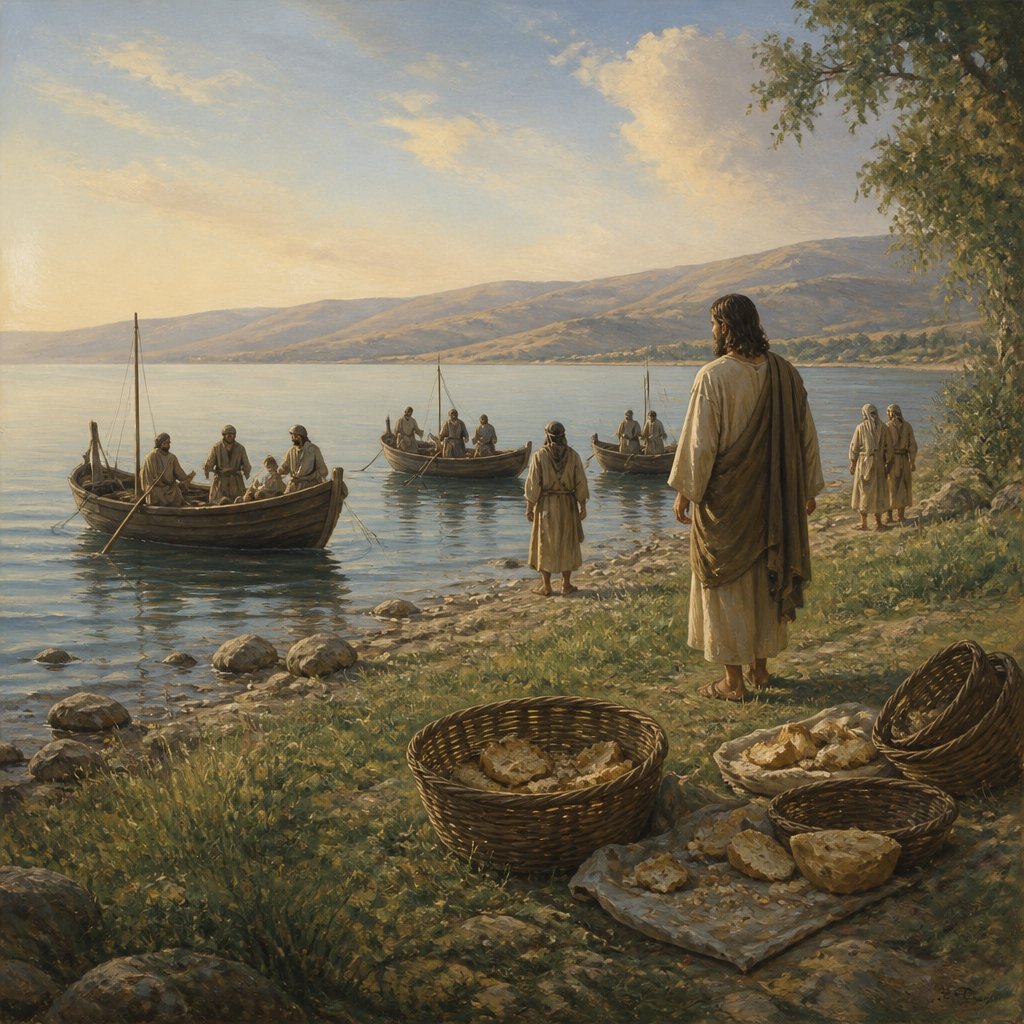
John 6:23 states, "Howbeit there came other boats from Tiberias nigh unto the place where they did eat bread, after that the Lord had given thanks." This verse appears within the context of the miraculous feeding of the five thousand, a remarkable event that not only showcases the power of Jesus Christ but also highlights the profound meaning of thankfulness in our relationship with God.
At first glance, John 6:23 may seem merely a descriptive passage about the logistics of the boats coming from Tiberias, but it unfolds deeper spiritual implications when we observe it carefully in light of the surrounding scripture.
### The Context of Gratitude
Before this verse, we witness one of the most significant miracles performed by Christ—He feeds five thousand people with just five loaves and two fish. A small boy's lunch is transformed into a banquet that leaves everyone satisfied, with twelve baskets of leftovers! This miracle exemplifies the abundance of God's provision and the importance of gratitude. When Jesus took the loaves, He gave thanks (John 6:11), setting a divine example for us.
The act of giving thanks is foundational in the life of a believer. It reminds us that everything comes from God—from the smallest morsel of bread to the vastness of our blessings. When we practice giving thanks, we acknowledge that all we have is a gift. In speaking on the subject of thankfulness, Paul reminds us in 1 Thessalonians 5:18, "In every thing give thanks: for this is the will of God in Christ Jesus concerning you."
In the context of the bread, what the Lord offered through that miraculous meal extends beyond physical nourishment. We see the metaphor of bread representing Jesus Himself, the Bread of Life. He states later in this chapter (John 6:35), "I am the bread of life: he that cometh to me shall never hunger; and he that believeth on me shall never thirst."
### Tiberias and the Journey of Faith
Tiberias, situated on the western shore of the Sea of Galilee, symbolizes a place of bustling human activity and commerce. The arrival of other boats from Tiberias to witness the after-effects of the miraculous meal suggests humanity's unending quest for satisfaction and fulfillment. However, we must recognize that true sustenance is not found on the shores of earthly living but in the heart of Christ.
The boats coming from Tiberias also symbolize our pursuit of God's presence. Just as those boats seek out where bread was eaten, we too are called to seek out the living bread. Jesus invites us—"Come unto me, all ye that labour and are heavy laden, and I will give you rest" (Matthew 11:28). This verse draws us into a deeper relationship with Him, reflecting that our search for satisfaction is best resolved in a spiritual context rather than being caught in the hustle and bustle of life.
### The Call to Action
By contemplating John 6:23, we are encouraged to cultivate a life of gratitude and an awareness of the divine presence in our daily routines. We need to examine our hearts and consider how we seek sustenance in our lives. Are we merely chasing the next fleeting pleasure, or are we turning to the Bread of Life for our every need?
In practical terms, how can we embody this practice of gratitude?
1. **Daily Acknowledgment:** Start each day by recognizing God’s blessings. A simple prayer of thanks can transform your perspective, allowing you to see God's hand in all things.
2. **Celebrate Community Meals:** Join with family and friends in thankful fellowship, mirroring the gathering where bread was shared. A meal shared in gratitude can become a time of reflecting on God’s goodness.
3. **Encourage One Another:** Share stories of how God has provided in your life with others. Encourage them to recognize His blessings in their journeys.
### Conclusion
In summary, John 6:23 carries a profound lesson of thankfulness and divine sustenance. Jesus’ act of giving thanks shapes our understanding of true nourishment—both physical and spiritual. As boats arrive from Tiberias searching for bread, let us approach with hearts of gratitude, recognizing that our ultimate sustenance comes from Christ alone, the source of life and abundance. May we not only eat bread in remembrance of His provision but also partake of His life generously offered to all who believe.
Want to reflect more on John 6:23?
Continue your spiritual journey with Bible Chat — an AI-powered tool for exploring God's Word through conversation. Ask questions, discover connections, and deepen your understanding.
Get Our Apps


John 6:23 Artwork
John 6:23 - "(Howbeit there came other boats from Tiberias nigh unto the place where they did eat bread, after that the Lord had given thanks:)"
"(Howbeit there came other boats from Tiberias nigh unto the place where they did eat bread, after that the Lord had given thanks:)" - John 6:23

John 3:23 - "¶ And John also was baptizing in Aenon near to Salim, because there was much water there: and they came, and were baptized."

John 14:23-29

John 14:23-29

John 14:23-29

John 10:23 - "And Jesus walked in the temple in Solomon's porch."

John 1:6 - "¶ There was a man sent from God, whose name was John."

John 6:63

John 6:63

Matthew 6:23

John 6:63

John 6:63

John 15:23 - "He that hateth me hateth my Father also."

John 9:23 - "Therefore said his parents, He is of age; ask him."
John 6:12

John 6:40

John 21:6

John 14:6

Romans 6:23

Romans 6:23

John 21:6

John 6:16

John 6:37

John 21:6

John 6:40

John 21:6

Genesis 23-6

John 13:23 - "Now there was leaning on Jesus' bosom one of his disciples, whom Jesus loved."

John 12:23 - "¶ And Jesus answered them, saying, The hour is come, that the Son of man should be glorified."