Leaving the Waterpot Behind: A Journey of Transformation
"The woman then left her waterpot, and went her way into the city, and saith to the men," - John 4:28
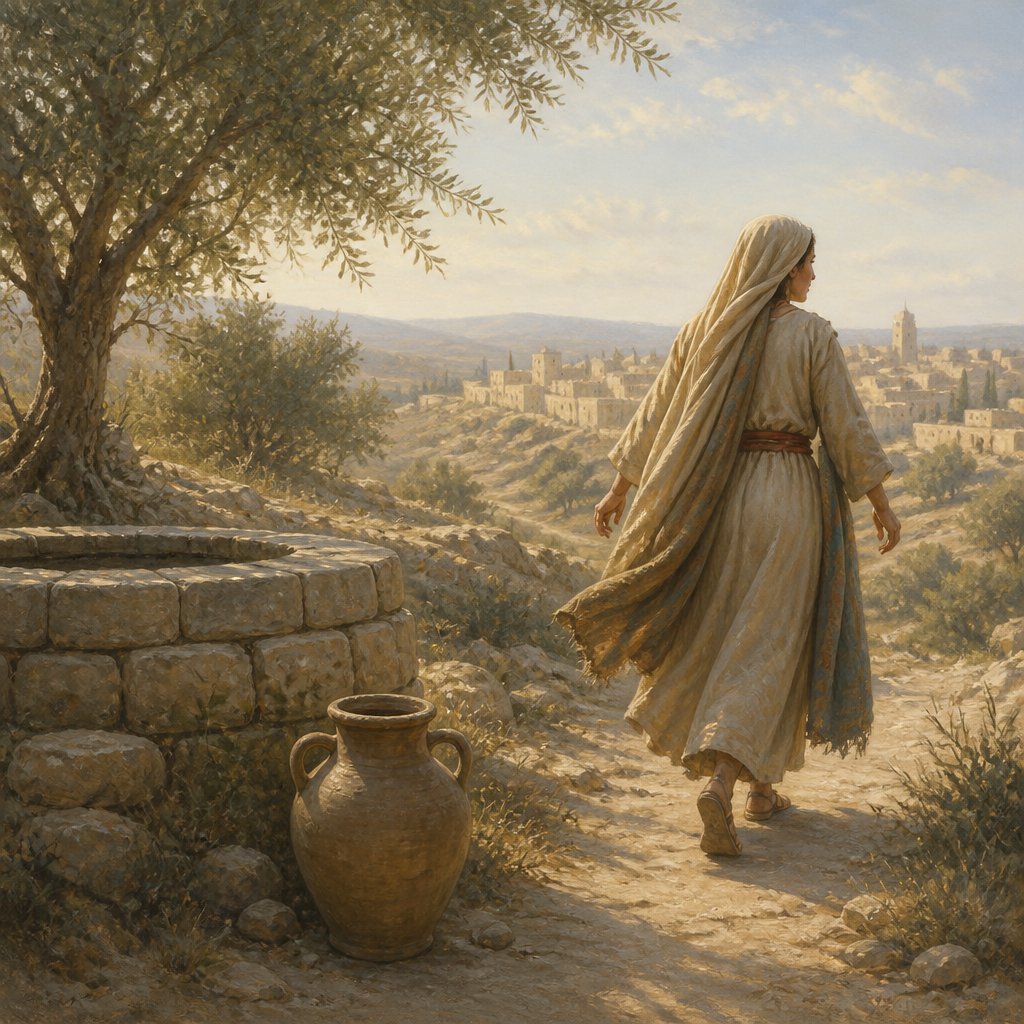
In the Gospel of John, chapter 4, we encounter the profound narrative of Jesus' encounter with the Samaritan woman at the well. This story, rich in symbolism and deep in spiritual meaning, culminates in the simple yet powerful verse, "The woman then left her waterpot, and went her way into the city, and saith to the men" (John 4:28 KJV). In this verse, we see a remarkable transformation taking place, one that resonates with each of us in our own spiritual journeys.
The first thing we notice is the waterpot. For the Samaritan woman, the waterpot was not merely a vessel for her daily task; it represented her past, her identity, her struggles, and her burdens. Traditionally, women in her culture would carry water to fulfill the family's needs, and for her, this task was routine. However, by focusing on the waterpot, we see more than just a physical object; it symbolizes her emotional and spiritual baggage, one heavy with shame and societal rejection. She came to the well in the heat of the day, avoiding the other women who looked down upon her, but in her encounter with Jesus, she found a love that transcended her sin and shame.
When she leaves her waterpot, this act signifies a critical moment of decision. It is not merely a physical act of leaving behind a container filled with water; it is a powerful metaphor for leaving behind her old life—a life defined by her past, characterized by loneliness, and encapsulated by regret. The waterpot represents all the burdens we carry—our fears, insecurities, past mistakes, and the relentless pursuit of worldly satisfaction. By setting it down, the woman demonstrates an act of faith and surrender.
In her encounter with Jesus, the woman discovered something infinitely greater than the physical water she came to draw. Jesus offered her “living water,” a fount that promised to quench her spiritual thirst forever. This illustrates a fundamental truth in our walk with Christ: when we encounter the living God, we are forever changed. We are invited not merely to quench our thirst but to have it transformed into a river of life within us, leading us out into the world.
After leaving her waterpot, she goes into the city, emboldened by her experience. She does not return to her old ways; instead, she runs towards the men of the city to share the good news of what she encountered. This act of testimony signifies a shift from shame to purpose, from isolation to community. The very people who may have shunned her now become the audience of her transformed life. This is a poignant reminder that when we encounter Christ, we are not only transformed individually, but we are also tasked with sharing that transformation with others. The woman's encounter with Jesus catalyzed her mission, turning her from a mere water bearer into a messenger of hope.
As we reflect upon John 4:28, let us ask ourselves: What is our waterpot? What is it that we are carrying that prevents us from living fully in the freedom and joy offered by Christ? What burdens do we cling to, thinking they define us? It may be our past mistakes, disappointments, or sometimes even the comforts of routine. Like the Samaritan woman, it is time to leave those waterpots behind.
In each of our lives, there comes an invitation to encounter Jesus in a personal and transformative way. When we accept this invitation and respond, we find the courage to leave behind what we no longer need, embracing a new identity in Christ. We are called not only to experience His grace but also to be conduits of His love, sharing our story with those around us. Just as the woman became a catalyst for others to believe, may we, too, go forth empowered to spread the message of hope and transformation to the world.
Want to reflect more on John 4:28?
Continue your spiritual journey with Bible Chat — an AI-powered tool for exploring God's Word through conversation. Ask questions, discover connections, and deepen your understanding.
Get Our Apps


John 4:28 Artwork

John 4:28 - "The woman then left her waterpot, and went her way into the city, and saith to the men,"
"The woman then left her waterpot, and went her way into the city, and saith to the men," - John 4:28

John 14:28

John 5:28

John 5:28

John 5:28

John 1:28 - "These things were done in Bethabara beyond Jordan, where John was baptizing."

Mark 8:28 - "And they answered, John the Baptist: but some say, Elias; and others, One of the prophets."

"These things were done in Bethabara beyond Jordan, where John was baptizing." - John 1:28

Exodus 28:4

Exodus 28:4

John 20:28 - "And Thomas answered and said unto him, My Lord and my God."

John 5:28 - "Marvel not at this: for the hour is coming, in the which all that are in the graves shall hear his voice,"

John 13:28 - "Now no man at the table knew for what intent he spake this unto him."

John 9:28 - "Then they reviled him, and said, Thou art his disciple; but we are Moses' disciples."

Exodus 28:4

Exodus 28:4

John 6:28 - "Then said they unto him, What shall we do, that we might work the works of God?"

John 4:4 - "And he must needs go through Samaria."

Ezekiel 1:4-28

John 4:16

John 3:4

John 4:16

John 4:16

John 4:16

John 4:16

John 16:28 - "I came forth from the Father, and am come into the world: again, I leave the world, and go to the Father."

Daniel 4:28 - "¶ All this came upon the king Nebuchadnezzar."

Ezekiel 1:4-28 – The vision of the four living creatures and the wheels.

John 19:28 - "¶ After this, Jesus knowing that all things were now accomplished, that the scripture might be fulfilled, saith, I thirst."