The Glory Revealed: Understanding the Miraculous in Everyday Life
"This beginning of miracles did Jesus in Cana of Galilee, and manifested forth his glory; and his disciples believed on him." - John 2:11
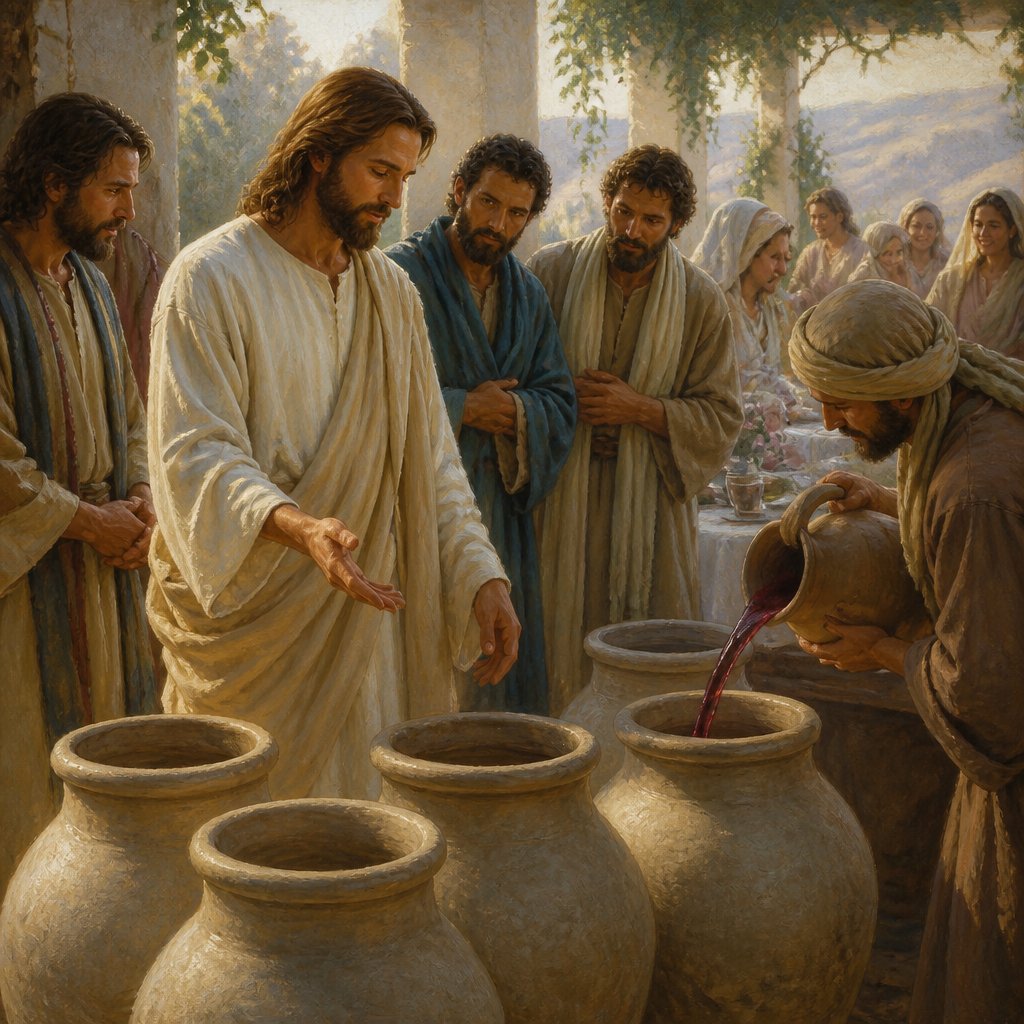
In John 2:11, we find a poignant moment in the early ministry of Jesus that carries substantial theological and practical implications: "This beginning of miracles did Jesus in Cana of Galilee, and manifested forth his glory; and his disciples believed on him." This verse not only marks the first miracle Jesus performed, transforming water into wine at a wedding feast, but it serves as a pivotal point in revealing the nature and character of Christ, inviting us to explore the notion of divine glory through the lens of our own daily lives.
### A Profound Miracle in Ordinary Settings
The setting of this miracle is noteworthy; Jesus performed it at a seemingly inconsequential social gathering. The wedding at Cana was an ordinary affair, yet through this event, Jesus transformed the mundane into the extraordinary. This teaches us an essential lesson: the presence of Christ brings significance to what appears commonplace. He enters our ordinary moments and infuses them with purpose and splendor. When we encounter difficulties or monotony in our days, we must remember that Christ is actively working behind the scenes, preparing to turn our limited perspectives into experiences of His infinite glory.
### Manifestation of Glory
The verse says that through this miracle, Jesus "manifested forth his glory." The term "manifested" means to make something visible or known, and Jesus did this through the miraculous act of changing water into wine. This miracle was a revelation of His divine nature, showcasing not only His power but also His ability to meet needs and exceed expectations. It indicates how God acts not just in grand gestures but also in subtle yet impactful ways within our lives.
When we face life's challenges, we can often overlook the divine workings around us. Miracles might not always appear as dramatic interventions; they often manifest in the slow and faithful unfolding of God's plans, revealing His glory in ways we could never orchestrate on our own. Are there moments in your life when you recognized the hand of God at work, even if it was subtle? Are you allowing yourself to be open to His presence in unexpected places?
### The Response of Faith
The latter half of John 2:11 reveals a transformative response. It states, "and his disciples believed on him." The miracle led the disciples to deeper faith. Faith is a critical component of our relationship with Jesus; it is how we respond to His revelations, His glory, and His works. In witnessing the miracle, the disciples' belief in Jesus was fortified—not merely through acknowledgment of His power but because they personally experienced the manifestation of His glory.
Likewise, in our lives, we are called to respond to the revelations of Christ with a faith that is not static but growing and dynamic. How are we nurturing our faith in light of the miracles we encounter? If our eyes are opened to recognize God's hand in our lives, our belief will grow deeper.
### Invitation to Witness
This narrative invites us not only to witness but also to participate in the ongoing work of Christ in the world. As the disciples believed on Him through the miracle, we are likewise called to be witnesses of His glory. Every act of kindness, every moment of grace extended, and every small victory in our lives is an opportunity to mirror the glory of Christ and testify to His goodness.
In conclusion, John 2:11 is a profound reminder of how Jesus interacts with our everyday lives to reveal His glory. As we go about our daily routines, may we remain attentive to the miraculous—those sacred moments where the extraordinary meets the ordinary—and may we always respond in faith, just as the disciples did, allowing that faith to transform our lives and the lives of those around us.
Want to reflect more on John 2:11?
Continue your spiritual journey with Bible Chat — an AI-powered tool for exploring God's Word through conversation. Ask questions, discover connections, and deepen your understanding.
Get Our Apps


John 2:11 Artwork

John 2:11 - "This beginning of miracles did Jesus in Cana of Galilee, and manifested forth his glory; and his disciples believed on him."

1 John 2:11 - "But he that hateth his brother is in darkness, and walketh in darkness, and knoweth not whither he goeth, because that darkness hath blinded his eyes."
"This beginning of miracles did Jesus in Cana of Galilee, and manifested forth his glory; and his disciples believed on him." - John 2:11
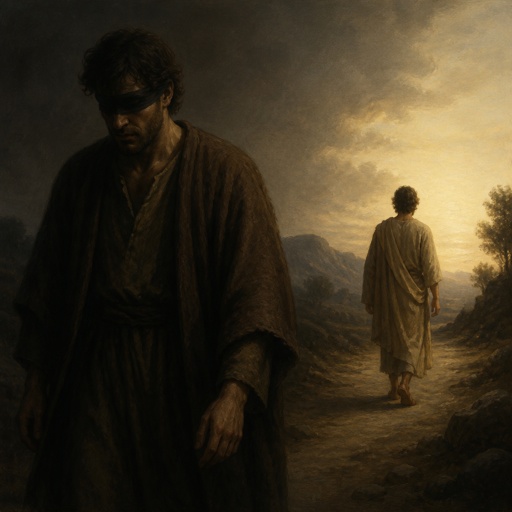
"But he that hateth his brother is in darkness, and walketh in darkness, and knoweth not whither he goeth, because that darkness hath blinded his eyes." - 1 John 2:11

2 John 1:11 - "For he that biddeth him God speed is partaker of his evil deeds."

1 John 2:27

1 John 2:27

1 John 2:27

1 John 2:27

Matthew 11:2 - "Now when John had heard in the prison the works of Christ, he sent two of his disciples,"

John 11:2 - "(It was that Mary which anointed the Lord with ointment, and wiped his feet with her hair, whose brother Lazarus was sick.)"

John (11:35) Jesus wept.

"For he that biddeth him God speed is partaker of his evil deeds." - 2 John 1:11

John (11:35) Jesus wept.

John (11:35) Jesus wept.

John 11:35

John 15.1-11

John 11:35

John (11:35) Jesus wept.

John (11:35) Jesus wept.

John (11:35) Jesus wept.

John (11:35) Jesus wept.

John (11:35) Jesus wept.

John (11:35) Jesus wept.
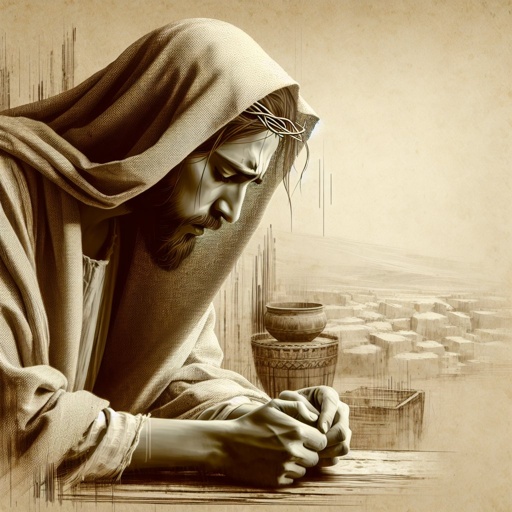
John 11:35 - "Jesus wept."

John (11:35) Jesus wept.

John (11:35) Jesus wept.

John (11:35) Jesus wept.

John (11:35) Jesus wept.

John (11:35) Jesus wept.