The Nature of Christ’s Kingdom
"Then Pilate entered into the judgment hall again, and called Jesus, and said unto him, Art thou the King of the Jews? Jesus answered him, Sayest thou this thing of thyself, or did others tell it thee of me? Pilate answered, Am I a Jew? Thine own nation and the chief priests have delivered thee unto me: what hast thou done? Jesus answered, My kingdom is not of this world: if my kingdom were of this world, then would my servants fight, that I should not be delivered to the Jews: but now is my kingdom not from hence. Pilate therefore said unto him, Art thou a king then? Jesus answered, Thou sayest that I am a king. To this end was I born, and for this cause came I into the world, that I should bear witness unto the truth. Every one that is of the truth heareth my voice. Pilate saith unto him, What is truth? And when he had said this, he went out again unto the Jews, and saith unto them, I find in him no fault at all. But ye have a custom, that I should release unto you one at the passover: will ye therefore that I release unto you the King of the Jews? Then cried they all again, saying, Not this man, but Barabbas. Now Barabbas was a robber." - John 18:33-40
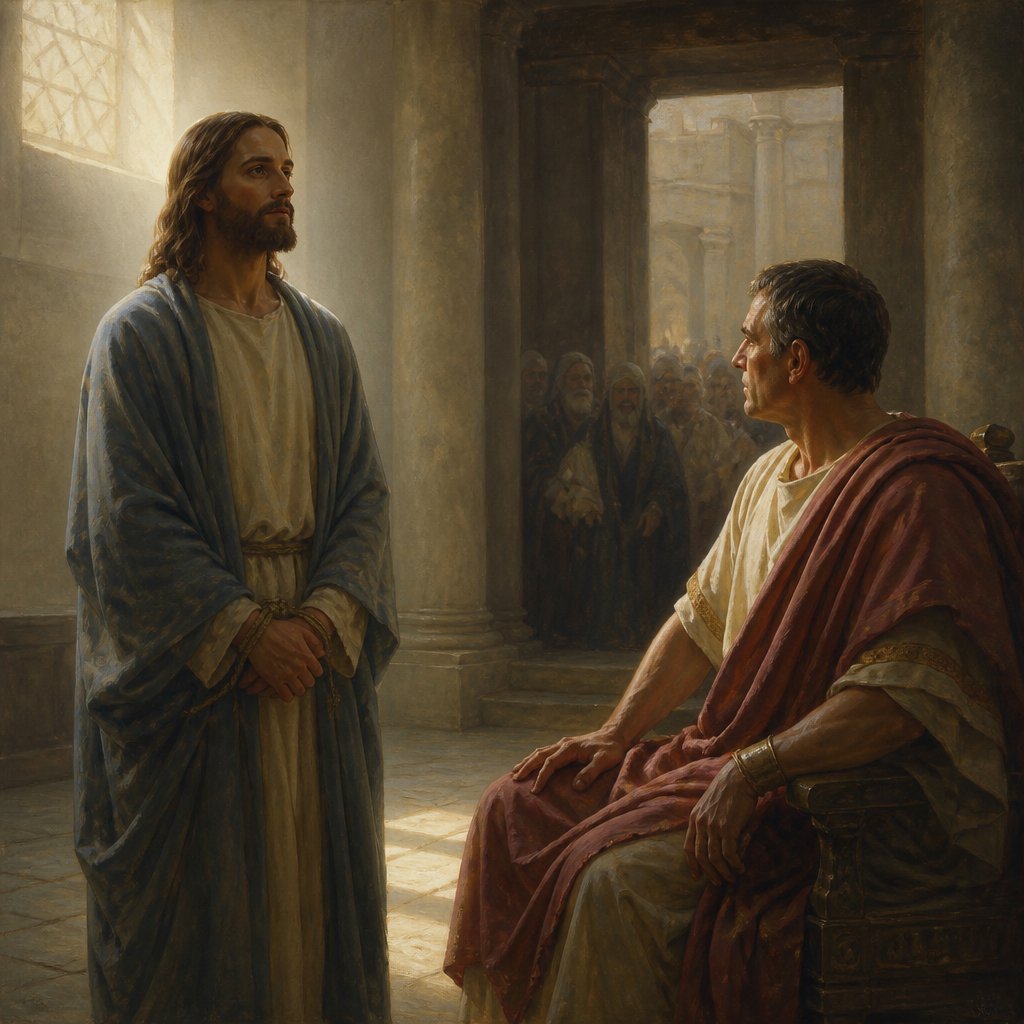
In the dramatic encounter between Jesus and Pilate, captured in John 18:33-40 KJV, we see a clash of kingdoms and a profound revelation of truth. Pilate's inquiry, "Art thou the King of the Jews?" sets the stage for a theological discourse that transcends the political tensions of the day. It raises a question that resonates with every believer: How do we understand the kingship of Christ in an age characterized by conflict and confusion?
Jesus’ response to Pilate exposes a fundamental difference between earthly principles of power and the nature of His own kingdom. "My kingdom is not of this world," Jesus states. By this, He invites us to reflect on the very nature of our allegiance. What does it mean to belong to a kingdom that operates outside of worldly norms? In a world where power is often tied to domination and control, Jesus introduces us to a revolutionary kind of power characterized by servanthood, love, and truth.
To acknowledge Christ as our King is to recognize that His dominion is not defined by territory or political might but by the realm of human hearts. His kingdom is rooted in His nature—loving, just, and merciful. While worldly authorities often fight to uphold their positions through force and oppression, Christ’s kingship compels us to reflect on our role as citizens of His kingdom. He demonstrated this by His choice to endure suffering instead of retaliation, showing us that true strength is not in the sword but in sacrificial love.
Pilate’s questions also reveal a deeper existential struggle: "What is truth?" Here we see the heart of Jesus’ mission delivered in splendid clarity. He came to bear witness unto the truth, which is embodied in His very being. To be a follower of Christ is to pursue truth, a pursuit that often runs contrary to the narratives presented by the world. In our daily interactions, we are faced with multiple definitions of truth—some are shaped by convenience, others by societal norms. Christ calls us to a higher standard, insisting that truth can only be anchored in Him.
The moment would prove pivotal, as Pilate ultimately finds no fault in Jesus yet succumbs to the pressure of the crowd, choosing to release Barabbas, a robber, over the true King. This choice mirrors the choices we make daily—will we choose the easy path, defined by societal pressures and convenience, or will we cling to Christ, even when it places us at odds with the prevailing culture? Jesus’ declaration of His kingdom invites us to stand firm in our convictions, regardless of external circumstances. The question posed by the crowd—"Not this man, but Barabbas"—is also echoed in our lives as we encounter the temptations to choose what is comfortable over what is right.
Let us search our hearts as we stand at the crossroads of faith. Are we willing to endure the scorn of society for the sake of truth? Are we prepared to align ourselves with the values of Christ’s kingdom, which often requires us to swim against the tide? Jesus’ kingdom offers us hope and purpose, drawing us into a narrative that is vast and eternal, challenging us to be bearers of His truth in every sphere of our lives.
In essence, John 18:33-40 is not merely an account of Jesus’ trial but a reflection of our own discipleship. It challenges us to evaluate the allegiances we hold and to whom we pledge our loyalty. As we navigate the complexities of our modern context, let us remember that we serve a King whose reign is characterized by truth, love, and sacrifice, beckoning us to participate in His eternal kingdom that will never fade away.
Want to reflect more on John 18:33-40?
Continue your spiritual journey with Bible Chat — an AI-powered tool for exploring God's Word through conversation. Ask questions, discover connections, and deepen your understanding.
Get Our Apps


John 18:33-40 Artwork

John 18:33-40 - "Then Pilate entered into the judgment hall again, and called Jesus, and said unto him, Art thou the King of the Jews? Jesus answered him, Sayest thou this thing of thyself, or did others tell it thee of me? Pilate answered, Am I a Jew? Thine own nation and the chief priests have delivered thee unto me: what hast thou done? Jesus answered, My kingdom is not of this world: if my kingdom were of this world, then would my servants fight, that I should not be delivered to the Jews: but now is my kingdom not from hence. Pilate therefore said unto him, Art thou a king then? Jesus answered, Thou sayest that I am a king. To this end was I born, and for this cause came I into the world, that I should bear witness unto the truth. Every one that is of the truth heareth my voice. Pilate saith unto him, What is truth? And when he had said this, he went out again unto the Jews, and saith unto them, I find in him no fault at all. But ye have a custom, that I should release unto you one at the passover: will ye therefore that I release unto you the King of the Jews? Then cried they all again, saying, Not this man, but Barabbas. Now Barabbas was a robber."
"Then Pilate entered into the judgment hall again, and called Jesus, and said unto him, Art thou the King of the Jews? Jesus answered him, Sayest thou this thing of thyself, or did others tell it thee of me? Pilate answered, Am I a Jew? Thine own nation and the chief priests have delivered thee unto me: what hast thou done? Jesus answered, My kingdom is not of this world: if my kingdom were of this world, then would my servants fight, that I should not be delivered to the Jews: but now is my kingdom not from hence. Pilate therefore said unto him, Art thou a king then? Jesus answered, Thou sayest that I am a king. To this end was I born, and for this cause came I into the world, that I should bear witness unto the truth. Every one that is of the truth heareth my voice. Pilate saith unto him, What is truth? And when he had said this, he went out again unto the Jews, and saith unto them, I find in him no fault at all. But ye have a custom, that I should release unto you one at the passover: will ye therefore that I release unto you the King of the Jews? Then cried they all again, saying, Not this man, but Barabbas. Now Barabbas was a robber." - John 18:33-40

John 18:40 - "Then cried they all again, saying, Not this man, but Barabbas. Now Barabbas was a robber."

John 18:33 - "Then Pilate entered into the judgment hall again, and called Jesus, and said unto him, Art thou the King of the Jews?"

"Then cried they all again, saying, Not this man, but Barabbas. Now Barabbas was a robber." - John 18:40

John 6:40

John 6:40

John 16:33

John 16:33

John 16:33

John 16:33
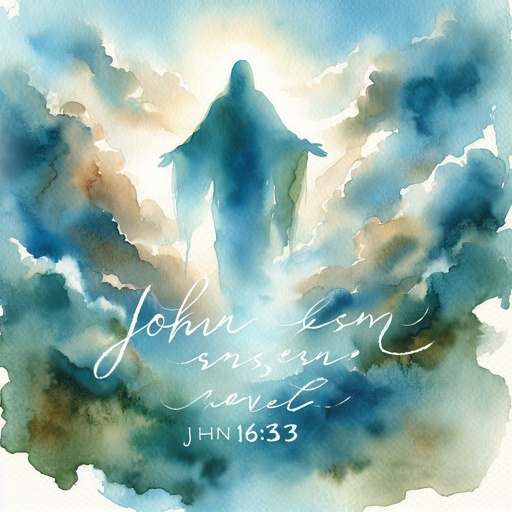
John 16:33

John 16:33

Numbers 33:40 - "And king Arad the Canaanite, which dwelt in the south in the land of Canaan, heard of the coming of the children of Israel."

John 16 : 33

John 1:40 - "One of the two which heard John speak, and followed him, was Andrew, Simon Peter's brother."

John 10:40 - "And went away again beyond Jordan into the place where John at first baptized; and there he abode."

John 1:33

John 5:33 - "Ye sent unto John, and he bare witness unto the truth."
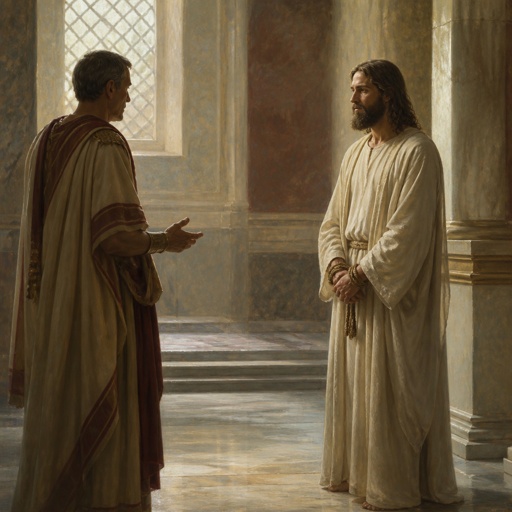
"Then Pilate entered into the judgment hall again, and called Jesus, and said unto him, Art thou the King of the Jews?" - John 18:33

John 5:40 - "And ye will not come to me, that ye might have life."

Genesis 18-33

John 7:40 - "¶ Many of the people therefore, when they heard this saying, said, Of a truth this is the Prophet."

Exodus 40:33 - "And he reared up the court round about the tabernacle and the altar, and set up the hanging of the court gate. So Moses finished the work."

John 19:40 - "Then took they the body of Jesus, and wound it in linen clothes with the spices, as the manner of the Jews is to bury."

Ezekiel 40:18 - "And the pavement by the side of the gates over against the length of the gates was the lower pavement."

John 9:33 - "If this man were not of God, he could do nothing."

Numbers 33:18 - "And they departed from Hazeroth, and pitched in Rithmah."

Genesis 40:18 - "And Joseph answered and said, This is the interpretation thereof: The three baskets are three days:"

Job 40:18 - "His bones are as strong pieces of brass; his bones are like bars of iron."