Unraveling the Threads of Injustice: A Deep Dive into John 18:30
"They answered and said unto him, If he were not a malefactor, we would not have delivered him up unto thee." - John 18:30

As we immerse ourselves in the narrative surrounding the crucifixion of Jesus Christ, we encounter poignant moments that reveal the depths of human sin, the nature of justice, and the overarching sovereignty of God. One such moment is captured in John 18:30, which states, "They answered and said unto him, If he were not a malefactor, we would not have delivered him up unto thee." This verse invites us to reflect deeply on the circumstances that led to Jesus' trial and the implications of that trial for our own lives today.
The word "malefactor" refers to someone who commits evil or wrongdoing. In this context, the religious leaders of the day attempt to persuade Pilate of Jesus' guilt. This declaration is laden not only with irony but also with an abundance of theological significance. Imagine the tension in the air: the very people responsible for delivering the Son of God into the hands of the Roman authorities were doing so while asserting his guilt. This moment encapsulates the profound injustice that accompanies false accusations, and it begs the question, why would they feel compelled to present Jesus as a criminal?
The Jewish leaders had long felt threatened by Jesus. His teachings challenged their authority, and his miracles revealed their inability to perform the works of God in a way that captivated the people. The crowds that once gathered to hear their teachings now flocked to Jesus. Out of fear of losing their power and influence, they concocted falsehoods and twisted the truth to serve their purposes. They were committed to preserving their status quo rather than embracing the kingdom that Jesus proclaimed.
In John 18:30, we see a powerful illustration of how fear and pride can distort reality. The religious leaders’ insistence that Jesus must be guilty reveals their unwillingness to confront their own hearts. At a deeper level, this moment serves as a reflection of humanity's broader malaise—our tendency to scapegoat others in order to avoid accountability for our own actions. In our own lives, how often do we direct our blame toward others rather than examining the motives of our hearts? Are we quick to judge and malign when confronted with a truth that unsettles us?
This verse also teaches us about the nature of authority. The Jewish leaders believed that by delivering Jesus to Pilate, they were exercising their power effectively. However, they underestimated the authority of the One they were trying to condemn. Jesus transcends earthly authority. Despite their best efforts to silence him through manipulation, Jesus remained sovereign over all circumstances. In a world that seems increasingly chaotic, this truth offers profound comfort. Regardless of the injustices we face or witness, we can trust that God is fully in control.
Engaging with this verse invites us to confront our own biases and the ways we may unwittingly contribute to injustice. We are called to examine our hearts critically, asking ourselves: How can we embody the love and truth of Christ in our relationships and communities? Rather than adhering to the patterns of the world—manipulating truths, fostering division, or striving for control—we are invited to pursue righteousness and mercy. Jesus' journey from arrest to cross highlights the importance of reflecting his love even amidst rejection and injustice.
In conclusion, John 18:30 serves as a powerful reminder of the complexities of human nature and the relentless pursuit of grace that God extends to each of us. As we engage with the story of Jesus' trial, may we seek not only to understand the events that transpired but also to apply the lessons gleaned in our lives. Let us be agents of justice and mercy, striving to speak the truth in love, and to bring light into the shadows of injustice—just as our Lord did.
Want to reflect more on John 18:30?
Continue your spiritual journey with Bible Chat — an AI-powered tool for exploring God's Word through conversation. Ask questions, discover connections, and deepen your understanding.
Get Our Apps


John 18:30 Artwork

John 18:30 - "They answered and said unto him, If he were not a malefactor, we would not have delivered him up unto thee."
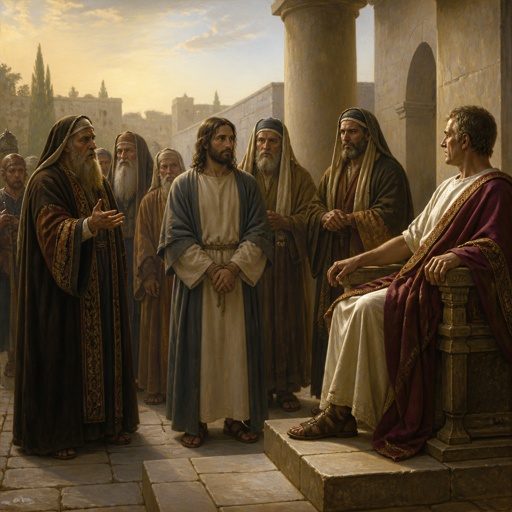
"They answered and said unto him, If he were not a malefactor, we would not have delivered him up unto thee." - John 18:30

John 14:30

John 10:30

John 10:30

John 3:30

Genesis 18-30

John 20:30-31

John 10:30 - "I and my Father are one."

John 4:30 - "Then they went out of the city, and came unto him."

John 3:30 - "He must increase, but I must decrease."

1 Samuel 30:18

John 8:30 - "As he spake these words, many believed on him."

Mark 11:30 - "The baptism of John, was it from heaven, or of men? answer me."

John 7:17-18

John 7:17-18

John 13:30 - "He then having received the sop went immediately out: and it was night."

John 7:17-18

John 7:17-18

John 18:25

john 18:36

"I and my Father are one." - John 10:30

John 12:30 - "Jesus answered and said, This voice came not because of me, but for your sakes."

John 11:30 - "Now Jesus was not yet come into the town, but was in that place where Martha met him."

"I and my Father are one." - John 10:30

Proverbs 30:18-19 – "There are three things that are too amazing for me, four that I do not understand."

John 14:30 - "Hereafter I will not talk much with you: for the prince of this world cometh, and hath nothing in me."

1 John 5:18

1 John 4:18

1 John 4:18