Standing Firm in Truth Amidst Trial
"The high priest then asked Jesus of his disciples, and of his doctrine. Jesus answered him, I spake openly to the world; I ever taught in the synagogue, and in the temple, whither the Jews always resort; and in secret have I said nothing. Why askest thou me? ask them which heard me, what I have said unto them: behold, they know what I said. And when he had thus spoken, one of the officers which stood by struck Jesus with the palm of his hand, saying, Answerest thou the high priest so? Jesus answered him, If I have spoken evil, bear witness of the evil: but if well, why smitest thou me? Now Annas had sent him bound unto Caiaphas the high priest." - John 18:19-24
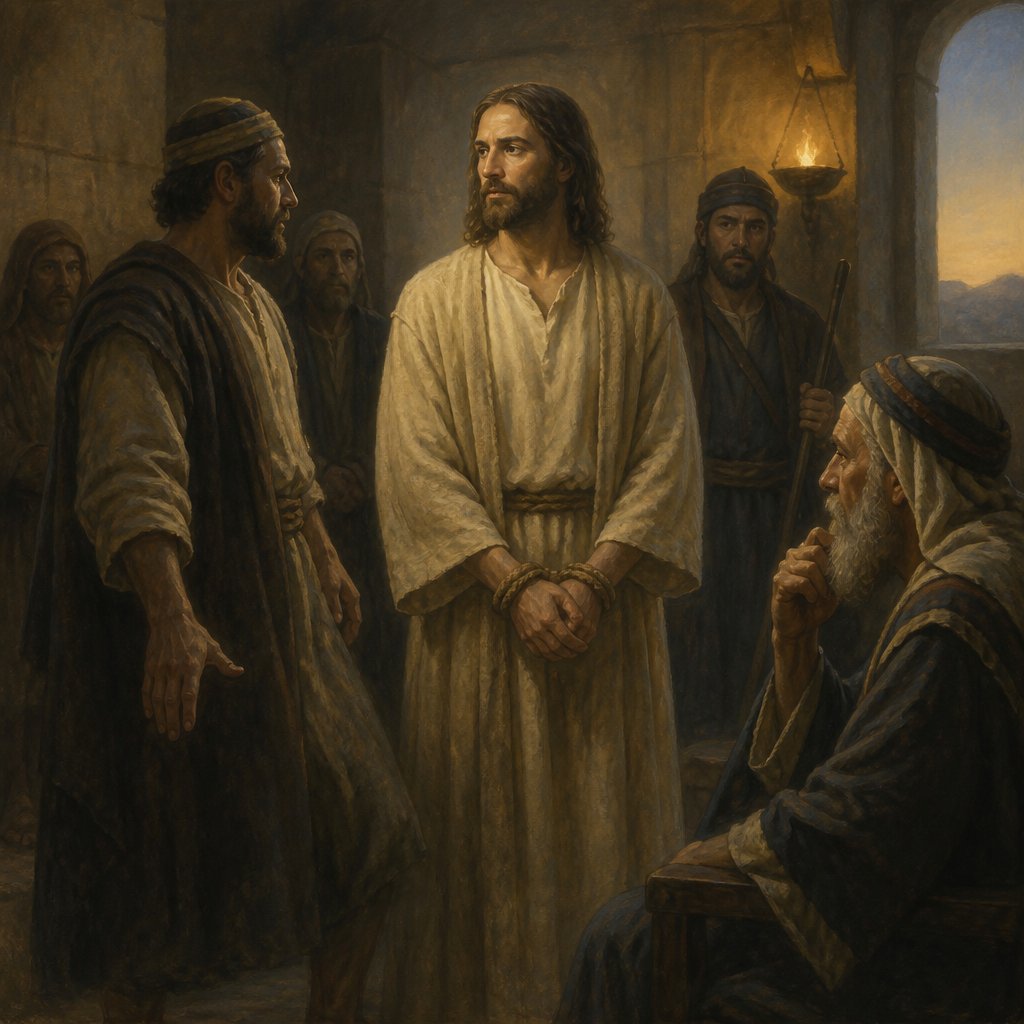
In John 18:19-24, we find ourselves at a pivotal moment in the life of Jesus, a moment laden with tension and significance. The passage presents a courtroom setting where Jesus, the incarnate Son of God, stands before the high priest Annas. This interaction is not simply a trial; it is a confrontation of eternal truths. The high priest, in his position of authority, seeks to interrogate Jesus about His disciples and His teachings, yet the responses of Jesus bring forth deeper insights not only about His mission but also about the heart of the one questioning Him.
The initial inquiry, "The high priest then asked Jesus of his disciples, and of his doctrine," encapsulates the curiosity and fear of the religious leaders at that time. Here, we see the threat that Jesus posed to the established religious order. He was a radical departure from their traditions, and His influence on the people was undeniable. The high priest’s inquiry seems less about seeking truth than about finding grounds for condemnation. In the realm where power meets spirituality, the confrontation we witness reveals a deep-seated fear and insecurity on the part of the leaders.
Jesus’ response is striking: "I spake openly to the world; I ever taught in the synagogue, and in the temple, whither the Jews always resort; and in secret have I said nothing." In this declaration, we observe several profound elements of His character and mission. Jesus asserts that His teachings were never hidden or secretive. He is a proponent of truth, openly proclaiming the gospel to anyone who would listen. This dedication to transparency underscores His role as the Light of the World, a light that had come to dispel darkness, not contribute to it. For us as followers of Christ, this is an exhortation to live openly and authentically. In our own lives, do we embody this spirit of openness in sharing the hope of the Gospel, both in word and action?
His rhetorical question, "Why askest thou me? ask them which heard me, what I have said unto them: behold, they know what I said," points to the legitimacy of His teachings and the validity of the testimonies of those who heard Him. Jesus invites accountability; He directs the high priest to those who have experienced His words and witnessed His miracles. This reinforces a vital truth: our faith is not merely based on the opinions of a few but profoundly rooted in the collective experience of believers. Herein lies a challenge for us: we are called to share our encounters with Christ, to share how His teachings have transformed our lives so that others may come to know Him as well.
As the narrative unfolds, we encounter an officer who, in an act of indignation, strikes Jesus for His answers. Jesus’ reply, "If I have spoken evil, bear witness of the evil: but if well, why smitest thou me?" directly confronts the injustice before Him. He does not retaliate in violence but instead challenges the legitimacy of the act against Him. This moment reveals the ultimate example of how we are to respond to conflict and injustice in our own lives. Instead of responding with anger or aggression, Jesus exemplifies grace and peace, demonstrating the power of a calm heart in the face of adversity.
The conclusion of the passage, where it notes that "Annas had sent him bound unto Caiaphas the high priest," serves as a grim reminder of the world’s tendency to bind and restrict those who stand for truth, often out of fear or misunderstanding. Jesus, unbound by the injustice and false accusations, remained resolute in His purpose — to bear the sins of the world and fulfill the covenant of grace.
In reflecting on John 18:19-24, we are compelled to ask ourselves: Are we ready to stand firm in truth, even when faced with adversity? Are we willing to speak openly about our faith and bear witness to the transformative power of Christ in our lives? As Jesus stood before His accusers with grace and conviction, may we strive to echo that same spirit, standing firm in our faith, illuminated by the truth He exemplified.
Want to reflect more on John 18:19-24?
Continue your spiritual journey with Bible Chat — an AI-powered tool for exploring God's Word through conversation. Ask questions, discover connections, and deepen your understanding.
Get Our Apps


John 18:19-24 Artwork

John 18:19-24 - "The high priest then questioned Jesus about his disciples and his teaching. Jesus answered him, “I have spoken openly to the world; I have always taught in synagogues and in the temple, where all Jews come together. I have said nothing in secret. Why do you ask me? Ask those who heard me, what I said to them; they know what I said.” When he had said this, one of the officers standing by struck Jesus with his hand, saying, “Is that how you answer the high priest?” Jesus answered him, “If I have spoken wrongly, bear witness to the wrong; but if rightly, why do you strike me?” Annas then sent him bound to Caiaphas the high priest."
"The high priest then questioned Jesus about his disciples and his teaching. Jesus answered him, “I have spoken openly to the world; I have always taught in synagogues and in the temple, where all Jews come together. I have said nothing in secret. Why do you ask me? Ask those who heard me, what I said to them; they know what I said.” When he had said this, one of the officers standing by struck Jesus with his hand, saying, “Is that how you answer the high priest?” Jesus answered him, “If I have spoken wrongly, bear witness to the wrong; but if rightly, why do you strike me?” Annas then sent him bound to Caiaphas the high priest." - John 18:19-24

John 18:24 - "Now Annas had sent him bound unto Caiaphas the high priest."

John 18:19 - "¶ The high priest then asked Jesus of his disciples, and of his doctrine."

John 19:18 - "Where they crucified him, and two other with him, on either side one, and Jesus in the midst."
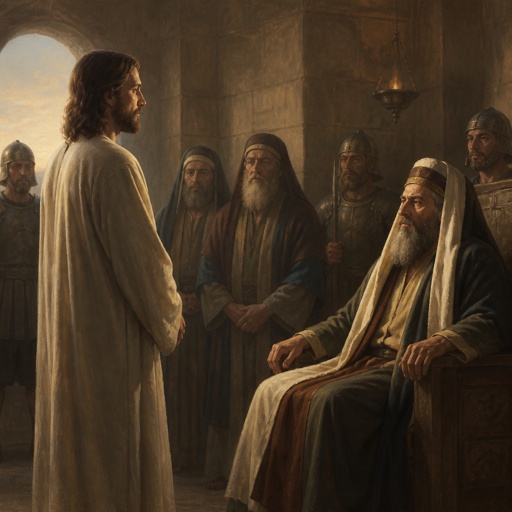
"¶ The high priest then asked Jesus of his disciples, and of his doctrine." - John 18:19

"Now Annas had sent him bound unto Caiaphas the high priest." - John 18:24

1 John 3:18-19 - "My little children, let us not love in word, neither in tongue; but in deed and in truth. And hereby we know that we are of the truth, and shall assure our hearts before him."

John 19:17-18 - "And he bearing his cross went forth into a place called the place of a skull, which is called in the Hebrew Golgotha: Where they crucified him, and two other with him, on either side one, and Jesus in the midst."

1 John 4:18-19 - "There is no fear in love; but perfect love casteth out fear: because fear hath torment. He that feareth is not made perfect in love. We love him, because he first loved us."

John 3:24 - "For John was not yet cast into prison."
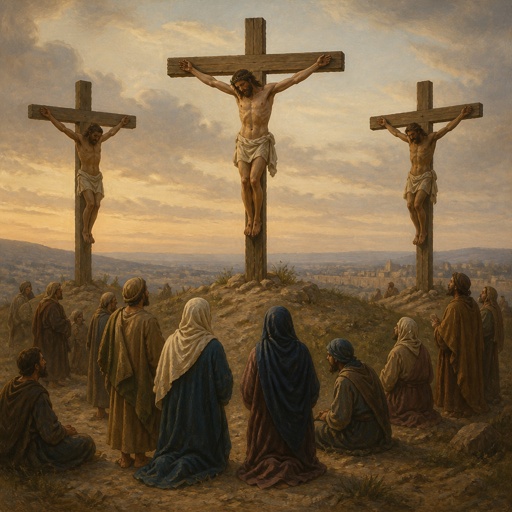
"Where they crucified him, and two other with him, on either side one, and Jesus in the midst." - John 19:18

John 19:24 - "They said therefore among themselves, Let us not rend it, but cast lots for it, whose it shall be: that the scripture might be fulfilled, which saith, They parted my raiment among them, and for my vesture they did cast lots. These things therefore the soldiers did."

"For John was not yet cast into prison." - John 3:24

John 15:18-19 - "If the world hates you, keep in mind that it hated me first. If you belonged to the world, it would love you as its own. As it is, you do not belong to the world, but I have chosen you out of the world. That is why the world hates you."

John 7:17-18

John 7:17-18

Genesis 24-19

Genesis 19-24

John 19:38

John 19:1

Genesis 19:24

John 7:17-18

John 7:17-18

Genesis 24-18

John 18:25

john 18:36

Genesis 18-24

John 19:19 - "¶ And Pilate wrote a title, and put it on the cross. And the writing was, JESUS OF NAZARETH THE KING OF THE JEWS."

John 17.6-19