The Assurance of Christ's Divinity: Knowing God Through Jesus
"Now are we sure that thou knowest all things, and needest not that any man should ask thee: by this we believe that thou camest forth from God." - John 16:30
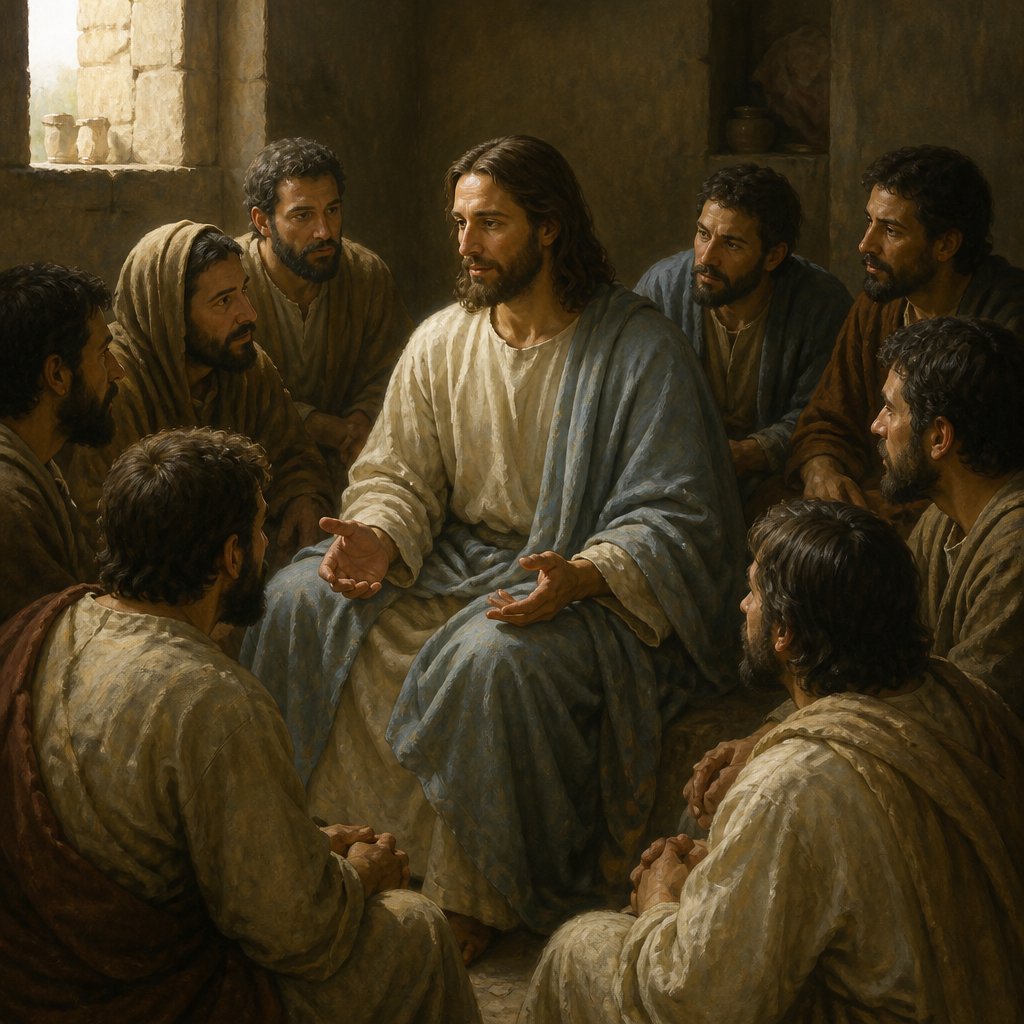
In John 16:30, the disciples proclaim, "Now are we sure that thou knowest all things, and needest not that any man should ask thee: by this we believe that thou camest forth from God." This profound statement encapsulates the essence of faith, revelation, and the reassuring knowledge of the divine nature of Christ.
As the disciples stood with Jesus, they were on the brink of a paradigm shift. Moments before this declaration, they had been grappling with the uncertainty that accompanied Christ's impending departure. They had witnessed the miracles, the teachings, and the fulfilled prophecies, yet the complexity of understanding Jesus' true identity remained challenging. It is here that we find the pivotal moment of clarity—a revelation that Jesus is indeed the Son of God, fully aware of all things and intimately connected to the Father.
### The Depth of Assurance
The phrase "Now are we sure" reflects a definitive trust that the disciples reach after being taught and guided by Jesus. This assurance did not come from a blind faith or mere speculation, but from a relationship forged through experiences and teachings. Their certainty was not simply about having knowledge; rather, it was a deeper recognition of Jesus' divine authority. He was, in fact, God incarnate, who possessed the wisdom and understanding of the cosmos, knowing the hearts and minds of all who sought Him.
In our lives, we often encounter moments of doubt or uncertainty. We may struggle in our prayer life, questioning whether we articulate our needs and desires correctly before God. Yet the disciples' revelation reminds us that God knows our hearts intimately. Psalm 139:1-4 states, "O Lord, thou hast searched me, and known me. Thou knowest my downsitting and mine uprising, thou understandest my thought afar off. Thou compassest my path and my lying down, and art acquainted with all my ways. For there is not a word in my tongue, but, lo, O Lord, thou knowest it altogether." Just as the disciples found confidence in Jesus’ omniscience, we can find tranquility in knowing that God already understands the deepest cries of our hearts.
### The Need for Conversation
The verse also emphasizes, "needest not that any man should ask thee." This statement speaks volumes about the self-sufficiency of Christ and His divine insight. While it is vital to bring our requests and concerns before God, and indeed, Scripture encourages such communication (Philippians 4:6), we must remember that Jesus does not require our input for His understanding. This is a humbling truth that reflects the sovereignty of God. He is above our limitations, with a perspective that far exceeds our own.
However, prayer is still vital—not because God needs it, but because we need it. Praying is more about aligning our hearts with His will, building our trust, and deepening our relationship with Him. It is in the process of laying our burdens at His feet that we gain access to peace that surpasses all understanding (Philippians 4:7).
### Belief in Christ: A Transformative Power
The concluding phrase, "by this we believe that thou camest forth from God," signifies the disciples’ acknowledgment of Jesus’ divine origin. Their faith was solidified not just by miracles but by the intimate knowledge of who Jesus truly was. This is crucial for us today. The foundation of our faith hinges on the acknowledgment of Christ’s divinity and His purpose in our lives. When we accept that He came from God, we recognize that our relationship with Him is not just a covenant of interaction, but a transformative union that shapes our very existence.
### Conclusion
In our Christian walk, John 16:30 embodies the essence of faith built on assurance, the beauty of intimate communion with the omniscient God, and the transformative belief in Christ's divine nature. As we meditate on these truths, let us confidently approach the throne of grace, knowing that He knows all and sees all, believing that, indeed, He came forth from God to illuminate our paths. Let this radiate in our hearts and spill over into our interactions, fostering a faith that reassures and inspires others to seek the knowledge of the One who knows all.
Want to reflect more on John 16:30?
Continue your spiritual journey with Bible Chat — an AI-powered tool for exploring God's Word through conversation. Ask questions, discover connections, and deepen your understanding.
Get Our Apps


John 16:30 Artwork

John 16:30 - "Now are we sure that thou knowest all things, and needest not that any man should ask thee: by this we believe that thou camest forth from God."
"Now are we sure that thou knowest all things, and needest not that any man should ask thee: by this we believe that thou camest forth from God." - John 16:30

John 14:30

John 10:30

John 10:30

John 3:30

John 20:30-31

judges 16:30

John 10:30 - "I and my Father are one."

John 4:30 - "Then they went out of the city, and came unto him."

John 3:30 - "He must increase, but I must decrease."

John 8:30 - "As he spake these words, many believed on him."

Mark 11:30 - "The baptism of John, was it from heaven, or of men? answer me."

John 16:33

John 16:33

John 16:33

John 13:30 - "He then having received the sop went immediately out: and it was night."

Exodus 16:30 - "So the people rested on the seventh day."

John 16:33
John 16:33

John 16:33

John 3:16

"I and my Father are one." - John 10:30

John 4:16

John 3:16

john 3:16

John 3:16

John 3:16

John 4:16

John 3:16