Valuing the Sacred: A Reflection on Sacrifice and Generosity
"Why was not this ointment sold for three hundred pence, and given to the poor?" - John 12:5

In John 12:5, we encounter a moment heavy with emotion and intense moral reflection. The verse states, "Why was not this ointment sold for three hundred pence, and given to the poor?" This question, posed by Judas Iscariot, captures a profound tension that often exists within the human heart: the balance between stewardship for the needy and the honor due to God.
In the broader narrative, Jesus is visiting the home of Martha, Mary, and Lazarus. Mary, in an act of worship that many have acclaimed as one of the most poignant expressions of love for Jesus, pours out an expensive ointment—a precious nard—on His feet and wipes them with her hair. This lavish act exudes deep affection, reverence, and recognition of Christ's worthiness. Yet, Judas, a follower who would soon betray Jesus, criticizes this gesture, highlighting the perceived wastefulness of using such costly oil when it could have been sold to provide for the poor.
On the surface, Judas's argument appears noble. After all, in a world rife with poverty and suffering, is it not our duty to prioritize the needs of the destitute? His question reverberates through time, invoking the perennial struggle between prioritizing spiritual devotion and social responsibility. As Christians, we are often challenged to consider how our resources can best reflect our faith and love for both God and our neighbors.
However, it is vital to remember that Judas's motivations were tainted; he was not truly concerned about the poor. Rather, he was motivated by greed and self-interest, as he held the bag and was known to pilfer from it. His query serves as a warning against hypocrisy. It beckons us to examine our hearts: are we genuinely concerned for those in need, or are we using this as a facade to mask our selfish motives?
Mary’s act was a radical statement of love that transcended typical societal norms. Her sacrifice was not intended to diminish the plight of the poor but to honor Jesus—a recognition of His divine identity as the Messiah. In her profound adoration, she understood that the value of what was being offered exceeded mere material wealth. It expressed a heartfelt acknowledgment of Jesus's significance in her life.
In our own lives, how often do we fall into the trap of rationalizing our reluctance to give or sacrifice in tangible ways? The world constantly pulls us toward a mindset that sees resources as finite, compelling us to prioritize earthly needs over spiritual matters. It can be tempting to advocate for frugality as a moral high ground, forgetting that some expressions of love and honor require generosity that may seem extravagant to others.
God might call us to give freely of our resources, even when cultural narratives urge caution or practicality. This does not mean neglecting the poor or being financially irresponsible; rather, it means placing Christ’s value as preeminent in our lives. Mary’s act implores us to re-evaluate our definitions of worth and generosity. Have we ever considered that some oils—the anointing of our time, talent, and treasures—could be poured out in worship as a testament of our devotion to God?
Judas's remark showcases a common challenge in the faith: the dichotomy between faith and works, between devotion and duty. Jesus responds to Judas by affirming Mary’s actions: "Let her alone: against the day of my burying hath she kept this." (John 12:7). He emphasizes the importance of honoring God above all else while reminding us that there will always be opportunities to help the poor.
This brings us to a conclusion where we need to consider the kind of worship that Jesus cherishes. It is not simply about how much we give, but the heart behind our giving. Let us strive to anoint His feet with our abundance and pour out our lives in love and devotion, remembering that to serve Him wholeheartedly also means to serve His people passionately and generously.
As we reflect this week, may we ask ourselves: Are there moments where God is inviting us into a deeper expression of worship, one that may appear extravagant to the watching world? In acknowledging the sacred, let us learn to value and celebrate the gift of giving that flows from grateful hearts.
Want to reflect more on John 12:5?
Continue your spiritual journey with Bible Chat — an AI-powered tool for exploring God's Word through conversation. Ask questions, discover connections, and deepen your understanding.
Get Our Apps


John 12:5 Artwork

John 12:5 - "Why was not this ointment sold for three hundred pence, and given to the poor?"

"Why was not this ointment sold for three hundred pence, and given to the poor?" - John 12:5

1 John 5:12 - "He that hath the Son hath life; and he that hath not the Son of God hath not life."

John 5:12 - "Then asked they him, What man is that which said unto thee, Take up thy bed, and walk?"

"He that hath the Son hath life; and he that hath not the Son of God hath not life." - 1 John 5:12

"Then asked they him, What man is that which said unto thee, Take up thy bed, and walk?" - John 5:12
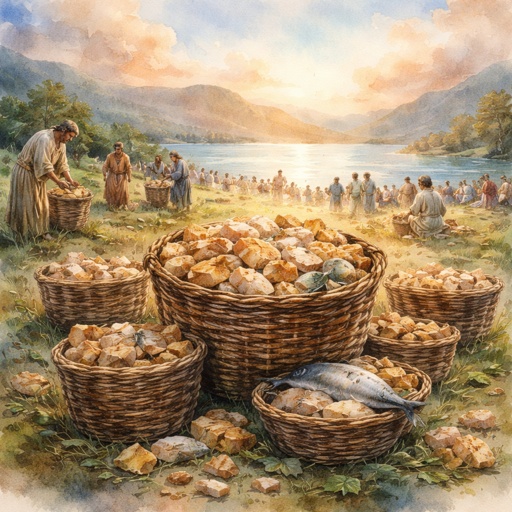
John 6:12

John 8:12

John 12:25

John 8:12

John 8:12
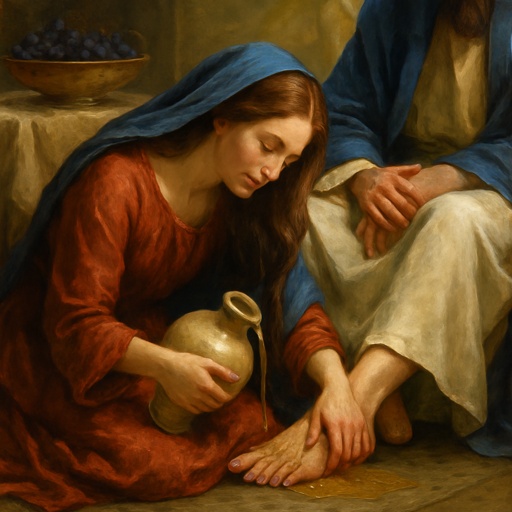
John 12:3

John 8:12

John 15:5

John 5:2

John 15:5

John 5:33 - "Ye sent unto John, and he bare witness unto the truth."

John 5:5 - "And a certain man was there, which had an infirmity thirty and eight years."

John 20:11-12

John 5:28

John 5:28

John 5:28

1 John 5:5 - "Who is he that overcometh the world, but he that believeth that Jesus is the Son of God?"

John 12:12 - "¶ On the next day much people that were come to the feast, when they heard that Jesus was coming to Jerusalem,"

John 3:5-8

John 1:1-5

John 1:1-5

John 3:5-8

1 John 5:18

John 3:5-8