The Power of Prayer: Assurance in Divine Communication
"And I knew that thou hearest me always: but because of the people which stand by I said it, that they may believe that thou hast sent me." - John 11:42
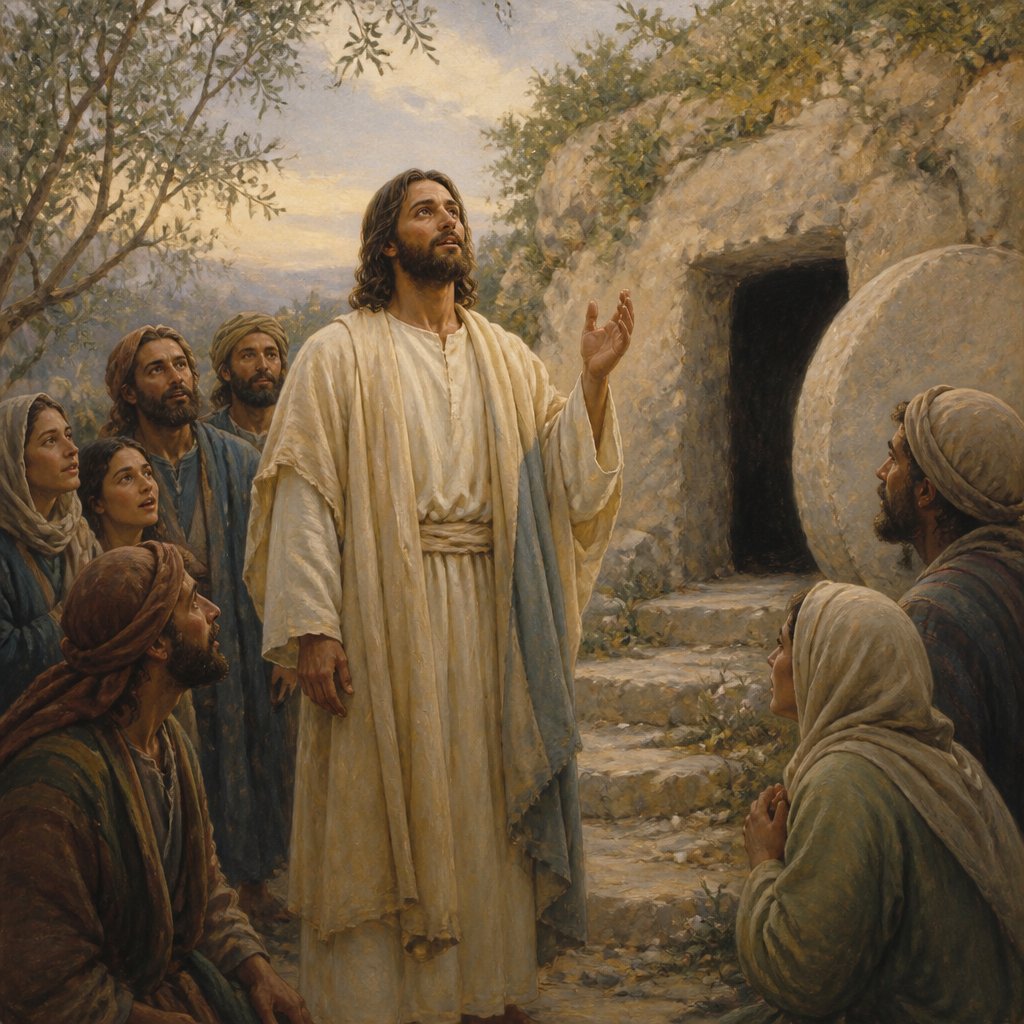
In the eleventh chapter of the Gospel of John, we witness an extraordinary moment where Jesus raises Lazarus from the dead. This moment not only showcases His miraculous power but also reveals profound truths about prayer and its connection to belief. In this context, John 11:42 records Jesus saying, "And I knew that thou hearest me always: but because of the people which stand by I said it, that they may believe that thou hast sent me."
This verse is rich in meaning, depicting the intimate relationship between Jesus and the Father, characterized by constant and open communication. When Jesus states, "I knew that thou hearest me always," He affirms a fundamental truth about His identity and the nature of God. Jesus, fully aware of the omniscience of the Father, acknowledges that every prayer, spoken or unspoken, is heard by God. This acknowledgment is not just a declaration; it underscores the essence of who God is—a responsive and present listener in our lives.
Furthermore, Jesus’s motivation for voicing His prayer publicly is striking. He explains, "but because of the people which stand by I said it, that they may believe that thou hast sent me." This indicates that prayer serves a dual purpose: it is not only the channel of intimate communication with God but also a witness to those around us. So often, we approach prayer as an inward act solely for our benefit, forgetting that our expressions of faith can inspire those who observe.
In our lives, we may struggle with belief, especially in moments of turmoil or doubt. The people present at the tomb of Lazarus were likely mournful and skeptical; they had witnessed death, loss, and sorrow. Yet, Jesus positioned His prayer not just as a conversation with God but as a clarifying moment for those around Him. He longed for them to believe—not merely for the sake of belief but that they might understand the divine authority and personal relationship He shared with His Father.
This illustrates the weightiness of our words in prayer. Each time we pray, we not only engage in a dialog with God, laying bare our requests and needs but also creating an opportunity for those around us to witness God’s work in our lives. Our prayers can act as testimonies, revealing to others the character and faithfulness of God.
Additionally, this moment in John teaches us about the broader implications of faith. Jesus desired those present to witness His connection to the Father as a confirmation of His divine mission. Prayer is inherently powerful; it shapes our understanding and relationship with God while simultaneously serving as a beacon of hope for others. When we pray aloud in authentic faith, we demonstrate what it looks like to trust God’s sovereignty, encouraging others to consider their own belief.
Moreover, Jesus's understanding of God’s constant listening strengthens our faith. In an age sagging under doubts and concerns, we cling to the promise that God hears us always. This doesn’t mean we will always receive what we ask for; rather, it speaks to His attentiveness and willingness to engage with our lives. God hears the cries of our hearts as much as He hears the spoken words, reminding us that prayer transcends mere words—it's a heartfelt sigh shared with our Creator, filled with longing and love.
As we reflect on John 11:42, let us carry its truths into our prayer lives. It is our privilege to speak with God, knowing He listens and responds, both for our edification and as a testament to those in our midst. May we be emboldened to speak openly, encouraging belief and faith in others as we demonstrate the depth of our communication with God. Through our prayers, may we witness His glory in action, drawing ourselves and others closer to the truth of His love and power.
Want to reflect more on John 11:42?
Continue your spiritual journey with Bible Chat — an AI-powered tool for exploring God's Word through conversation. Ask questions, discover connections, and deepen your understanding.
Get Our Apps


John 11:42 Artwork

John 11:42 - "And I knew that thou hearest me always: but because of the people which stand by I said it, that they may believe that thou hast sent me."
"And I knew that thou hearest me always: but because of the people which stand by I said it, that they may believe that thou hast sent me." - John 11:42

John 1 29-42

John 1 29-42

John 10:42 - "And many believed on him there."

John 1 29-42

John 1 29-42

"And many believed on him there." - John 10:42

John 5:42 - "But I know you, that ye have not the love of God in you."

John 19:42 - "There laid they Jesus therefore because of the Jews' preparation day; for the sepulchre was nigh at hand."

John 7:42 - "Hath not the scripture said, That Christ cometh of the seed of David, and out of the town of Bethlehem, where David was?"

1 Chronicles 11:42 - "Adina the son of Shiza the Reubenite, a captain of the Reubenites, and thirty with him,"

1 Kings 11:42 - "And the time that Solomon reigned in Jerusalem over all Israel was forty years."

Genesis 42:11 - "We are all one man's sons; we are true men, thy servants are no spies."

John 6:42 - "And they said, Is not this Jesus, the son of Joseph, whose father and mother we know? how is it then that he saith, I came down from heaven?"

Daniel 11:42 - "He shall stretch forth his hand also upon the countries: and the land of Egypt shall not escape."

John 12:42 - "¶ Nevertheless among the chief rulers also many believed on him; but because of the Pharisees they did not confess him, lest they should be put out of the synagogue:"

"But I know you, that ye have not the love of God in you." - John 5:42

John 4:42 - "And said unto the woman, Now we believe, not because of thy saying: for we have heard him ourselves, and know that this is indeed the Christ, the Saviour of the world."

John 7:42 Has not the Scripture said that the Christ comes from the seed of David and from the town of Bethlehem, where David was?”

isaiah 42:11 I, even I, am the Lord, And besides Me there is no savior.

"There laid they Jesus therefore because of the Jews' preparation day; for the sepulchre was nigh at hand." - John 19:42

John 1:42 - "And he brought him to Jesus. And when Jesus beheld him, he said, Thou art Simon the son of Jona: thou shalt be called Cephas, which is by interpretation, A stone."

isaiah 42:11 I, even I, am the Lord, And besides Me there is no savior.

isaiah 42:11 I, even I, am the Lord, And besides Me there is no savior.

John (11:35) Jesus wept.

John (11:35) Jesus wept.

John (11:35) Jesus wept.

John 11:35

John 15.1-11