Hope in the Midst of Delay
"Then when Jesus came, he found that he had lain in the grave four days already." - John 11:17
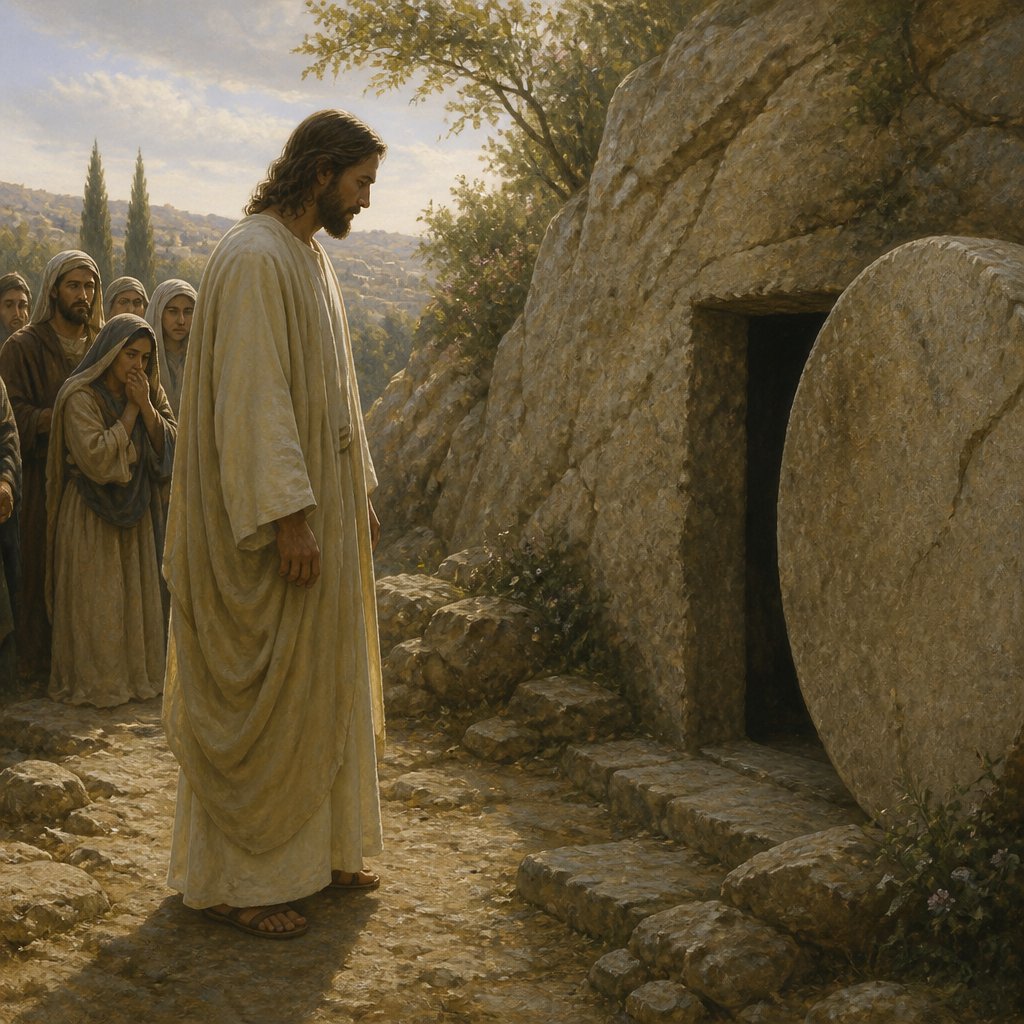
As we reflect on John 11:17, "Then when Jesus came, he found that he had lain in the grave four days already," we are presented with deep theological and personal implications. This particular moment in the ministry of Jesus takes place in Bethany, where He arrives after the death of Lazarus, whom He loved dearly. The mere fact that Lazarus has been in the grave for four days sets the stage for one of the most profound demonstrations of Christ’s power over death and His deep compassion for humanity.
The timing of Jesus’ arrival is pivotal. His delay, though he had the ability to heal Lazarus while he was still alive, raises significant questions about His understanding of life, death, and resurrection. To the Jews, the belief at the time was that the spirit of a deceased person remained near the body for three days. On the fourth day, when decomposition started to be evident, they assumed hope was completely lost. Thus, by arriving on the fourth day, Jesus challenges the cultural perception of hope and finality.
In our own lives, we often encounter moments where God seems silent or delayed. Prayers go unanswered, and our hopes seem to decay while we wait. It is in these seemingly barren times that we grapple with doubt, fear, and disappointment, questioning if Jesus is indeed aware or involved in our suffering. The incident with Lazarus serves as a profound reminder that God’s timing is not our own. We may label a situation as dead and gone, but it is precisely in the moments that we perceive as past hope that Jesus can reveal His mighty power over death and despair.
When Jesus finally arrives, He is greeted by Martha, who expresses her faith even amidst her grief: "Lord, if thou hadst been here, my brother had not died" (John 11:21). Though Martha understands Jesus’ ability to heal the sick, she is confronted with the stark reality of death—an undeniable obstacle that tests the limits of her faith. Yet, in a masterful conversation, Jesus declares, "I am the resurrection, and the life: he that believeth in me, though he were dead, yet shall he live" (John 11:25). Here, He is revealing His identity and the authoritative power He holds over life and death.
Through the pain of loss, Martha’s faith begins to intersect with the undeniable truth of Jesus’ power. This moment encapsulates the essence of our relationship with Christ: belief in Him becomes the gateway to experience the miraculous. In our moments of struggle and grief, we too can choose to embrace a faith that defies the limitations of our circumstances. Like Martha, we may need to vocalize our despair but simultaneously reaffirm our faith in the Lord.
As Christians, we understand that suffering and challenges are often part of our journey, but we can take comfort in the hope that even in the darkest hours, Jesus is present. His arrival at Lazarus’ tomb signals that it is never too late for Him to intervene. We serve a God who brings life where there appears to be death. He is not deterred by our situations or the timelines we adhere to; instead, He uses them to showcase His glory.
The story culminates in Jesus calling Lazarus forth from the grave, which is not just a restoration of physical life, but a demonstration of His ultimate authority over death—the resurrection to come for all who believe in Him. This act is a reminder that with Jesus, every grave can be a conduit for resurrection.
As we meditate on this passage, let us hold onto the promise that even in our waiting and what feels like delays, Jesus is diligently orchestrating a plan that leads to His glory. Our hope is found not in the immediacy of answers but in the unwavering power of Christ who transcends even the shadows of death. Let us therefore approach our situation with faith, believing that our Lord can still bring life and purpose, no matter how dire it may seem.
Want to reflect more on John 11:17?
Continue your spiritual journey with Bible Chat — an AI-powered tool for exploring God's Word through conversation. Ask questions, discover connections, and deepen your understanding.
Get Our Apps


John 11:17 Artwork

John 11:17 - "Then when Jesus came, he found that he had lain in the grave four days already."
"Then when Jesus came, he found that he had lain in the grave four days already." - John 11:17

John 17:11 - "And now I am no more in the world, but these are in the world, and I come to thee. Holy Father, keep through thine own name those whom thou hast given me, that they may be one, as we are."

John 7:17-18

John 7:17-18

John 7:17-18

John 7:17-18

John 17:17 - "Sanctify them through thy truth: thy word is truth."

John 1:17

John 21:17

John 1:17

John 1:17

John 14:16-17

John (11:35) Jesus wept.

Revelation 1:7

John (11:35) Jesus wept.

John (11:35) Jesus wept.

John 11:35

John 15.1-11

John 11:35

John (11:35) Jesus wept.

John (11:35) Jesus wept.

John (11:35) Jesus wept.

John 17:16 - "They are not of the world, even as I am not of the world."

John (11:35) Jesus wept.

John (11:35) Jesus wept.

John (11:35) Jesus wept.

John 11:35 - "Jesus wept."

John (11:35) Jesus wept.

John (11:35) Jesus wept.