Restoration from Ruin: The Divine Gardener
"He hath laid my vine waste, and barked my fig tree: he hath made it clean bare, and cast it away; the branches thereof are made white." - Joel 1:7
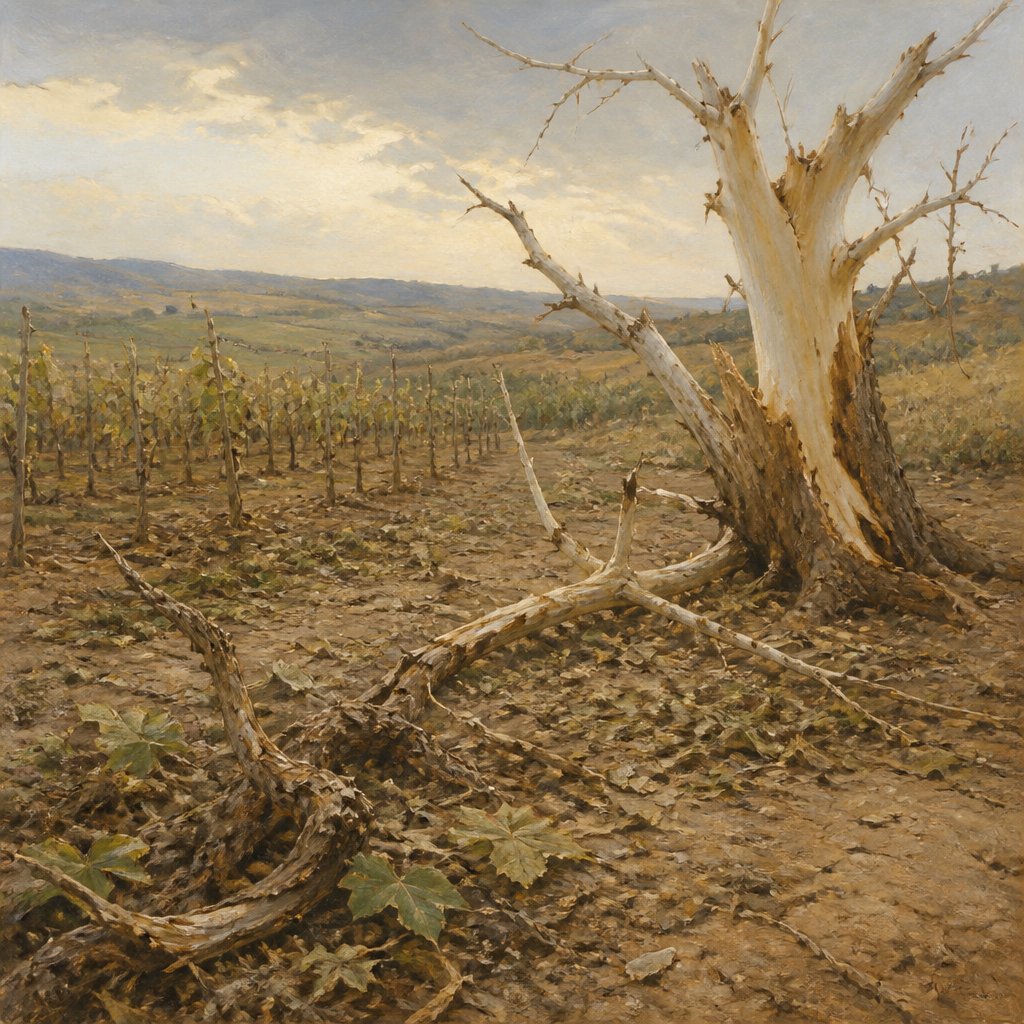
As we meditate on Joel 1:7, "He hath laid my vine waste, and barked my fig tree: he hath made it clean bare, and cast it away; the branches thereof are made white," we find ourselves confronted with the stark imagery of loss and devastation. This verse speaks of a desolate scene in which the vital resources of life — the vine and the fig tree — have been left stripped, bare and vulnerable. This imagery is more than just a description of agricultural ruin; it serves as a metaphor for spiritual desolation and the impact of divine judgment.
In ancient Israel, the vine and the fig tree were not merely crops; they represented abundance, security and the blessings of God. They were symbols of Israel's prosperity and relationship with the Lord. A vineyard filled with thriving vines and a bountiful fig tree indicated God’s favor and presence among His people. Thus, when Joel describes these plants as laid waste, he directs our attention to the severe consequences of sin and the spiritual neglect that Israel faces.
The phrase "laid my vine waste" speaks to the utter desolation that has befallen the people. The idea of something being 'laid waste' denotes a state of ruin where no hope of renewal is in sight. The imagery of a tree "barked" or stripped illustrates an invasive destruction, where the very essence of life is attacked. This could very well reflect our own spiritual lives, where sin gnaws away at our vitality, leaving us bare and vulnerable.
The necessary destruction of the trees resonates with God’s desire for holiness and the separation from sin. It begs the question: Have we allowed the pests of our spiritual life to invade our hearts? Have we neglectfully allowed our relationship with God to wither?
Further, when Joel mentions that the branches are made white, we see a definitive sign of death. The white bark signifies that life has been drained — there is no longer lush greenery; instead, there is lifelessness. It can represent a dire warning: such is the outcome when God’s people turn away from Him.
Yet, as we delve deeper, we should not allow ourselves to remain in despair. Each devastation carried out by God's hand serves a purpose. It calls us to repentance, urging us back toward the tender embrace of the Divine Gardener. Restoration is always God’s agenda, and the peeling back of layers often signals a resurgence of new growth to come. As believers, we are assured that God's discipline—though painful—ultimately aims to draw us closer to Him.
Throughout scripture, we are reminded that destruction can often lead to renewal. Psalm 51 highlights God’s desire to create in us a clean heart. John 15:2 tells us, "Every branch in me that beareth not fruit he taketh away: and every branch that beareth fruit, he purgeth it, that it may bring forth more fruit." Here we see that being laid bare is not the end, but rather a step towards becoming fruitful. God prunes us, sometimes painfully, so that we can grow stronger in our faith.
In communion with the Lord, we find that He is never distancing from us in our seasons of barrenness. As He lays waste our sinful proclivities, He simultaneously prepares the soil of our hearts for a rich harvest. He is the vinedresser who knows precisely when to cut away the dead wood and when to nourish the living parts of our lives.
Ultimately, as we encounter this somber verse in Joel, let it guide us back to the altar of grace, where even in our lifelessness, He is ever-present. He is coming to restore our souls, to breathe new life into our barren spaces, to fill us again with hope, purpose, and fruitfulness. May we remain sensitive to His pruning, trust in His plans for restoration, and let Him guide us into the fullness of life and abundance that He promises.
Want to reflect more on Joel 1:7?
Continue your spiritual journey with Bible Chat — an AI-powered tool for exploring God's Word through conversation. Ask questions, discover connections, and deepen your understanding.
Get Our Apps


Joel 1:7 Artwork

Joel 1:7 - "He hath laid my vine waste, and barked my fig tree: he hath made it clean bare, and cast it away; the branches thereof are made white."
"He hath laid my vine waste, and barked my fig tree: he hath made it clean bare, and cast it away; the branches thereof are made white." - Joel 1:7

1 Chronicles 15:7 - "Of the sons of Gershom; Joel the chief, and his brethren an hundred and thirty:"

Joel 1:1 - "The word of the LORD that came to Joel the son of Pethuel."

1 Chronicles 7:3 - "And the sons of Uzzi; Izrahiah: and the sons of Izrahiah; Michael, and Obadiah, and Joel, Ishiah, five: all of them chief men."
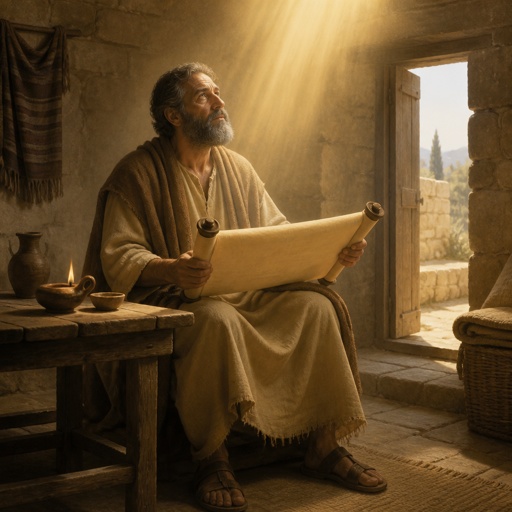
"The word of the LORD that came to Joel the son of Pethuel." - Joel 1:1

"Of the sons of Gershom; Joel the chief, and his brethren an hundred and thirty:" - 1 Chronicles 15:7

Joel 1 natural disaster

1 Chronicles 11:38 - "Joel the brother of Nathan, Mibhar the son of Haggeri,"
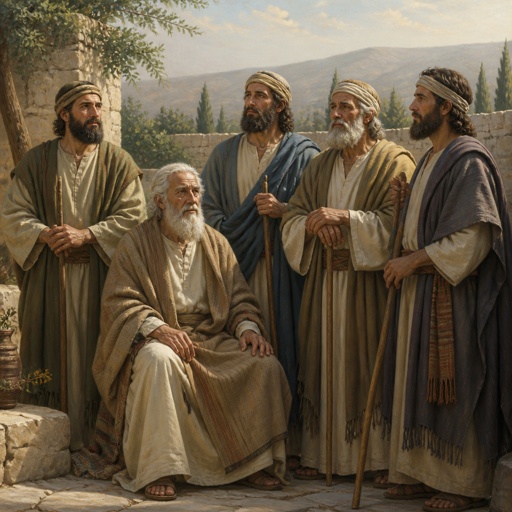
"And the sons of Uzzi; Izrahiah: and the sons of Izrahiah; Michael, and Obadiah, and Joel, Ishiah, five: all of them chief men." - 1 Chronicles 7:3

Joel 1:2-4, 13-20

1 Chronicles 23:8 - "The sons of Laadan; the chief was Jehiel, and Zetham, and Joel, three."

Joel 1:8 - "¶ Lament like a virgin girded with sackcloth for the husband of her youth."

1 Chronicles 5:12 - "Joel the chief, and Shapham the next, and Jaanai, and Shaphat in Bashan."

Joel 3:7 - "Behold, I will raise them out of the place whither ye have sold them, and will return your recompence upon your own head:"

1 Chronicles 4:35 - "And Joel, and Jehu the son of Josibiah, the son of Seraiah, the son of Asiel,"

1 Chronicles 6:36 - "The son of Elkanah, the son of Joel, the son of Azariah, the son of Zephaniah,"

Joel 1:15 - "Alas for the day! for the day of the LORD is at hand, and as a destruction from the Almighty shall it come."

Joel 2:7 - "They shall run like mighty men; they shall climb the wall like men of war; and they shall march every one on his ways, and they shall not break their ranks:"
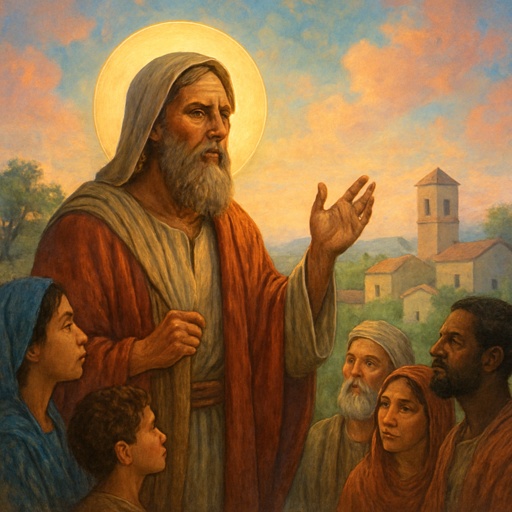
Prophet Joel in a small village surrounded by a small diverse group of listeners. Joel has an aura about his head. The background sky and cloud are seen in soft pastels pinks, yellows, and blues.

Prophet Joel in a small village surrounded by a small diverse group of listeners. Joel has an aura about his head. The background sky and cloud are seen in soft pastels pinks, yellows, and blues.

1 Chronicles 6:33 - "And these are they that waited with their children. Of the sons of the Kohathites: Heman a singer, the son of Joel, the son of Shemuel,"

Joel 1:10 - "The field is wasted, the land mourneth; for the corn is wasted: the new wine is dried up, the oil languisheth."

Joel 1:3 - "Tell ye your children of it, and let your children tell their children, and their children another generation."

1 Chronicles 5:4 - "The sons of Joel; Shemaiah his son, Gog his son, Shimei his son,"

Joel 1:17 - "The seed is rotten under their clods, the garners are laid desolate, the barns are broken down; for the corn is withered."

Joel 3:1 - "For, behold, in those days, and in that time, when I shall bring again the captivity of Judah and Jerusalem,"

1 Chronicles 27:20 - "Of the children of Ephraim, Hoshea the son of Azaziah: of the half tribe of Manasseh, Joel the son of Pedaiah:"

Joel 1:16 - "Is not the meat cut off before our eyes, yea, joy and gladness from the house of our God?"

1 Chronicles 15:11 - "And David called for Zadok and Abiathar the priests, and for the Levites, for Uriel, Asaiah, and Joel, Shemaiah, and Eliel, and Amminadab,"