The Ephemeral Nature of Earthly Prosperity
"For ye say, Where is the house of the prince? and where are the dwelling places of the wicked?" - Job 21:28
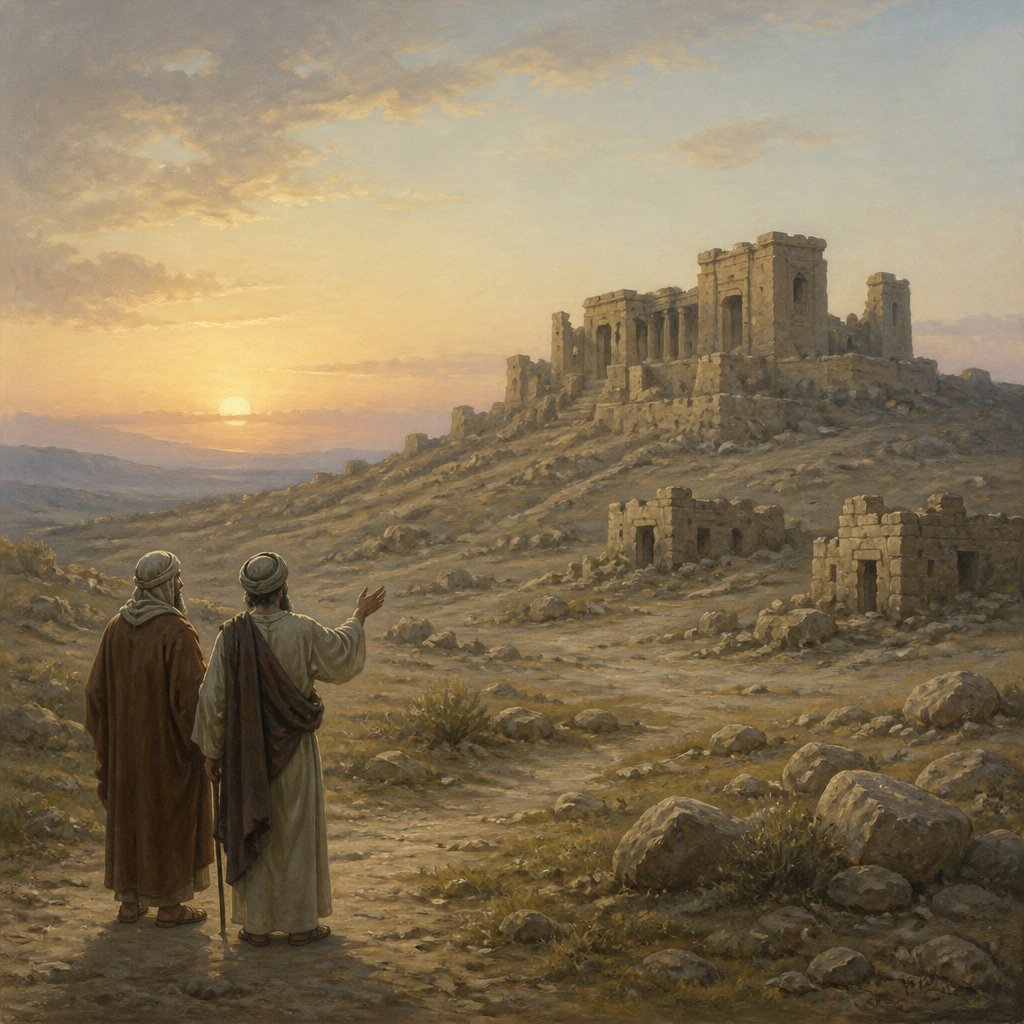
In the book of Job, we find one of the profound narratives of suffering and faith. Chapter 21, verse 28, states, "For ye say, Where is the house of the prince? and where are the dwelling places of the wicked?" This verse captures an essential theme within the struggle of Job, a man whose life was turned upside down by unexplainable suffering and loss while grappling with the seeming prosperity of the wicked.
To understand the weight of this verse, we must first grasp the context in which Job finds himself. At the forefront of the discussion are Job's friends, who believe that suffering is conclusive evidence of divine punishment for wrongdoing. Thus, they press Job regarding his affliction, suggesting that the wicked do not prosper and that if one is suffering, it must be because they have earned it through sin.
In their inquiries, notably seen in the question, "Where is the house of the prince?" they reflect a nostalgic longing for the prosperity they perceive in those who are wicked and boastful. The term 'prince' here symbolizes not just royalty or nobility in the common sense, but a person who has worldly power and possessions. Job’s friends are preoccupied with the visible success of the wicked, who seem to thrive regardless of their moral standing.
The questions posed in this verse echo a deep existential inquiry prevalent throughout the ages—where is the justice of God amidst the triumphs of the unrighteous? Why, they contend, should the wicked appear to live in comfort, while the righteous suffer?
But rather than dismissing their inquiry as misled, we ought to consider the gravity of this situation that many of us face. In our lives, we frequently encounter the seemingly successful and unrepentant individuals who seem to escape the repercussions of their actions. This is not merely a theoretical dilemma but a visceral one that weighs on many hearts. Millions wonder why good people face calamity while those who disregard moral obligation find success. However, these questions demand a profound response that dives deeper into the essence of faith.
In the short-term, the prosperity of the wicked raises doubt about God’s plan and justice. The visual impact of wealth, power, and worldly success can distort our viewpoints, leading to the belief that righteousness is futile. However, the book of Psalms reminds us, "For I was envious at the foolish, when I saw the prosperity of the wicked" (Psalm 73:3). Like the psalmist, Job and his friends grapple with this reality—how to reconcile the visible presence of injustice.
Yet, in this discourse, God lays bare a truth that transcends mere observation. The homes of the wicked and the houses of princes are temporary. Earthly possessions and power come with an expiration date. This notion reminds us that our faith should not rest on what we can see but should be rooted in the eternal perspective of God’s divine justice and sovereignty. The passing nature of earthly prominence is underscored in Psalm 37:10, which states, "For yet a little while, and the wicked shall not be: yea, thou shalt diligently consider his place, and it shall not be."
Ultimately, this verse illustrates that the measure of a person is not in their earthly possessions, but in their relationship with God and their adherence to His commands. We are reminded that God’s judgment is not encapsulated in the fleeting triumphs of the wicked but instead, He is looking for hearts aligned with righteousness. As believers, we must continually evaluate what we are placing our hopes in—a fleeting victory or an everlasting promise.
Let us reject the notion that God's love for us is predicated upon our circumstances. Instead, we should cultivate a deep trust in His perfect justice and timing. As we ponder Job's challenge, let us also embrace our call to remain steadfast in faith, living out the values of kindness, integrity, and love amid worldly challenges, knowing that true riches are found in His presence and in eternal life.
Want to reflect more on Job 21:28?
Continue your spiritual journey with Bible Chat — an AI-powered tool for exploring God's Word through conversation. Ask questions, discover connections, and deepen your understanding.
Get Our Apps


Job 21:28 Artwork

Job 21:28 - "For ye say, Where is the house of the prince? and where are the dwelling places of the wicked?"
"For ye say, Where is the house of the prince? and where are the dwelling places of the wicked?" - Job 21:28

Job 28:21 - "Seeing it is hid from the eyes of all living, and kept close from the fowls of the air."
"Seeing it is hid from the eyes of all living, and kept close from the fowls of the air." - Job 28:21

Job 28:3

Job 30:28

Job 30:28

Job 30:28

Job 21:1 - "But Job answered and said,"

Job 28:3

Job 30:28

Job 28:3

Job 30:28

Job 28:28 - "And unto man he said, Behold, the fear of the Lord, that is wisdom; and to depart from evil is understanding."

"But Job answered and said," - Job 21:1

Job 1:21

Job 28:20 - "Whence then cometh wisdom? and where is the place of understanding?"

Genesis 28-21

Genesis 21:28

Job 1:21

Job 28:14 - "The depth saith, It is not in me: and the sea saith, It is not with me."

Job 28:6 - "The stones of it are the place of sapphires: and it hath dust of gold."

Job 3:20-21 - "Job 3:20-21: Why is light given to those in misery, and life to the bitter of soul, to those who long for death that does not come, who search for it more than for hidden treasure?"

Job 28:1 - "Surely there is a vein for the silver, and a place for gold where they fine it."

Job 28:16 - "It cannot be valued with the gold of Ophir, with the precious onyx, or the sapphire."

Job 28:12 - "But where shall wisdom be found? and where is the place of understanding?"

Job 28:25 - "To make the weight for the winds; and he weigheth the waters by measure."

Job 13:28 - "And he, as a rotten thing, consumeth, as a garment that is moth eaten."

Job 28:2 - "Iron is taken out of the earth, and brass is molten out of the stone."

Job 28:8 - "The lion's whelps have not trodden it, nor the fierce lion passed by it."