The Broken Vessels of Moab: A Call to Reflection and Restoration
"There shall be lamentation generally upon all the housetops of Moab, and in the streets thereof: for I have broken Moab like a vessel wherein is no pleasure, saith the LORD." - Jeremiah 48:38
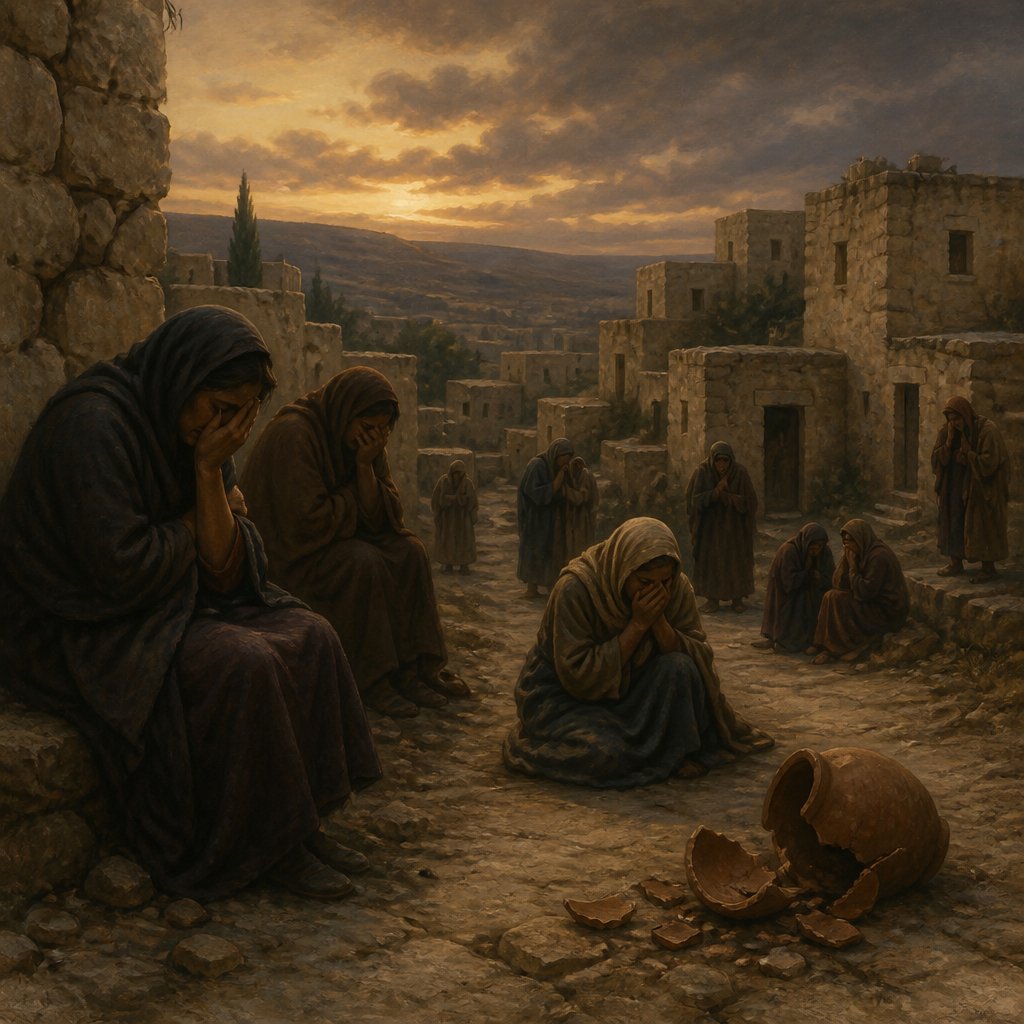
In the heart of the Book of Jeremiah, chapter 48 encapsulates profound truths about judgment, lamentation, and the fragile state of humanity apart from God. Jeremiah 48:38 starkly declares, "There shall be lamentation generally upon all the housetops of Moab, and in the streets thereof: for I have broken Moab like a vessel wherein is no pleasure, saith the LORD." As we delve into this powerful verse, it beckons us to examine both the consequences of sin and the leadership of God in times of despair.
**Understanding the Context of Moab**
The land of Moab, historically known for its opposition against Israel, represents not just a geographic entity, but a metaphor for any heart or community that stands in rebellion against God. The Moabites were steeped in idolatry and pride, which ultimately led to their downfall. Jeremiah’s prophecy serves as a divine message of impending doom, a lamentation for their fate. This brings us to a critical realization: when we seek fulfillment outside the will of God, we risk becoming a vessel of disappointment, shattered and without purpose. The destruction of Moab signifies the broader truth that sin, while initially appealing or gratifying, ultimately leads to despair and desolation.
**Lamentation and its Significance**
The word "lamentation" invokes a deep emotional response. It paints a picture of sorrow not just confined to the hearts of its people but spilling over into their very lives. The lamentation upon the rooftops signifies the widespread recognition of loss, with no place untouched by grief. In our lives, how often do we experience lamentation? It may stem from broken relationships, failed dreams, or moral failures. When we step into a life apart from God, both individually and collectively as communities, the result often mirrors the lamentation of Moab. We must recognize these moments of sorrow, not merely as failures, but as divine invitations to return to our Creator.
**The Broken Vessel**
The analogy of a vessel which God has broken is a poignant imagery of fragility and loss. Just as ceramics can be shattered and rendered useless, so too can our lives become devoid of purpose when lived outside the bounds of God's intention. God’s declaration, "for I have broken Moab like a vessel wherein is no pleasure," underscores His sovereign authority over nations, and by extension, over our lives. This statement is both a warning and a reminder of the natural consequences of rebellion.
**Personal Reflection**
As believers, how can we respond to this haunting reminder? First and foremost, we must examine our own lives. Are there areas where we hold onto sin or pride similar to Moab? Do we ignore God’s calls for repentance and restoration? This evaluation is crucial because it encourages us to confront our brokenness rather than hide from it. Each of us has faced moments where we feel shattered—whether through personal sin, loss, or fear; however, brokenness can also lead to renewal. God does not abandon the broken; He is close to the contrite and ready to restore the heart that turns back to Him.
**The Hope in Brokenness**
Through the wounds and the lamentations, God tenderly whispers hope. The promise of restoration is intertwined within the narrative of judgment. While Moab faces destruction, they are also reminded of a God who desires restoration. As we reflect on our lives and the lamentations we face, let us not lose sight of God's grace. Perhaps where we feel broken and beyond repair, He is preparing us to be vessels of honor, capable of reflecting His glory.
**Conclusion**
In conclusion, Jeremiah 48:38 serves as a powerful reminder that brokenness speaks volumes about our dependence on God. Lament may echo through our lives, but it does not define us. Let us choose to acknowledge our need for divine intervention, seeking God’s restoration with humility. As we turn back to His ways, may we find that even in lament, there is a pathway leading back to purpose and joy in His presence.
Want to reflect more on Jeremiah 48:38?
Continue your spiritual journey with Bible Chat — an AI-powered tool for exploring God's Word through conversation. Ask questions, discover connections, and deepen your understanding.
Get Our Apps


Jeremiah 48:38 Artwork

Jeremiah 48:38 - "There shall be lamentation generally upon all the housetops of Moab, and in the streets thereof: for I have broken Moab like a vessel wherein is no pleasure, saith the LORD."
"There shall be lamentation generally upon all the housetops of Moab, and in the streets thereof: for I have broken Moab like a vessel wherein is no pleasure, saith the LORD." - Jeremiah 48:38

Jeremiah 48:22 - "And upon Dibon, and upon Nebo, and upon Beth-diblathaim,"

Jeremiah 48:6 - "Flee, save your lives, and be like the heath in the wilderness."

Jeremiah 38:13 - "So they drew up Jeremiah with cords, and took him up out of the dungeon: and Jeremiah remained in the court of the prison."

Jeremiah 48:16 - "The calamity of Moab is near to come, and his affliction hasteth fast."

Jeremiah 48:23 - "And upon Kiriathaim, and upon Beth-gamul, and upon Beth-meon,"

Jeremiah 48:14 - "¶ How say ye, We are mighty and strong men for the war?"

Jeremiah 48:3 - "A voice of crying shall be from Horonaim, spoiling and great destruction."

Jeremiah 38:1–13

Jeremiah 48:25 - "The horn of Moab is cut off, and his arm is broken, saith the LORD."

Jeremiah 48:4 - "Moab is destroyed; her little ones have caused a cry to be heard."

Jeremiah 38:24 - "¶ Then said Zedekiah unto Jeremiah, Let no man know of these words, and thou shalt not die."

Jeremiah 38:6 - "Then took they Jeremiah, and cast him into the dungeon of Malchiah the son of Hammelech, that was in the court of the prison: and they let down Jeremiah with cords. And in the dungeon there was no water, but mire: so Jeremiah sunk in the mire."

Jeremiah 48:13 - "And Moab shall be ashamed of Chemosh, as the house of Israel was ashamed of Beth-el their confidence."

Jeremiah 38:28 - "So Jeremiah abode in the court of the prison until the day that Jerusalem was taken: and he was there when Jerusalem was taken."

Jeremiah 32:38 - "And they shall be my people, and I will be their God:"

Jeremiah 48:20 - "Moab is confounded; for it is broken down: howl and cry; tell ye it in Arnon, that Moab is spoiled,"

Jeremiah 48:21 - "And judgment is come upon the plain country; upon Holon, and upon Jahazah, and upon Mephaath,"

Jeremiah 48:43 - "Fear, and the pit, and the snare, shall be upon thee, O inhabitant of Moab, saith the LORD."

Jeremiah 48:24 - "And upon Kerioth, and upon Bozrah, and upon all the cities of the land of Moab, far or near."

Jeremiah 38:12 - "And Ebed-melech the Ethiopian said unto Jeremiah, Put now these old cast clouts and rotten rags under thine armholes under the cords. And Jeremiah did so."
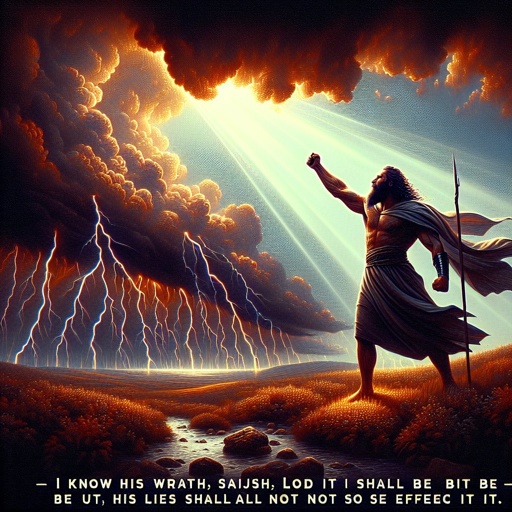
Jeremiah 48:30 - "I know his wrath, saith the LORD; but it shall not be so; his lies shall not so effect it."

Jeremiah 48:42 - "And Moab shall be destroyed from being a people, because he hath magnified himself against the LORD."

Jeremiah 38:19 - "And Zedekiah the king said unto Jeremiah, I am afraid of the Jews that are fallen to the Chaldeans, lest they deliver me into their hand, and they mock me."

Jeremiah 48:19 - "O inhabitant of Aroer, stand by the way, and espy; ask him that fleeth, and her that escapeth, and say, What is done?"

Jeremiah 48:47 - "¶ Yet will I bring again the captivity of Moab in the latter days, saith the LORD. Thus far is the judgment of Moab."

Jeremiah 48:40 - "For thus saith the LORD; Behold, he shall fly as an eagle, and shall spread his wings over Moab."

Jeremiah 48:10 - "Cursed be he that doeth the work of the LORD deceitfully, and cursed be he that keepeth back his sword from blood."

Jeremiah 38:14 - "¶ Then Zedekiah the king sent, and took Jeremiah the prophet unto him into the third entry that is in the house of the LORD: and the king said unto Jeremiah, I will ask thee a thing; hide nothing from me."