The Weight of Yokes: A Call to Wisdom in Uncertain Times
"Go and tell Hananiah, saying, Thus saith the LORD; Thou hast broken the yokes of wood; but thou shalt make for them yokes of iron." - Jeremiah 28:13
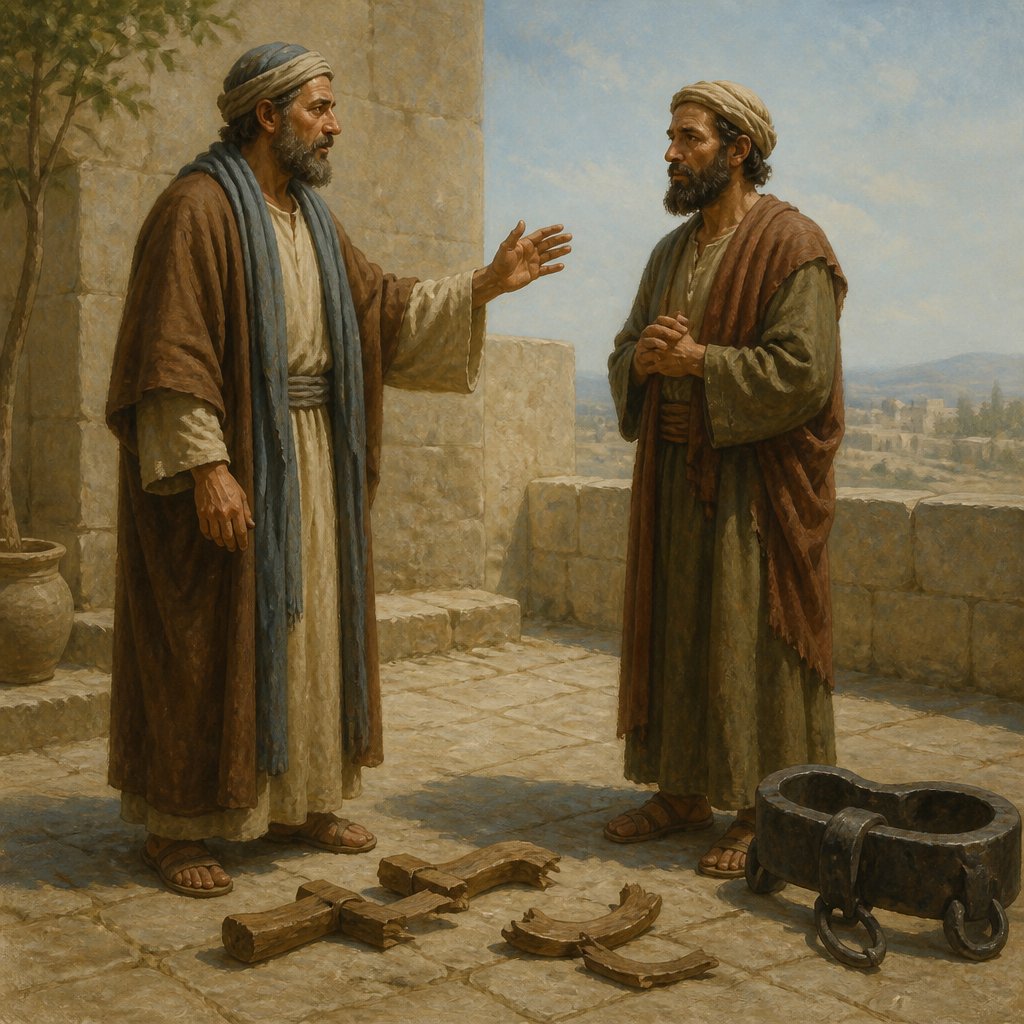
In Jeremiah 28:13, the Lord delivers a poignant message through the prophet Jeremiah to Hananiah: "Go and tell Hananiah, saying, Thus saith the LORD; Thou hast broken the yokes of wood; but thou shalt make for them yokes of iron." At first glance, this pronouncement appears to echo the temporary relief that Hananiah false prophesied would come to the people of Judah. However, further contemplation of this scripture reveals profound spiritual truths about the nature of burdens, prophecy, and the sovereignty of God.
The context of this verse is rooted in a turbulent period for the nation of Judah. The Babylonians had besieged Jerusalem, and many were turning to false prophets for comfort and assurance of a quick end to their suffering. Hananiah claimed that God would break the yoke of Babylon, promising deliverance within two years. Yet, as Jeremiah was charged to deliver the Lord's word, he revealed the deeper reality—a shift from a lighter yoke made of wood to a heavier yoke of iron. This speaks to the severity of consequences when one operates outside God’s will and the heavy burden imposed by falsehood.
Hananiah's prophecy was appealing. It resonated with the human desire to escape hardship and embrace immediate relief. How often do we seek comfort in what our ears long to hear rather than what the Spirit genuinely conveys? In our lives, we can be tempted to embrace messages that promise ease, prosperity, and quick fixes. The allure of erroneously blissful proclamations can blind us to the underlying truth that often, God does not immediately remove our burdens but rather equips us to endure and grow within them.
Yokes in biblical scripture signify burdens, governance, and roles of servitude. Wood yokes were usually lighter and more manageable, symbolizing temporary trials. In contrast, iron yokes represented harsher, more burdensome realities. Here, God cautions Hananiah and the people regarding the consequences of misleading desires for easy paths, emphasizing that false hope can lead to greater oppression. In essence, the Lord is proclaiming that turning from the truth—even with the best intentions—doubles down on suffering.
In our lives, we might recognize these shifts from wooden to iron yokes. Perhaps we find ourselves in difficult places due to decisions made in haste or the allure of misleading wisdom. Reflecting on times when we faced heavier burdens, we may realize that none were worse than those brought on by straying from God’s path. True freedom does not arise from ignoring God's instruction; it emerges from aligning ourselves with His truth.
Consider the greater arc of hope woven through this narrative. God, through Jeremiah, does provide insightful wisdom about enduring through trials. Jesus, in Matthew 11:28-30, reminds us that He invites us to take His yoke upon us, for His burden is light. We are encouraged to lean into Him during our periods of suffering. While Hananiah's message would have invited a supposed freedom, the authentic call of God always guides us towards growth, wisdom, and ultimately, peace.
As we meditate on Jeremiah 28:13, let us discern the voices we heed. Are we turning to the truth of God's word amidst our burdens or falling prey to the enticing sounds of convenience? And when faced with hardships that seem unbearable, let us remember that God’s heart is inclined towards our transformation, urging us to withstand the trials that build resilience within us.
In reflection, pray for wisdom to identify iron yokes that might arise from following falsehoods and ask for the grace for those who feel the weight of iron burdens. May we learn, step by step, to walk alongside God, taking on the lighter yoke He offers and trusting His plan even when it leads us through hardship, rooted in faith and the ultimate promise of redemption.
Want to reflect more on Jeremiah 28:13?
Continue your spiritual journey with Bible Chat — an AI-powered tool for exploring God's Word through conversation. Ask questions, discover connections, and deepen your understanding.
Get Our Apps


Jeremiah 28:13 Artwork

Jeremiah 28:13 - "Go and tell Hananiah, saying, Thus saith the LORD; Thou hast broken the yokes of wood; but thou shalt make for them yokes of iron."
"Go and tell Hananiah, saying, Thus saith the LORD; Thou hast broken the yokes of wood; but thou shalt make for them yokes of iron." - Jeremiah 28:13

Jeremiah 28:12 - "Then the word of the LORD came unto Jeremiah the prophet, after that Hananiah the prophet had broken the yoke from off the neck of the prophet Jeremiah, saying,"

Jeremiah 38:28 - "So Jeremiah abode in the court of the prison until the day that Jerusalem was taken: and he was there when Jerusalem was taken."

Jeremiah 28:5 - "Then the prophet Jeremiah said unto the prophet Hananiah in the presence of the priests, and in the presence of all the people that stood in the house of the LORD,"

Genesis 28-13

Ezekiel 28:13

Jeremiah 28:10 - "Then Hananiah the prophet took the yoke from off the prophet Jeremiah's neck, and brake it."

Jeremiah 28:15 - "Then said the prophet Jeremiah unto Hananiah the prophet, Hear now, Hananiah; The LORD hath not sent thee; but thou makest this people to trust in a lie."

Jeremiah 28:17 - "So Hananiah the prophet died the same year in the seventh month."

Mark 13:28-37

Mark 13:28-37

Jeremiah 38:13 - "So they drew up Jeremiah with cords, and took him up out of the dungeon: and Jeremiah remained in the court of the prison."

Jeremiah 29:11-13

Jeremiah 29:11-13

Jeremiah 29:11-13

Jeremiah 29:11-13

Mark 13:28-37

luke 13:28-37

Luke 13:28-27

Luke 13:28-27

Luke 13:28-27

Mark 13:28-37

luke 13:28-37

Jeremiah 6:28 - "They are all grievous revolters, walking with slanders: they are brass and iron; they are all corrupters."

Jeremiah 13:23

Exodus 28:13 - "¶ And thou shalt make ouches of gold;"

Jeremiah 52:28-30 - "Jeremiah 52:28-30: 28 This is the people whom Nebuchadrezzar carried away captive: in the seventh year three thousand Jews and three and twenty: 29 In the eighteenth year of Nebuchadrezzar he carried away captive from Jerusalem eight hundred thirty and two persons: 30 In the three and twentieth year of Nebuchadrezzar Nebuzaradan the captain of the guard carried away captive of the Jews seven hundred forty and five persons: all the persons were four thousand and six hundred."

Jeremiah 28:7 - "Nevertheless hear thou now this word that I speak in thine ears, and in the ears of all the people;"

Joshua 13:28 - "This is the inheritance of the children of Gad after their families, the cities, and their villages."