From Stocks to Prophecy: Understanding God's Call
"And it came to pass on the morrow, that Pashur brought forth Jeremiah out of the stocks. Then said Jeremiah unto him, The LORD hath not called thy name Pashur, but Magor-missabib." - Jeremiah 20:3

The passage from Jeremiah 20:3 (KJV) reads, "And it came to pass on the morrow, that Pashur brought forth Jeremiah out of the stocks. Then said Jeremiah unto him, The LORD hath not called thy name Pashur, but Magor-missabib." This verse captures not just a moment in the life of the prophet Jeremiah but an entire narrative about the struggle of prophetic witness in a world resistant to God’s truth.
As we delve into this verse, we encounter a complex interplay between power, authority, and prophetic calling. Pashur, the priest, who had imprisoned Jeremiah, represents the establishment that often reacts with hostility towards God’s messengers. In a culture where authority was wielded with a heavy hand, Jeremiah stood alone. We see that even when Jeremiah was beaten and placed in stocks—an instrument of humiliation and punishment—his commitment to conveying God’s message did not waver. Instead of cowering in despair, Jeremiah speaks boldly: "The LORD hath not called thy name Pashur, but Magor-missabib."
The name Pashur means "freedom, understanding," while Jeremiah imbues it with a new definition—Magor-missabib, which means "terror on every side." This shift from one name to the other is not just a play on words; it is a prophetic declaration that reveals the true nature of Pashur’s situation and the consequences of his actions against God’s prophet. Here, we learn that the reclaiming of authority in God's kingdom is often accompanied by profound irony.
When we reflect on this, we can ask ourselves: How often do we find ourselves in the stocks of our own circumstances? Life's tribulations can bind us, much like the physical restraints Jeremiah experienced. Whether through our own choices, the actions of others, or life’s unexpected turns, we often find ourselves constrained and in agony. However, we must remember that the same God who freed Jeremiah is available to us. His voice beckons us to breakthrough, to redefine our situation. God sometimes allows our trials so we can experience His true freedom.
God's purpose transcends our immediate circumstances. While Pashur held the power at that moment, God’s ultimate authority reigned. This narrative illustrates a critical principle: God repurposes our suffering for a greater purpose. Just as Jeremiah’s imprisonment fueled his prophetic utterance, our trials can lead to profound revelations in our walks with God. Our moments of confinement become moments of clarity.
In times of distress, we must listen keenly for our true name. God calls us not by our circumstances but by our potential and the identity He sees in us. When the world around us may declare us as failed, broken, or defeated, God sees us through the lens of His mercy and grace, calling us courageous, strong, and redeemed.
As Christians today, we should recognize that being a follower of Christ may lead us into uncomfortable situations. Like Jeremiah, we may not always be met with acceptance or understanding. The world can often reject the truth we stand for. Yet, it is in these moments, amid our trials, that God shapes our character and deepens our faith.
In closing, let us embrace the truth spoken to Jeremiah and ponder the depth of our calling. Like Jeremiah, we must confront the Pashurs in our lives, whether they be other people, institutions, or even our own doubts. And with the conviction of the Spirit within us, may we respond with God's truth, proclaiming the names that God declares over us. Let us lift our voices, for in them lies the power to redefine our story, much like Jeremiah found his voice amidst the stocks. May we hold fast to our identity in Christ, allowing His truth to set us free.
Want to reflect more on Jeremiah 20:3?
Continue your spiritual journey with Bible Chat — an AI-powered tool for exploring God's Word through conversation. Ask questions, discover connections, and deepen your understanding.
Get Our Apps


Jeremiah 20:3 Artwork

Jeremiah 20:3 - "And it came to pass on the morrow, that Pashur brought forth Jeremiah out of the stocks. Then said Jeremiah unto him, The LORD hath not called thy name Pashur, but Magor-missabib."

"And it came to pass on the morrow, that Pashur brought forth Jeremiah out of the stocks. Then said Jeremiah unto him, The LORD hath not called thy name Pashur, but Magor-missabib." - Jeremiah 20:3

Jeremiah 3:20 - "¶ Surely as a wife treacherously departeth from her husband, so have ye dealt treacherously with me, O house of Israel, saith the LORD."

Jeremiah 20:4

Jeremiah 20:2 - "Then Pashur smote Jeremiah the prophet, and put him in the stocks that were in the high gate of Benjamin, which was by the house of the LORD."

Jeremiah 20:1 - "Now Pashur the son of Immer the priest, who was also chief governor in the house of the LORD, heard that Jeremiah prophesied these things."

Jeremiah 44:20 - "¶ Then Jeremiah said unto all the people, to the men, and to the women, and to all the people which had given him that answer, saying,"

Jeremiah 5:20 - "Declare this in the house of Jacob, and publish it in Judah, saying,"

Jeremiah 8:20 - "The harvest is past, the summer is ended, and we are not saved."

Jeremiah 16:20 - "Shall a man make gods unto himself, and they are no gods?"

Jeremiah 21:3 - "¶ Then said Jeremiah unto them, Thus shall ye say to Zedekiah:"

Jeremiah 3:2

Jeremiah 33:3

Jeremiah 33:3

Jeremiah 3:1

Jeremiah 3:49

Jeremiah 26:20 - "And there was also a man that prophesied in the name of the LORD, Urijah the son of Shemaiah of Kirjath-jearim, who prophesied against this city and against this land according to all the words of Jeremiah:"

"¶ Surely as a wife treacherously departeth from her husband, so have ye dealt treacherously with me, O house of Israel, saith the LORD." - Jeremiah 3:20

Jeremiah 46:20 - "Egypt is like a very fair heifer, but destruction cometh; it cometh out of the north."

matthew 20:3
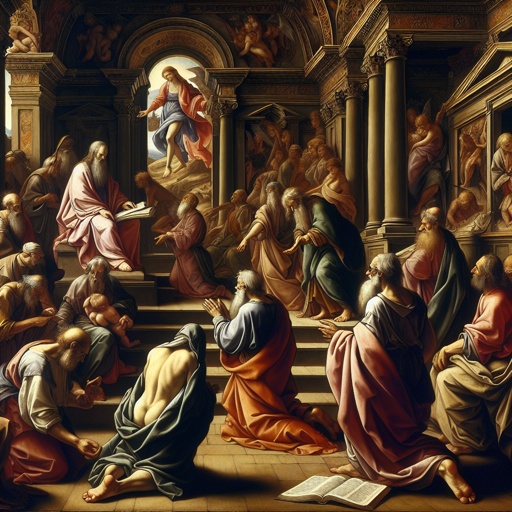
Genesis 20-3

Revelation 3:20

Revelation 3:20

Revelation 3:20

Jeremiah 48:20 - "Moab is confounded; for it is broken down: howl and cry; tell ye it in Arnon, that Moab is spoiled,"

Jeremiah 35:3 - "Then I took Jaazaniah the son of Jeremiah, the son of Habaziniah, and his brethren, and all his sons, and the whole house of the Rechabites;"

Jeremiah 38:20 - "But Jeremiah said, They shall not deliver thee. Obey, I beseech thee, the voice of the LORD, which I speak unto thee: so it shall be well unto thee, and thy soul shall live."

Job 3:20-21 - "Job 3:20-21: Why is light given to those in misery, and life to the bitter of soul, to those who long for death that does not come, who search for it more than for hidden treasure?"

Zephaniah 3:14-20

Jeremiah 20:14 - "¶ Cursed be the day wherein I was born: let not the day wherein my mother bare me be blessed."