Honoring All: The Call to Justice and Mercy
"But ye have despised the poor. Do not rich men oppress you, and draw you before the judgment seats?" - James 2:6
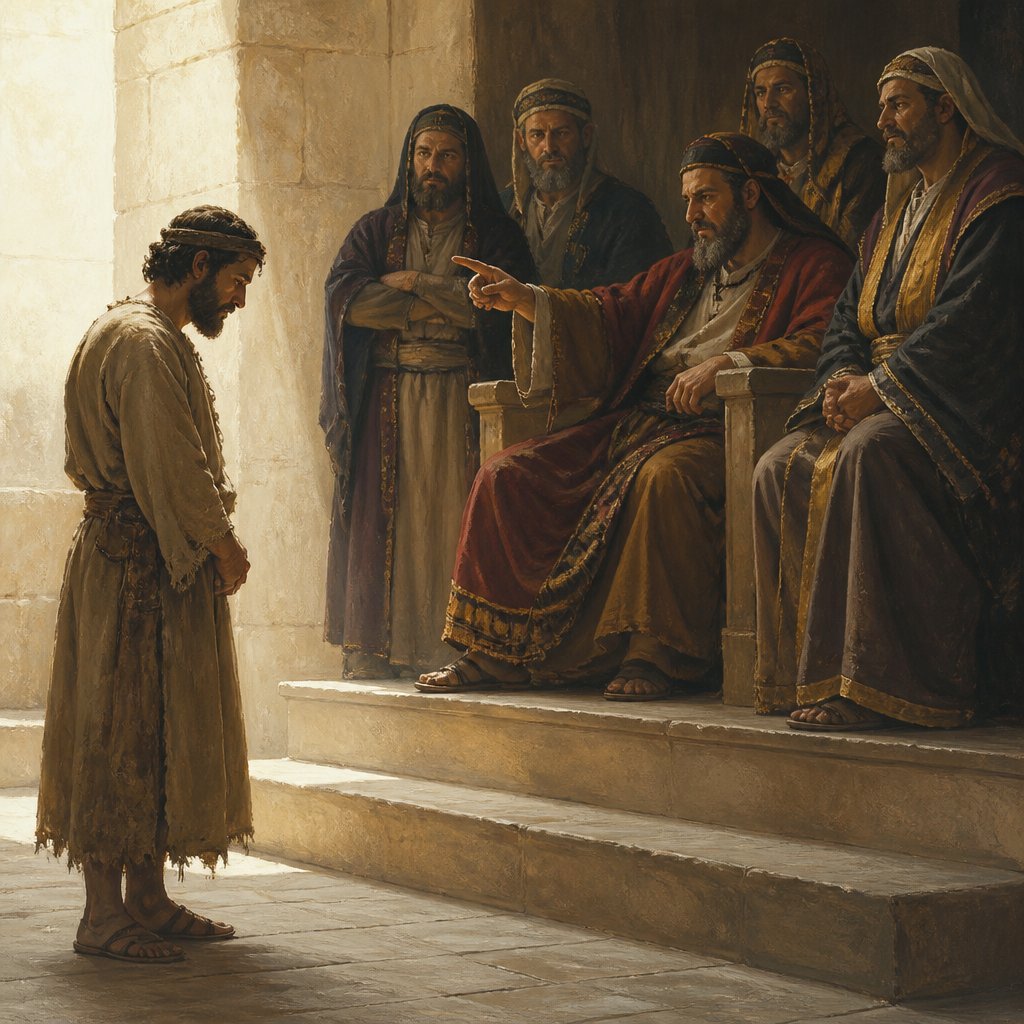
James 2:6 states, "But ye have despised the poor. Do not rich men oppress you, and draw you before the judgment seats?" This verse, nestled within the epistle of James, challenges us to reflect deeply on our attitudes towards wealth, social status, and the inherent dignity worthy of every individual created in the image of God. James brings to light a pressing issue that transcends time and culture: the tendency to show favoritism toward the rich while neglecting and devaluing the poor.
The context of this verse is crucial for understanding its profound implication. James addresses early Christians who were not only facing external persecution but were also struggling with internal divisions, particularly concerning social class. Visitors arriving at the assemblies were greeted not by the egalitarian spirit of Christ, but by the segregating gaze of wealth and prestige. The rich were placed in honorable seats, while the poor were relegated to the sidelines.
Such actions reveal a toxic inconsistency within the community of faith. The church, called to embody the principles of Christ’s kingdom, was behaving like the very world it sought to transform. In doing so, they effectively despised the poor, who are often the most vulnerable. The significance of this despising goes beyond mere neglect; it is a rejection of God's creation, who possesses inherent value and dignity irrespective of economic status.
James draws attention to the reality that the rich often wield significant power. He rhetorically asks whether the rich not oppress the believers and drag them before judgment seats—an allusion to the legal systems that favored the wealthy. This prompts us to reflect on how society still operates in a similar fashion today. Those who possess wealth frequently have access to resources that can manipulate justice in their favor, further perpetuating systems of oppression. It is crucial for the church to be aware of these dynamics and to actively oppose any forms of partiality.
As believers, we must confront a painful truth: it is far easier to side with the powerful than to stand in solidarity with the marginalized. We are called to recognize the daily realities faced by those who are impoverished or oppressed. The teachings of Jesus resonate profoundly here, as He consistently identified with the poor and voiced His concern for them. Matthew 25:40 states, "Inasmuch as ye have done it unto one of the least of these my brethren, ye have done it unto me." To disregard the poor is to disregard Christ Himself.
Living out the message of this verse requires more than just an acknowledgment of wrongdoing; it demands an active response from each of us. We are faced with opportunities every day to advocate for the poor and amplify their voices. This could mean standing against unjust practices within our communities, supporting organizations that seek to empower the marginalized, or offering our time and resources to serve those in need.
Examining our own hearts reveals biases that we may have toward those less fortunate. Do we dismiss or overlook their contributions to society? Are we comfortable merely talking about issues affecting them, or are we compelled to act?
The call of James is a call to holistic faith that interlaces belief with action. Let us strive to be a community characterized by love, mercy, and justice. May we not only recognize the presence of the poor among us but also honor them, embodying the kingdom of God that exhorts us to lift up the lowly and proclaim good news to the poor (Luke 4:18).
In conclusion, let us commit ourselves to living authentically as representatives of Christ. As we take action and care for those who are struggling, we nourish not only their bodies and spirits but also our own as we align our hearts with God’s mission on earth. In a society that often screams wealth, status, and power, let our lives resound with the grace and dignity of every sacred soul.
Want to reflect more on James 2:6?
Continue your spiritual journey with Bible Chat — an AI-powered tool for exploring God's Word through conversation. Ask questions, discover connections, and deepen your understanding.
Get Our Apps


James 2:6 Artwork

James 2:6 - "But ye have despised the poor. Do not rich men oppress you, and draw you before the judgment seats?"
"But ye have despised the poor. Do not rich men oppress you, and draw you before the judgment seats?" - James 2:6

James 2:2-4

Luke 6:15 - "Matthew and Thomas, James the son of Alphaeus, and Simon called Zelotes,"

Luke 6:16 - "And Judas the brother of James, and Judas Iscariot, which also was the traitor."

james 2:26

James 5:6 - "Ye have condemned and killed the just; and he doth not resist you."

James 1:2-13

James 1: 2-4

James 1:2-13

James 1:2-4

Luke 6:14 - "Simon, (whom he also named Peter,) and Andrew his brother, James and John, Philip and Bartholomew,"

James 5:2 - "Your riches are corrupted, and your garments are motheaten."

Acts 12:2 - "And he killed James the brother of John with the sword."

James 4:6 - "But he giveth more grace. Wherefore he saith, God resisteth the proud, but giveth grace unto the humble."

James 1:6 - "But let him ask in faith, nothing wavering. For he that wavereth is like a wave of the sea driven with the wind and tossed."

James 2:15 - "If a brother or sister be naked, and destitute of daily food,"

1Jn 2:6 (KJVA) 6 He that saith he abideth in him ought himself also so to walk, even as he walked.

Mark 6:3 - "Is not this the carpenter, the son of Mary, the brother of James, and Joses, and of Juda, and Simon? and are not his sisters here with us? And they were offended at him."

James 2:4 - "Are ye not then partial in yourselves, and are become judges of evil thoughts?"
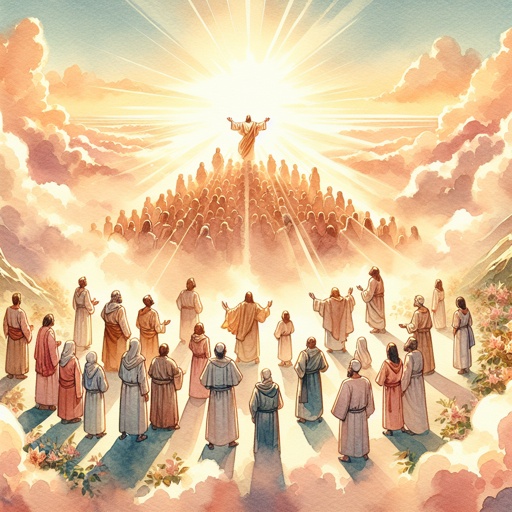
Ephesians 2:6 (KJVA) 6 And hath raised us up together, and made us sit together in heavenly places in Christ Jesus:

James 2:7 - "Do not they blaspheme that worthy name by the which ye are called?"

James 2:17 - "Even so faith, if it hath not works, is dead, being alone."

James 2:24 - "Ye see then how that by works a man is justified, and not by faith only."

James 2:12 - "So speak ye, and so do, as they that shall be judged by the law of liberty."

James 2:2 - "For if there come unto your assembly a man with a gold ring, in goodly apparel, and there come in also a poor man in vile raiment;"
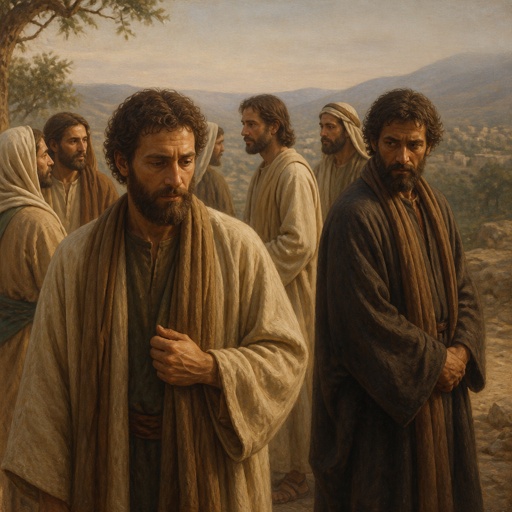
"And Judas the brother of James, and Judas Iscariot, which also was the traitor." - Luke 6:16
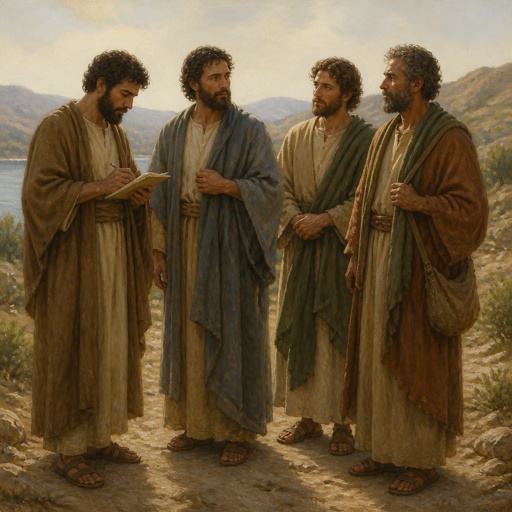
"Matthew and Thomas, James the son of Alphaeus, and Simon called Zelotes," - Luke 6:15

James 2:26 - "For as the body without the spirit is dead, so faith without works is dead also."

James 1:2 - "My brethren, count it all joy when ye fall into divers temptations;"