The Call to Discernment: Navigating Life with Wisdom
"Do not err, my beloved brethren." - James 1:16

In James 1:16, the Apostle Paul admonishes his readers, saying, "Do not err, my beloved brethren." This simple yet profound exhortation carries profound implications for our lives as believers. It invites us to engage in a process of critical discernment, urging us to evaluate our thoughts, actions, and the influences we allow into our hearts.
At its core, James' command is a warning against deception, particularly in the context of faith. The early Christian community faced various trials and temptations, much like we do today. They lived in a world filled with contradictions, competing philosophies, and voices that often contradicted the gospel truth. As modern believers, we are also bombarded with messages that can lead us away from the foundation of faith, (1 John 4:1) reminding us to test the spirits to know their origin.
The phrase "do not err" suggests that there is a potential for misdirection and false teachings that can lead believers away from the truth of God's word. It acts as a caring reminder from James, who refers to his audience as "beloved brethren," reflecting a sense of community and affection, yet firmly warns against the pitfalls of spiritual errancy. This call for discernment is vital because the stakes of error in faith are high; they can derail our walk with God and affect our witness in the world.
As we navigate life, it is essential to remember that every conviction, every doctrine we hold, every teaching we accept must constantly be weighed against the unchanging truth of Scripture. The word of God provides us with the lens through which we can assess our lives, challenges, and the beliefs we are tempted to adopt. The psalmist echoed a similar sentiment in Psalms 119:105, stating, "Thy word is a lamp unto my feet, and a light unto my path." By immersing ourselves in the Scriptures, we come to understand God's character, His desires for us, and the moral foundation that leads to a life of fulfillment and righteousness.
Moreover, James continues in the surrounding verses to remind us of the nature of God. He writes in James 1:17, "Every good gift and every perfect gift is from above, and comes down from the Father of lights, with whom is no variableness, neither shadow of turning." This serves to contrast the goodness of God against the backdrop of the errant paths we might follow. It reassures us that God is not the author of confusion (1 Corinthians 14:33), and it points us to the fact that His gifts are undeniably good and perfect. When we grasp the truth of God's nature, our ability to discern wisely increases. We start to recognize that the things tempting us away from God are, in fact, shadows that lead to death, while His eternal gifts lead to life.
Walking in discernment doesn’t just protect us from error; it also enables us to be effective witnesses to others. When we display a life rooted in truth, we can, in turn, guide others who might be wrestling with doubts or erratic teachings. Our clarity helps illuminate the path for those walking in darkness, much as Christ is the light of the world (John 8:12).
In conclusion, let us heed the words of James: "Do not err, my beloved brethren." Approach life with an unwavering commitment to discernment, grounding ourselves in the word of God while cultivating an awareness of the influences around us. As we do this, we not only protect ourselves from spiritual danger but also shine as lights in a world so desperately in need of God’s truth.
Want to reflect more on James 1:16?
Continue your spiritual journey with Bible Chat — an AI-powered tool for exploring God's Word through conversation. Ask questions, discover connections, and deepen your understanding.
Get Our Apps


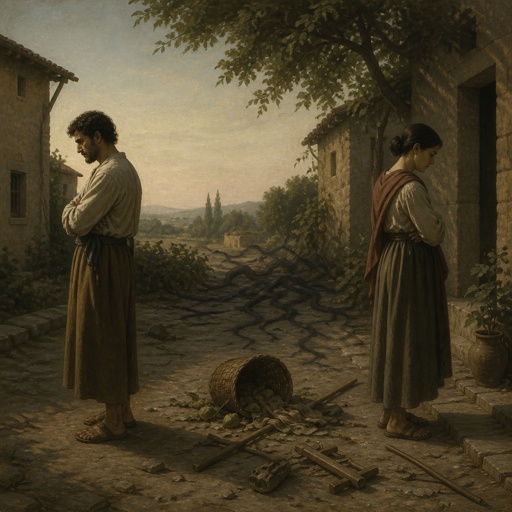
James 1:16 Artwork

James 1:16 - "Do not err, my beloved brethren."

"Do not err, my beloved brethren." - James 1:16

James 5:16

James 5:16

James 5:16

James 5:16

Mark 16:1 - "And when the sabbath was past, Mary Magdalene, and Mary the mother of James, and Salome, had bought sweet spices, that they might come and anoint him."

James 3:16 - "For where envying and strife is, there is confusion and every evil work."

James 1:6 - "But let him ask in faith, nothing wavering. For he that wavereth is like a wave of the sea driven with the wind and tossed."

James 1:1 - "James, a servant of God and of the Lord Jesus Christ, to the twelve tribes which are scattered abroad, greeting."

James 4:16 - "But now ye rejoice in your boastings: all such rejoicing is evil."

Luke 6:16 - "And Judas the brother of James, and Judas Iscariot, which also was the traitor."

"But let him ask in faith, nothing wavering. For he that wavereth is like a wave of the sea driven with the wind and tossed." - James 1:6

Joshua 1:16 (KJVA) 16 And they answered Joshua, saying, All that thou commandest us we will do, and whithersoever thou sendest us, we will go.

James

James 1: 2-4

James 1:2-4

James 1:17-22

James 1:17

James 1:19

James 1:17

James 1:17

James 1:9

James 1:17

James 1:10

james 1:27

James 1:22

James 1:17

Acts 1:13 - "And when they were come in, they went up into an upper room, where abode both Peter, and James, and John, and Andrew, Philip, and Thomas, Bartholomew, and Matthew, James the son of Alphaeus, and Simon Zelotes, and Judas the brother of James."
"For where envying and strife is, there is confusion and every evil work." - James 3:16