The Battle Within: Understanding Hezekiah's Response
"And he heard say concerning Tirhakah king of Ethiopia, He is come forth to make war with thee. And when he heard it, he sent messengers to Hezekiah, saying," - Isaiah 37:9
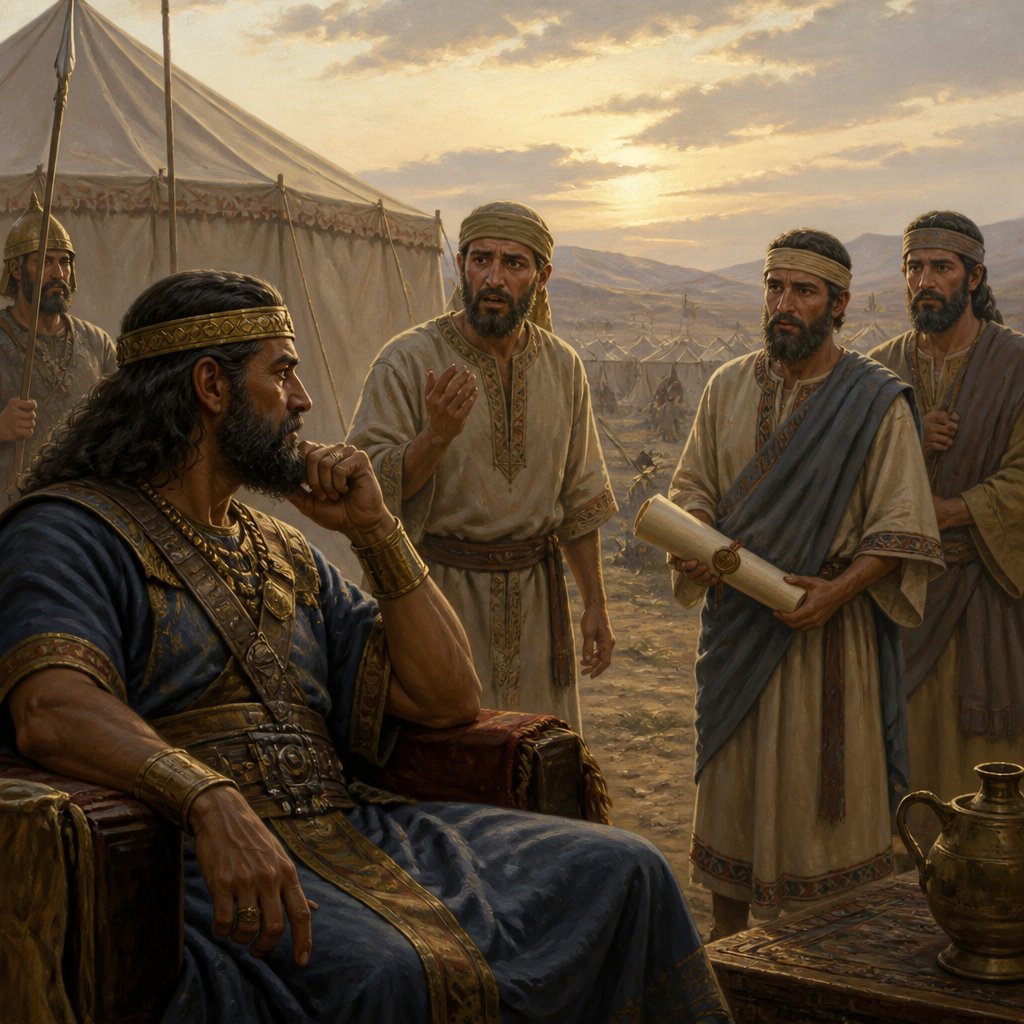
Isaiah 37:9 (KJV) states, "And he heard say concerning Tirhakah king of Ethiopia, He is come forth to make war with thee. And when he heard it, he sent messengers to Hezekiah, saying." This poignant moment in the narrative of King Hezekiah provides us with deep insights about faith, fear, and the nature of God's involvement in our lives during times of crisis.
In the context of this chapter, the backdrop is the terrifying siege upon Jerusalem by the Assyrians. King Sennacherib had dispatched his forces, and Hezekiah, though a king of faith, faced a colossal threat. What stands out in this passage is not just the impending doom that loomed over the city, but also the immediate reaction of Hezekiah to the news of an impending battle.
The mention of Tirhakah, king of Ethiopia, hints at a shifting tide. Hezekiah learned of a potential ally on the horizon—someone who might assist him in his struggle against the Assyrian might. We see that Hezekiah is not just a passive receiver of news; he is actively engaged in responding to what is thrown at him. It teaches us a profound lesson about how we must react to challenges.
In moments of our own distress, how do we respond? Like Hezekiah, we are often bombarded with threats—whether they come in the form of health crises, financial instability, relationship breakdowns, or spiritual doubts. The instinctive reaction might be to panic, to feel overwhelmed by the sheer weight of our circumstances. Yet, the narrative demonstrates the importance of our response, which is where Hezekiah sets a perfect example.
Hezekiah didn’t ignore the threat; he acknowledged it. There is wisdom in facing the reality of our situations rather than hiding from them. Acknowledgment is the first step toward resolution. We must recognize that challenges are a part of life. However, instead of succumbing to fear, Hezekiah chose to send messengers to God for guidance and reassurance. He turns to prayer and consultation with the prophet Isaiah. This act of seeking divine guidance emphasizes the importance of rooting our actions in faith and prayer, rather than in fear.
Another layer to Hezekiah's response is the awareness that while one threat arises, others may also be in motion. The mention of Tirhakah could imply that there are outside influences, unexpected help, or even new dangers that emerge when faced with difficulties. It reminds us that life is complex and God often weaves together multiple narratives in our lives, sometimes aligning events that we cannot see but that ultimately work for our good.
Faith requires vigilance. Just as Hezekiah received a message of war, we, too, receive messages that can instill fear. The juxtaposition of impending war and the call for divine intervention showcases the tension we face in our own lives. We may hear the news of impending battles—whether personal or communal—but we also must be attuned to the workings of God within those battles. In sending messengers to Hezekiah, Sennacherib may have hoped to instill dread; however, it was within Hezekiah’s choice to send a message back to God that hope was ignited.
Ultimately, this passage invites us to reflect deeply on our approaches to crisis. When news of battles—literal or metaphorical—arrive in our lives, where do we turn? The example of Hezekiah inspires us not only to face our fears but to seek the strength, wisdom, and presence of God.
In conclusion, Isaiah 37:9 presents us with not just a historical account, but a call to action in our spiritual lives. Let's strive to embody Hezekiah's resilience; let's become messengers of hope and faith in our own circumstances, knowing that we are never alone in our battles. The war may loom large, but so too does our God, who fights on our behalf and guides our response in faith.
Want to reflect more on Isaiah 37:9?
Continue your spiritual journey with Bible Chat — an AI-powered tool for exploring God's Word through conversation. Ask questions, discover connections, and deepen your understanding.
Get Our Apps


Isaiah 37:9 Artwork

Isaiah 37:9 - "And he heard say concerning Tirhakah king of Ethiopia, He is come forth to make war with thee. And when he heard it, he sent messengers to Hezekiah, saying,"
"And he heard say concerning Tirhakah king of Ethiopia, He is come forth to make war with thee. And when he heard it, he sent messengers to Hezekiah, saying," - Isaiah 37:9

Isaiah 37:5 - "So the servants of king Hezekiah came to Isaiah."

Isaiah 37:37 - "¶ So Sennacherib king of Assyria departed, and went and returned, and dwelt at Nineveh."

Isaiah 37:15 - "And Hezekiah prayed unto the LORD, saying,"

"So the servants of king Hezekiah came to Isaiah." - Isaiah 37:5

Isaiah 37:2 - "And he sent Eliakim, who was over the household, and Shebna the scribe, and the elders of the priests covered with sackcloth, unto Isaiah the prophet the son of Amoz."

"¶ So Sennacherib king of Assyria departed, and went and returned, and dwelt at Nineveh." - Isaiah 37:37

Mark 9:36-37

Matthew 9:37-38

1 Chronicles 9:37 - "And Gedor, and Ahio, and Zechariah, and Mikloth."

Isaiah 37:18 - "Of a truth, LORD, the kings of Assyria have laid waste all the nations, and their countries,"

Isaiah 37:13 - "Where is the king of Hamath, and the king of Arphad, and the king of the city of Sepharvaim, Hena, and Ivah?"

Isaiah 37:21 - "¶ Then Isaiah the son of Amoz sent unto Hezekiah, saying, Thus saith the LORD God of Israel, Whereas thou hast prayed to me against Sennacherib king of Assyria:"

Isaiah 37:35 - "For I will defend this city to save it for mine own sake, and for my servant David's sake."

"And Hezekiah prayed unto the LORD, saying," - Isaiah 37:15

Isaiah 37:34 - "By the way that he came, by the same shall he return, and shall not come into this city, saith the LORD."

Job 37:9 - "Out of the south cometh the whirlwind: and cold out of the north."

Isaiah 37:31 - "And the remnant that is escaped of the house of Judah shall again take root downward, and bear fruit upward:"

Isaiah 37:28 - "But I know thy abode, and thy going out, and thy coming in, and thy rage against me."

Isaiah 37:6 - "¶ And Isaiah said unto them, Thus shall ye say unto your master, Thus saith the LORD, Be not afraid of the words that thou hast heard, wherewith the servants of the king of Assyria have blasphemed me."

Matthew 9:37 - "Then saith he unto his disciples, The harvest truly is plenteous, but the labourers are few;"

Isaiah 37:32 - "For out of Jerusalem shall go forth a remnant, and they that escape out of mount Zion: the zeal of the LORD of hosts shall do this."

Isaiah 37:19 - "And have cast their gods into the fire: for they were no gods, but the work of men's hands, wood and stone: therefore they have destroyed them."

Isaiah 37:1 - "And it came to pass, when king Hezekiah heard it, that he rent his clothes, and covered himself with sackcloth, and went into the house of the LORD."

Psalms 37:9 - "For evildoers shall be cut off: but those that wait upon the LORD, they shall inherit the earth."

Isaiah 37:8 - "¶ So Rabshakeh returned, and found the king of Assyria warring against Libnah: for he had heard that he was departed from Lachish."

Isaiah 37:14 - "¶ And Hezekiah received the letter from the hand of the messengers, and read it: and Hezekiah went up unto the house of the LORD, and spread it before the LORD."

Isaiah 37:25 - "I have digged, and drunk water; and with the sole of my feet have I dried up all the rivers of the besieged places."

Isaiah 37:3 - "And they said unto him, Thus saith Hezekiah, This day is a day of trouble, and of rebuke, and of blasphemy: for the children are come to the birth, and there is not strength to bring forth."