The Seasons of Preparation: Understanding God's Timing
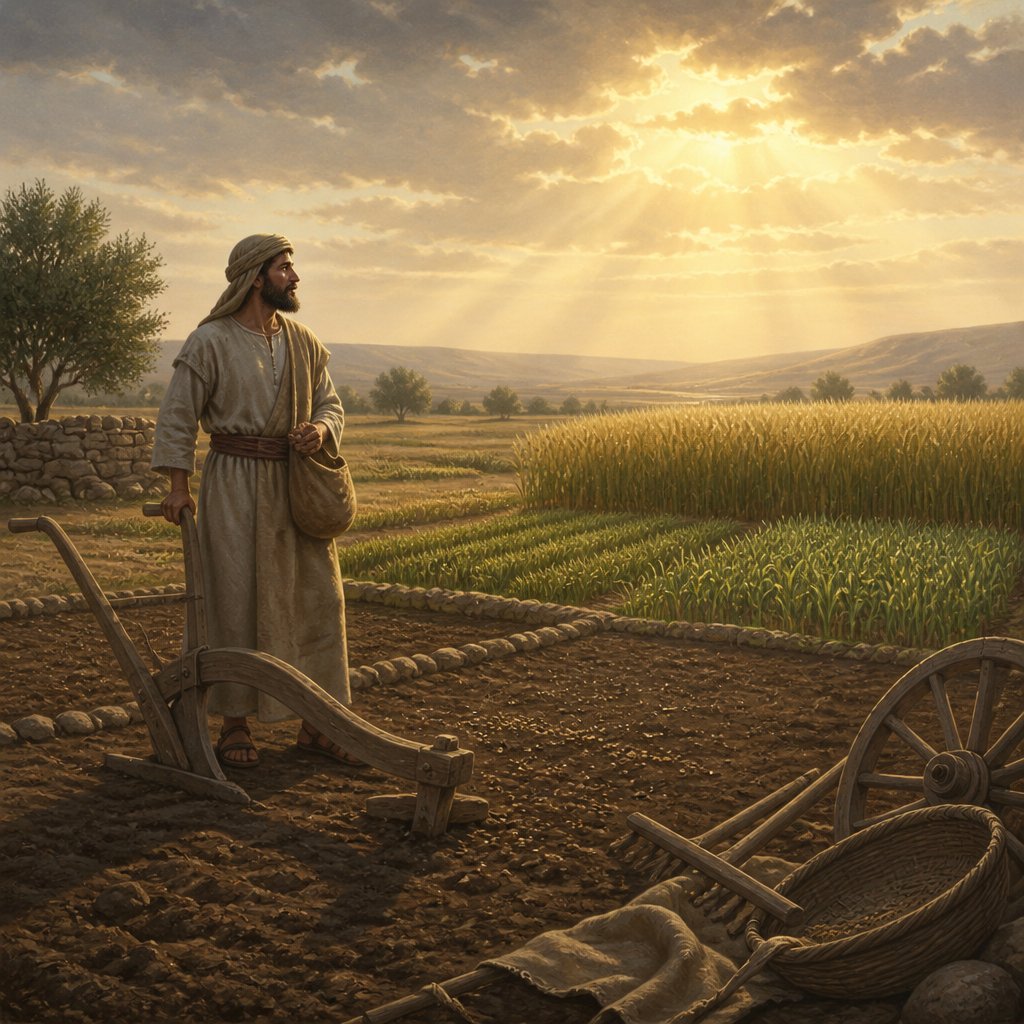
"Listen and hear my voice; pay attention and hear what I say. When a farmer plows for planting, does he plow continually? Does he keep on breaking up and working the soil? When he has leveled the surface, does he not sow caraway and scatter cumin? Does he not plant wheat in its place, barley in its plot, and spelt in its field? His God instructs him and teaches him the right way. Caraway is not threshed with a sledge, nor is the wheel of a cart rolled over cumin; caraway is beaten out with a rod, and cumin with a stick. Grain must be ground to make bread; so one does not go on threshing it forever. The wheels of a threshing cart may be rolled over it, but one does not use horses to grind grain. All this also comes from the Lord Almighty, whose plan is wonderful, whose wisdom is magnificent." - Isaiah 28:23-29
**Introduction**
In Isaiah 28:23-29, the prophet uses the imagery of farming as a profound metaphor for understanding the divine timing and wisdom in God's creation and His plans for humanity. This passage invites us to listen and recognize the natural rhythms of life, which reflect God's greater purposes. The verses remind us that just as a farmer follows specific practices to cultivate the earth, God methodically orchestrates His divine plan for each of us. Let us delve into these verses and glean insights that can transform our understanding of preparation, work, and God's marvelous wisdom in our lives.
**God’s Call to Listen**
The passage begins with a clear directive: "Listen and hear my voice; pay attention and hear what I say" (Isaiah 28:23, KJV). This call to attention emphasizes the importance of being attuned to God's direction. In our busy lives, filled with distractions, how often do we pause to truly listen for the gentle nudging of the Holy Spirit? The Lord beckons us to quiet our hearts and minds to embrace His wisdom. As we do this, we cultivate a deeper relationship with God, allowing His voice to guide our actions and decisions.
**Learning from the Farmer**
Isaiah goes on to illustrate the farmer's seasonal work: "When a farmer plows for planting, does he plow continually? Does he keep on breaking up and working the soil?" (Isaiah 28:24, KJV). The farmer understands that there are distinct phases in the agricultural cycle—planting, growing, and harvesting. Each step is essential and has its respective timing. Likewise, God works in seasons in our lives. We may be in a season of preparation, waiting, or perhaps even pruning. In every season, we are called to trust that God's hand is at work.
**Diversity in God’s Creation**
Next, the passage highlights the farmer's methodical approach to planting different seeds: "Does he not sow caraway and scatter cumin? Does he not plant wheat in its place, barley in its plot, and spelt in its field?" (Isaiah 28:25, KJV). Each type of grain has its specific requirements for growth, illustrating the beauty of God’s intentionality in creation. God has a unique plan for each of us, equipped with diverse gifts and callings. Understanding this diversity helps us appreciate our roles within the body of Christ, knowing that we all contribute to His greater mission in unique ways.
**God’s Instruction and Wisdom**
The most profound aspect of this passage comes from recognizing that all these agricultural practices are instructions from God: "His God instructs him and teaches him the right way" (Isaiah 28:26, KJV). God's guidance is available and necessary as we engage in our life's work. Are we seeking His wisdom in our daily endeavors? Are we acknowledging and receiving the guidance He generously offers? We must cultivate a reliance on God's wisdom as we navigate life’s challenges.
**The Process of Threshing**
The farmer also knows not to be excessive in his processes. "Caraway is not threshed with a sledge, nor is the wheel of a cart rolled over cumin" (Isaiah 28:27, KJV). Each seed is treated according to its nature, highlighting respect for the process and materials. Similarly, God teaches us patience. There are times when we must endure processes in our lives that shape us, but there is also understanding that these processes are finite. The things that refine us will not last indefinitely; in due time, they will yield the fruit of the Spirit in our lives.
**Conclusion: Recognizing God’s Plan**
Isaiah concludes with an affirmation of God’s sovereignty: "All this also comes from the Lord Almighty, whose plan is wonderful, whose wisdom is magnificent" (Isaiah 28:29, KJV). As we seek to listen and lean into God's timing, let us remember that His plans for us are intricate and beautiful. In every season of our lives, may we demonstrate faith, patience, and a willingness to work in tandem with God's design. Through our diligent work and attentive listening, we will witness the unfolding of His grandeur and the manifestation of His purposes in our lives.
Want to reflect more on Isaiah 28:23-29?
Continue your spiritual journey with Bible Chat — an AI-powered tool for exploring God's Word through conversation. Ask questions, discover connections, and deepen your understanding.
Get Our Apps


Isaiah 28:23-29 Artwork

Isaiah 28:23-29 - "Listen and hear my voice; pay attention and hear what I say. When a farmer plows for planting, does he plow continually? Does he keep on breaking up and working the soil? When he has leveled the surface, does he not sow caraway and scatter cumin? Does he not plant wheat in its place, barley in its plot, and spelt in its field? His God instructs him and teaches him the right way. Caraway is not threshed with a sledge, nor is the wheel of a cart rolled over cumin; caraway is beaten out with a rod, and cumin with a stick. Grain must be ground to make bread; so one does not go on threshing it forever. The wheels of a threshing cart may be rolled over it, but one does not use horses to grind grain. All this also comes from the Lord Almighty, whose plan is wonderful, whose wisdom is magnificent."

"Listen and hear my voice; pay attention and hear what I say. When a farmer plows for planting, does he plow continually? Does he keep on breaking up and working the soil? When he has leveled the surface, does he not sow caraway and scatter cumin? Does he not plant wheat in its place, barley in its plot, and spelt in its field? His God instructs him and teaches him the right way. Caraway is not threshed with a sledge, nor is the wheel of a cart rolled over cumin; caraway is beaten out with a rod, and cumin with a stick. Grain must be ground to make bread; so one does not go on threshing it forever. The wheels of a threshing cart may be rolled over it, but one does not use horses to grind grain. All this also comes from the Lord Almighty, whose plan is wonderful, whose wisdom is magnificent." - Isaiah 28:23-29

Exodus 23:28-29

Isaiah 28:29 - "This also cometh forth from the LORD of hosts, which is wonderful in counsel, and excellent in working."

Isaiah 28:23 - "¶ Give ye ear, and hear my voice; hearken, and hear my speech."

"¶ Give ye ear, and hear my voice; hearken, and hear my speech." - Isaiah 28:23

Isaiah 29:23 - "But when he seeth his children, the work of mine hands, in the midst of him, they shall sanctify my name, and sanctify the Holy One of Jacob, and shall fear the God of Israel."

"This also cometh forth from the LORD of hosts, which is wonderful in counsel, and excellent in working." - Isaiah 28:29

Isaiah 40:28-29 - "Hast thou not known? hast thou not heard, that the everlasting God, the LORD, the Creator of the ends of the earth, fainteth not, neither is weary? there is no searching of his understanding. He giveth power to the faint; and to them that have no might he increaseth strength."

MATTHEW 28: 23

Joel 2:28-29

Joel 2:28-29

Joel 2:28-29

Isaiah 29:6

Isaiah 29:12

Isaiah 29:4

Isaiah 29:4

Isaiah 29:18

Exodus 23:28

Isaiah 28:12

Isaiah 28:12

Matthew 23:28

Exodus 23:28

Matthew 23:28

John 14:23-29

John 14:23-29

John 14:23-29

Exodus 23:27-28

Numbers 28:29 - "A several tenth deal unto one lamb, throughout the seven lambs;"

2 Samuel 23:28 - "Zalmon the Ahohite, Maharai the Netophathite,"