Beyond the Sacrifice: Reflecting on True Worship
"To what purpose is the multitude of your sacrifices unto me? saith the LORD: I am full of the burnt offerings of rams, and the fat of fed beasts; and I delight not in the blood of bullocks, or of lambs, or of he goats." - Isaiah 1:11
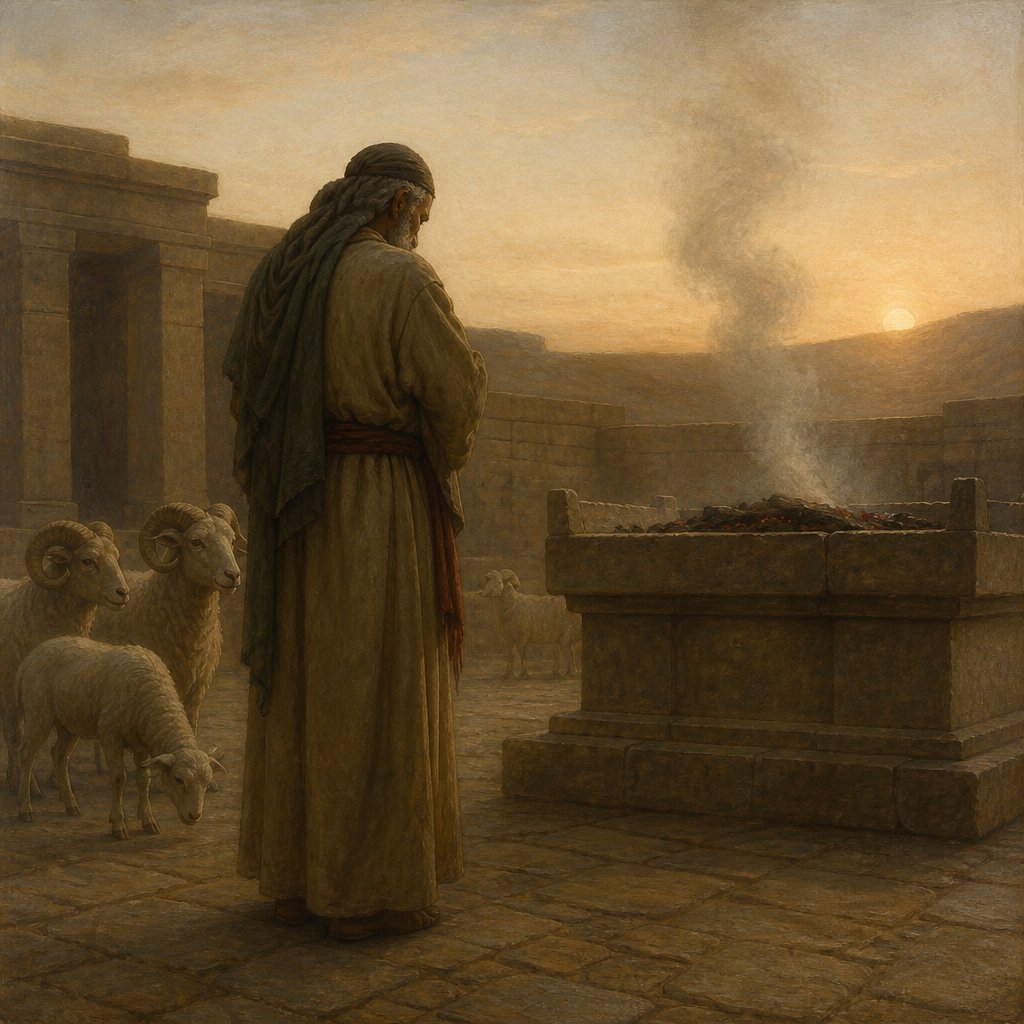
Isaiah 1:11 (KJV) states: "To what purpose is the multitude of your sacrifices unto me? saith the LORD: I am full of the burnt offerings of rams, and the fat of fed beasts; and I delight not in the blood of bullocks, or of lambs, or of he goats." In this piercing message delivered by God through the prophet Isaiah, we are invited to reflect deeply on the nature of our worship and the authenticity of our relationship with the Almighty.
In the context of Isaiah's time, sacrifices were central to the worship of God. The people of Israel were accustomed to bringing offerings as a means of seeking atonement, expressing gratitude, or fulfilling their religious duties. However, God, through Isaiah, questions the sincerity behind these acts. His inquiry, "To what purpose?" is not simply rhetorical; it compels us to think about the intentions of our hearts when we engage in acts of devotion.
Sacrifices were meant to be expressions of faith, acts leading to a closer relationship with God, yet what God perceives is a disconnect between their rituals and their reality. The multitude of sacrifices was rendered meaningless, burdensome even, when offered without the heart to truly worship. It highlights a crucial truth: ritualistic acts devoid of genuine faith and intention are unacceptable to God.
This passage reminds us that God is not after a checklist of rituals performed with frequency but seeks a heart postured in love, humility, and obedience. He states that He is "full" of burnt offerings. This imagery suggests that God has had enough of the insincere worship that lacks true devotion. It's not that offerings are wrong—they are indeed a part of worship—but when they become a formality rather than an expression of a heart aligned with God, they lose their value.
Consider how this applies to our modern context. It’s easy for us to fall into routine worship, where attending church, reading scripture, and praying can become habitual acts rather than heartfelt responses to God's grace. The question posed by God through Isaiah urges us to examine our motives. Are we engaging in these practices to fulfill an obligation, or are we genuinely seeking to connect with our Creator?
Furthermore, in the realm of sacrifice, God emphasizes the importance of living sacrifices over dead rituals. In Romans 12:1, Paul urges us to "present your bodies a living sacrifice, holy, acceptable unto God, which is your reasonable service." This further illustrates that true worship involves more than external rituals; it calls for a comprehensive surrender of our lives to God's will.
To truly worship, we must move beyond mere lip service or religious performance. Worship must encompass our entire being—our thoughts, actions, attitudes, and daily lives. It should reflect our gratitude, our acknowledgment of God’s sovereignty, and our desire to align with His purpose.
God calls us to a place of reflection and repentance. He desires us to confront any areas in our lives where our worship may have become stale or obligatory. In Isaiah 1:12-17, the Lord guides His people, urging them to learn to do well, seek justice, and help the oppressed, which illustrates that true worship should spur action and a sense of responsibility toward others.
May we take these words of Isaiah to heart. Let us not only evaluate our worship practices but also embrace the call to worship with authenticity and love. Let us turn our hearts towards God, allowing His spirit to fill us with a desire for holistic worship that transcends mere acts and becomes a vibrant expression of our faith. In doing so, we honor Him not just with what we offer, but with who we are in our daily lives.
Want to reflect more on Isaiah 1:11?
Continue your spiritual journey with Bible Chat — an AI-powered tool for exploring God's Word through conversation. Ask questions, discover connections, and deepen your understanding.
Get Our Apps


Isaiah 1:11 Artwork

Isaiah 1:11 - "To what purpose is the multitude of your sacrifices unto me? saith the LORD: I am full of the burnt offerings of rams, and the fat of fed beasts; and I delight not in the blood of bullocks, or of lambs, or of he goats."
"To what purpose is the multitude of your sacrifices unto me? saith the LORD: I am full of the burnt offerings of rams, and the fat of fed beasts; and I delight not in the blood of bullocks, or of lambs, or of he goats." - Isaiah 1:11

Isaiah 11:1

Isaiah 55:11

Isaiah 11:1-9

Isaiah 11:1-9

Isaiah 11:1-9

Acts 1:1-11

Acts 1:1-11

Isaiah 11:1 - "And there shall come forth a rod out of the stem of Jesse, and a Branch shall grow out of his roots:"

Revelation 1:11

Revelation 1:11

Nehemiah 11:1-19

Isaiah 11

Isaiah 1:1 - "The vision of Isaiah the son of Amoz, which he saw concerning Judah and Jerusalem in the days of Uzziah, Jotham, Ahaz, and Hezekiah, kings of Judah."

Isaiah 28:11 - "For with stammering lips and another tongue will he speak to this people."

"And there shall come forth a rod out of the stem of Jesse, and a Branch shall grow out of his roots:" - Isaiah 11:1

"And there shall come forth a rod out of the stem of Jesse, and a Branch shall grow out of his roots:" - Isaiah 11:1

Isaiah 43:11 - "I, even I, am the LORD; and beside me there is no saviour."

Isaiah 11:5 - "And righteousness shall be the girdle of his loins, and faithfulness the girdle of his reins."

Isaiah 24:11 - "There is a crying for wine in the streets; all joy is darkened, the mirth of the land is gone."

Isaiah 49:11 - "And I will make all my mountains a way, and my highways shall be exalted."

"The vision of Isaiah the son of Amoz, which he saw concerning Judah and Jerusalem in the days of Uzziah, Jotham, Ahaz, and Hezekiah, kings of Judah." - Isaiah 1:1

Isaiah 7:11 - "Ask thee a sign of the LORD thy God; ask it either in the depth, or in the height above."

Isaiah 3:11 - "Woe unto the wicked! it shall be ill with him: for the reward of his hands shall be given him."

Isaiah 2:1 - "The word that Isaiah the son of Amoz saw concerning Judah and Jerusalem."

Isaiah 13:1 - "The burden of Babylon, which Isaiah the son of Amoz did see."

Isaiah 60:1

Isaiah 9:11 - "Therefore the LORD shall set up the adversaries of Rezin against him, and join his enemies together;"

Isaiah 16:11 - "Wherefore my bowels shall sound like an harp for Moab, and mine inward parts for Kir-haresh."