The Echo of Despair: Listening to the Cries of Moab
"For the cry is gone round about the borders of Moab; the howling thereof unto Eglaim, and the howling thereof unto Beer-elim." - Isaiah 15:8
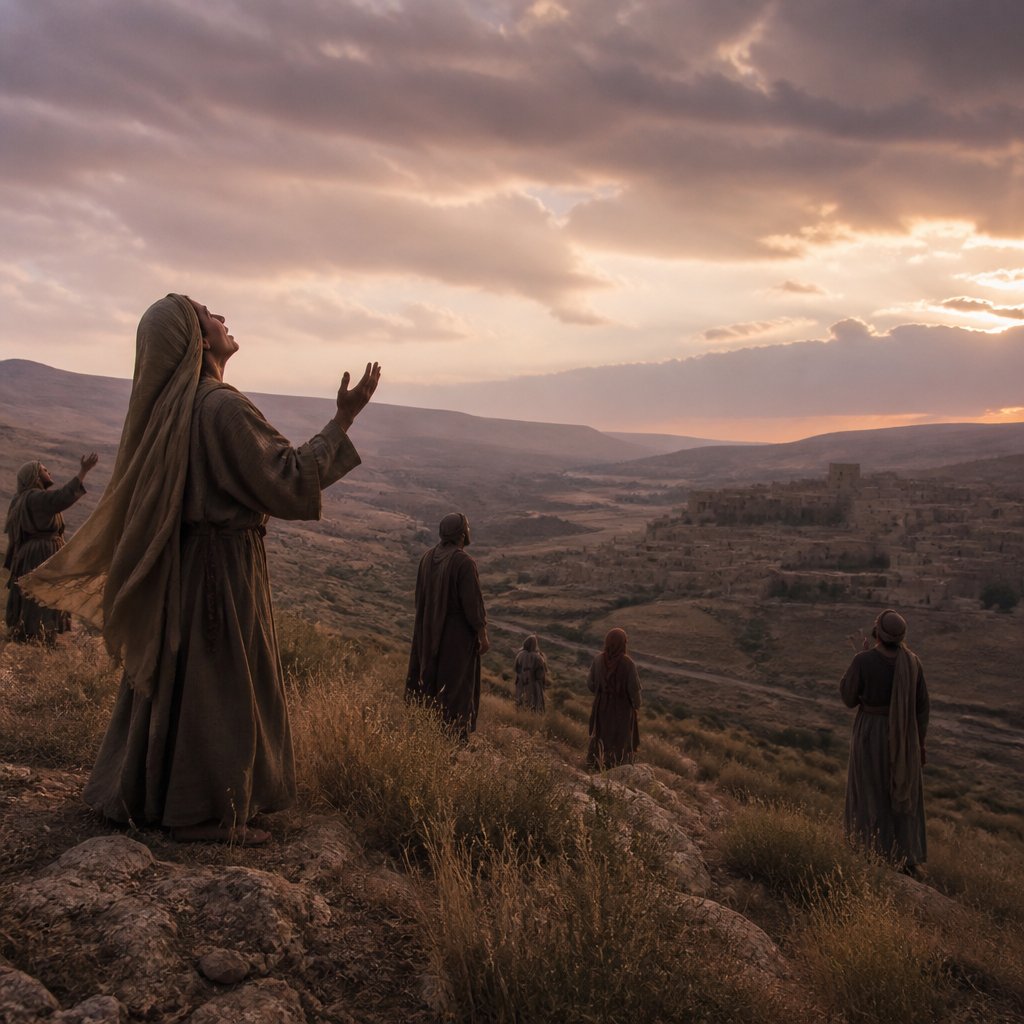
In the heart of the prophetic writings, Isaiah 15:8 presents a profound insight into the collective grief and despair of a nation: "For the cry is gone round about the borders of Moab; the howling thereof unto Eglaim, and the howling thereof unto Beer-elim." In this poignant verse, the prophet describes the anguish of Moab in the wake of divine judgment. It is essential to recognize that this cry is not merely an isolated incident; it resonates through the very fabric of Moabite culture, echoing the struggles of humanity.
### Understanding Moab’s Cry
To grasp the gravity of the lament in Moab, we first need to understand who the Moabites were. They were descendants of Lot, residing on the eastern side of the Jordan River, often at odds with Israel. Their identity was intertwined with rebellion against God, symbolizing the struggles and consequences of living outside of God's perfect will. The backdrop to Isaiah’s prophecy is one of impending destruction—a result of their sinfulness. The cries of the Moabites serve as a grim reminder that sin ultimately leads to despair and suffering.
### The Geography of Grief
Isaiah mentions specific locations—Eglaim and Beer-elim—significant enough to represent the extent of sorrow and destruction across Moab. Geographically, these towns symbolize the widespread consequences of sin, suggesting that there is no refuge from the sorrow that envelops them. Their cries penetrate every corner of their land, akin to how the consequences of our choices reach far beyond us, affecting those around us. It teaches us that our actions have communal repercussions; a failure to heed God's commands results in collective suffering.
### A Call to Acknowledge Our Cries
Just as the Moabites cried out in their distress, we too face moments of sorrow and grief— be it personal loss, relational strife, or spiritual desolation. It is crucial to acknowledge these cries in our lives. Whether it is the silence of despair or the loud howling of anguish, our cries are valid. God invites us to bring our burdens before Him.
In moments of turmoil, often, we isolate ourselves, thinking that our struggles must be faced alone. However, by recognizing the communal nature of grief, we are encouraged to reach out, support one another, and share our pain. The act of vocalizing our struggles can be tremendously liberating, acting as a cathartic release. Just as the Moabites’ howling reverberated through the land, we can allow our cries to echo into places of healing and solace.
### Listening to Others
The lamentation of the Moabites drives home the importance of listening. In an age saturated with noise, we often forget the power of silence and the importance of actively listening to the cries of those around us. Listening to someone else's heartache allows us to support them in their plight, guiding them towards hope and healing. Empathy can transform despair into strength, and through God’s love expressed in us, we can be a source of comfort.
### God’s Faithfulness in Mourning
Even amid the cries of despair, we must remember God's character. Though He allows trials and suffering, He has not abandoned us in our pain. Psalm 34:18 reassures us, "The LORD is nigh unto them that are of a broken heart; and saveth such as be of a contrite spirit." God hears our howls, our cries, and responds with comfort, offering hope. Through our mourning, He intricately weaves a tapestry of love and redemption, demonstrating that even in darkness, light breaks through.
### Conclusion
As we meditate on Isaiah 15:8, let us have hearts open to both our own cries and those of others around us. We must remember that while Moab's lamentation is a warning of judgment, it is also a call to humility and repentance. God desires to transform our howls of despair into songs of praise. May we lean into Him and allow our cries to bring us closer to His heart, renewing our hope in His promise to restore and redeem.
Want to reflect more on Isaiah 15:8?
Continue your spiritual journey with Bible Chat — an AI-powered tool for exploring God's Word through conversation. Ask questions, discover connections, and deepen your understanding.
Get Our Apps


Isaiah 15:8 Artwork
Isaiah 15:8 - "For the cry is gone round about the borders of Moab; the howling thereof unto Eglaim, and the howling thereof unto Beer-elim."
"For the cry is gone round about the borders of Moab; the howling thereof unto Eglaim, and the howling thereof unto Beer-elim." - Isaiah 15:8

Isaiah 8:15 - "And many among them shall stumble, and fall, and be broken, and be snared, and be taken."
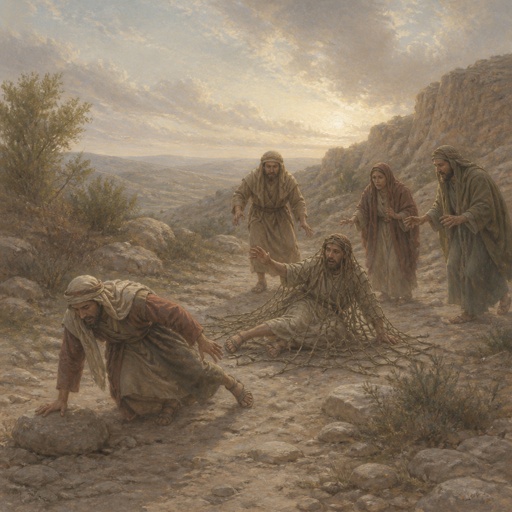
"And many among them shall stumble, and fall, and be broken, and be snared, and be taken." - Isaiah 8:15

Isaiah 19:8

Isaiah 6:8

Isaiah 64:8

Isaiah 37:15 - "And Hezekiah prayed unto the LORD, saying,"

Isaiah 60:8 - "Who are these that fly as a cloud, and as the doves to their windows?"

Genesis 15:8

Isaiah 2:15 - "And upon every high tower, and upon every fenced wall,"

Isaiah 14:15 - "Yet thou shalt be brought down to hell, to the sides of the pit."

Isaiah 65:8 A new wine

Isaiah 10:8 - "For he saith, Are not my princes altogether kings?"

Isaiah 9:15 - "The ancient and honourable, he is the head; and the prophet that teacheth lies, he is the tail."

Isaiah 39:8 - "Then said Hezekiah to Isaiah, Good is the word of the LORD which thou hast spoken. He said moreover, For there shall be peace and truth in my days."

Judges 9:8-15

Revelation 15:5-8

Exodus 8:1-15

Romas 8:15-16

Isaiah 34:8 - "For it is the day of the LORD'S vengeance, and the year of recompences for the controversy of Zion."

Isaiah 8:5 - "¶ The LORD spake also unto me again, saying,"

Romans 8:15-16

John 15:1-8

Revelation 15:5-8

Revelation 15:5-8

Isaiah 43:15 - "I am the LORD, your Holy One, the creator of Israel, your King."

Isaiah 45:15 - "Verily thou art a God that hidest thyself, O God of Israel, the Saviour."

Isaiah 8:16 - "Bind up the testimony, seal the law among my disciples."

Isaiah 8:20 - "To the law and to the testimony: if they speak not according to this word, it is because there is no light in them."